The Mashatu Game Reserve in Southeast Botswana, bordering South Africa and Zimbabwe, is known as the Tuli Block. As a mountain biker in this area, you share the trails with zebras, elephants, wildebeest, and other wildlife.
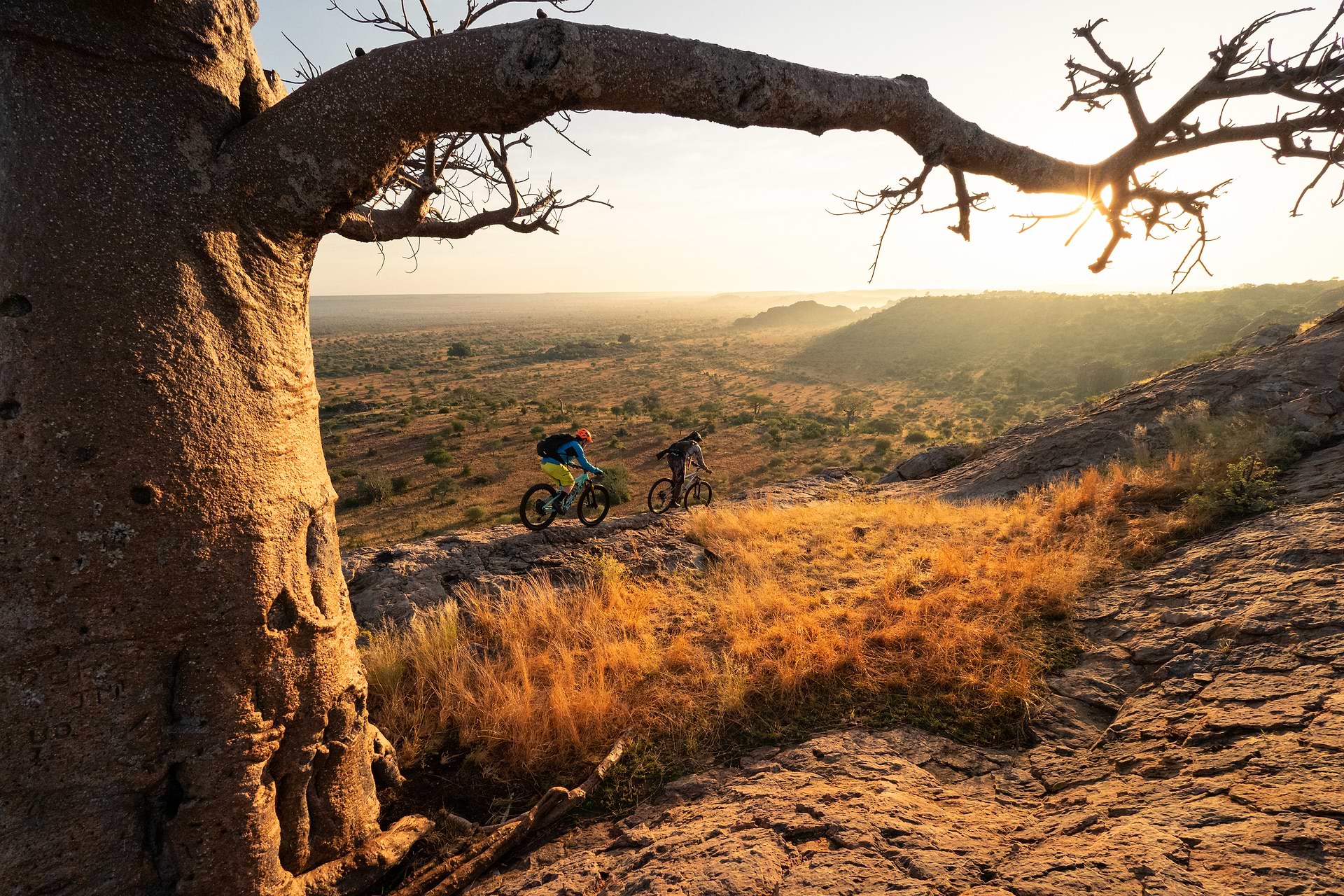
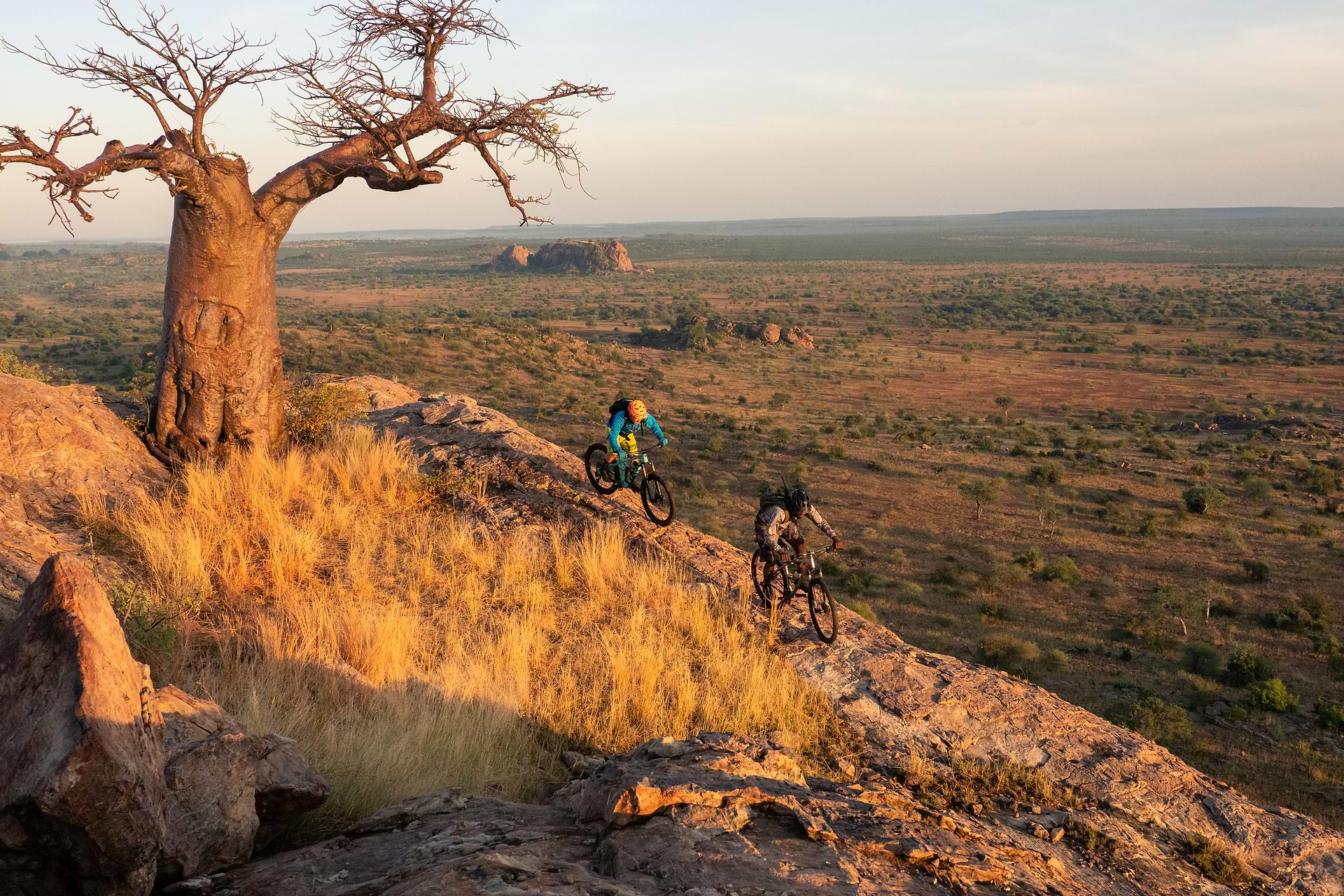
I feel like I’ve snuck into the world’s largest zoo with my mountain bike. I’m riding through Mashatu Game Reserve in Southeastern Botswana — a dry, sparsely treed expanse of savannah bordering South Africa and Zimbabwe known as the Tuli Block.
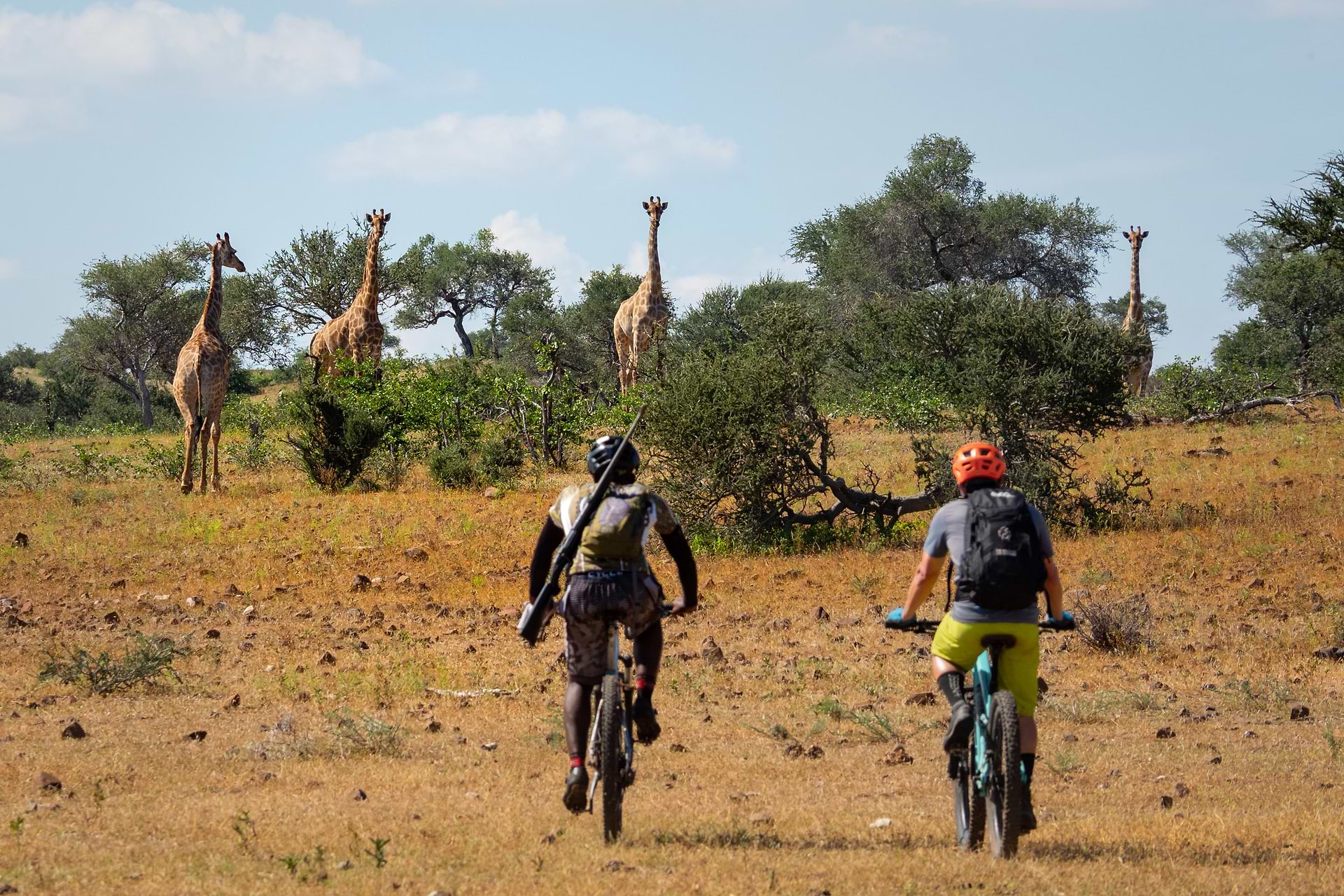
plumes of crimson dust are kicked into the sky by passing zebras, wildebeest, and our knobby bike tires as we glimpse elephants and giraffes less than 50 meters away. The diversity and sheer amount of wildlife are mind-blowing, and experiencing it from ground level makes me feel like I’m part of the action. But leading us back to camp, our guide Mario firmly reminds us that once the sun goes down, the lions and leopards lazing in the shade come to life for the nightly hunt.
and Botswana is leading the way. Botswana has been a leading country in many aspects since its independence in 1966. Botswana was the first country to ban big game hunting and focus on conservation with a clairvoyant focus on tourism. It’s also the only African country to avoid civil war and armed conflict with its neighbours — which is saying a lot considering the problematic past of south-central Africa. The forward-thinking governance also extends to Botswana’s 2.5 million citizens who enjoy universal health care, an old age pension from the age of 60, and programs for farmers and wildlife reserves to limit the spread of disease and ensure ample employment in the agricultural, industrial and tourism sectors.
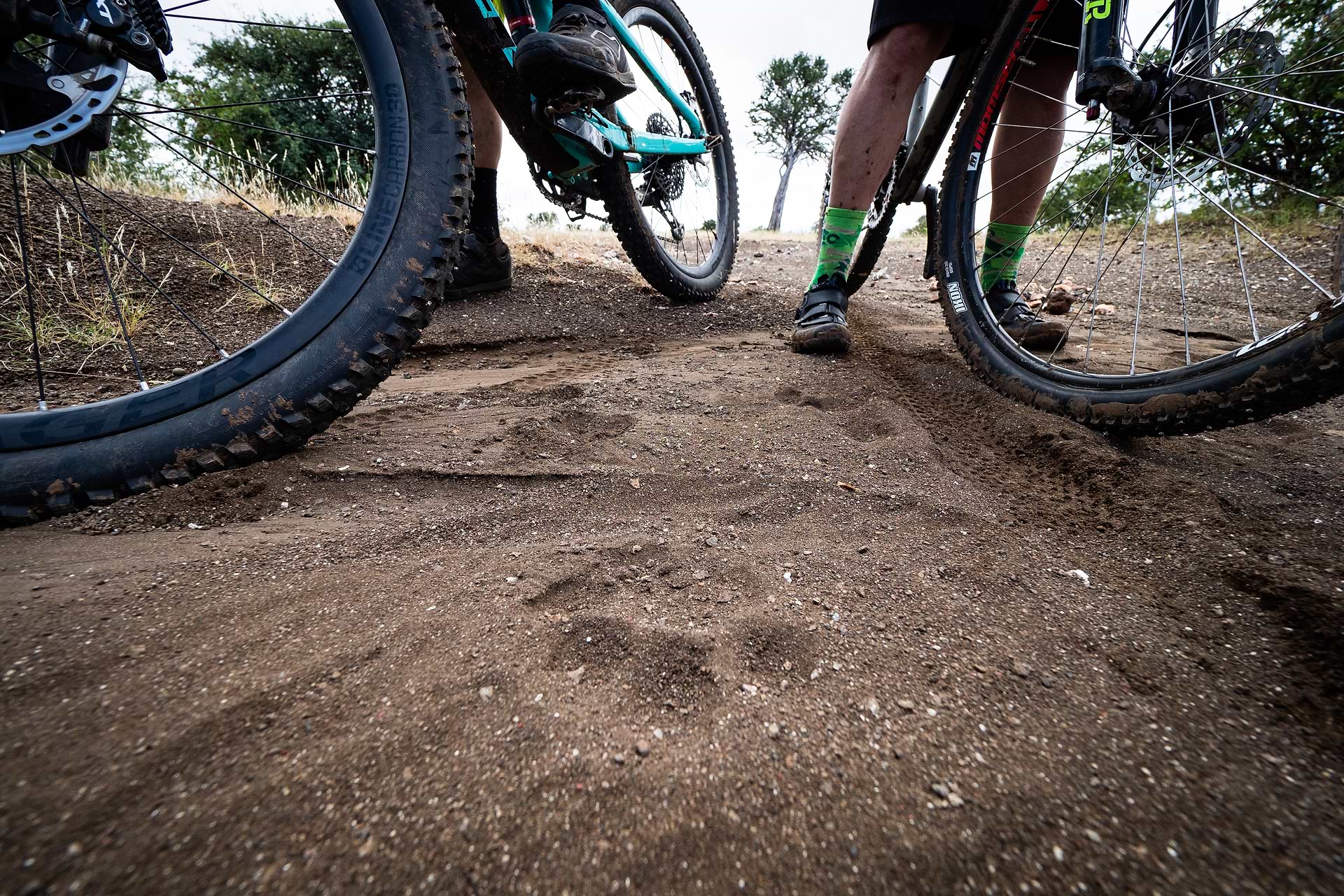
Mashatu is a mountain biking paradise for one reason — elephants. The lumbering beasts are creatures of habit with incredible memories — particularly for finding water and food. Theirs tried and tested travel routes have been trodden over centuries by wide, flat feet in single file — resulting in narrow ribbons of meandering singletrack perfect for mountain bikes. Kgosi Johan (Joe) Rakumako instantly recognized the riding potential. Nearly 20 years later —Rakumako is credited as one of Botswana’s mountain bike founders.
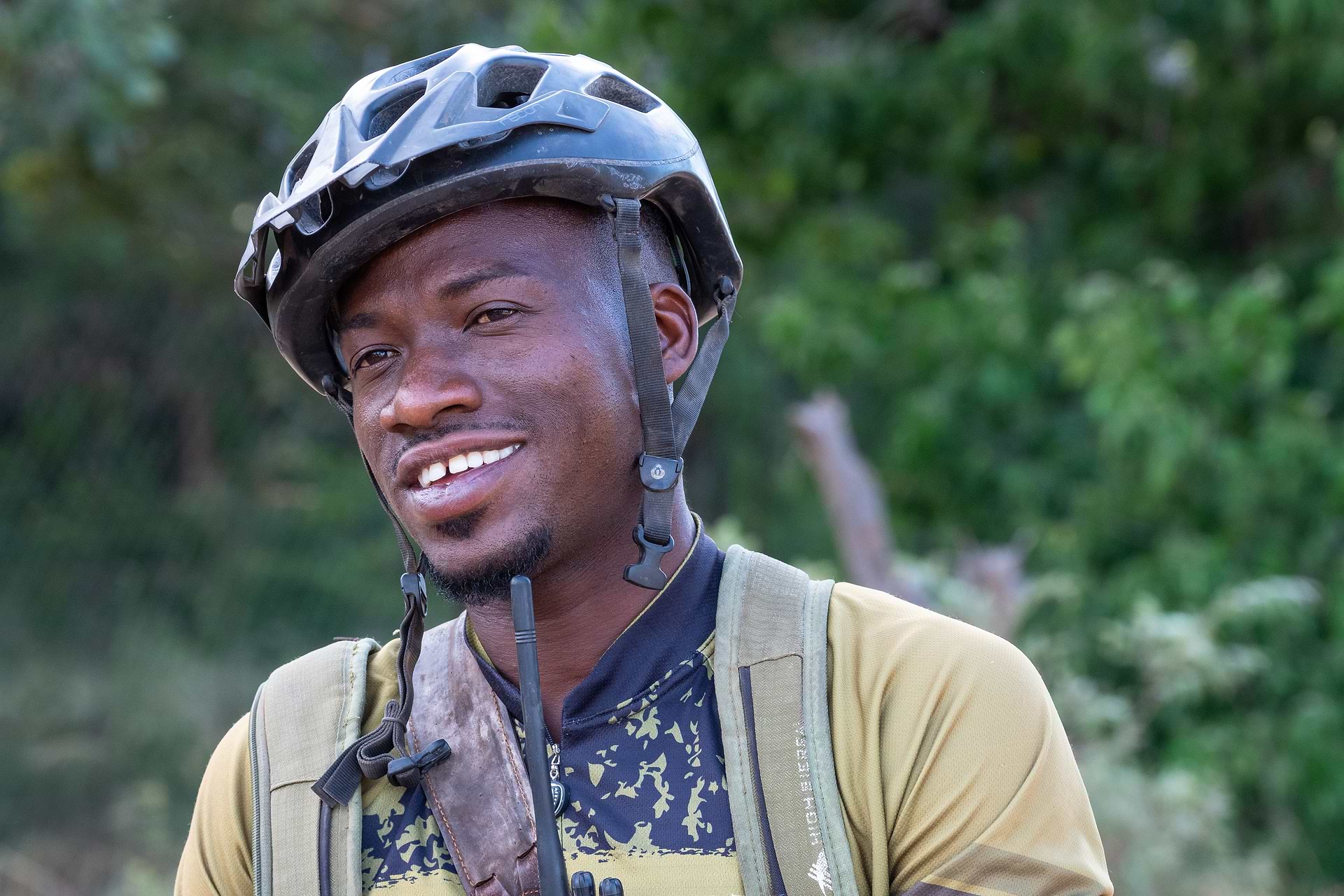
Kgosi Johan (Joe) Rakumako is credited as one of Botswana’s mountain bike pioneers.
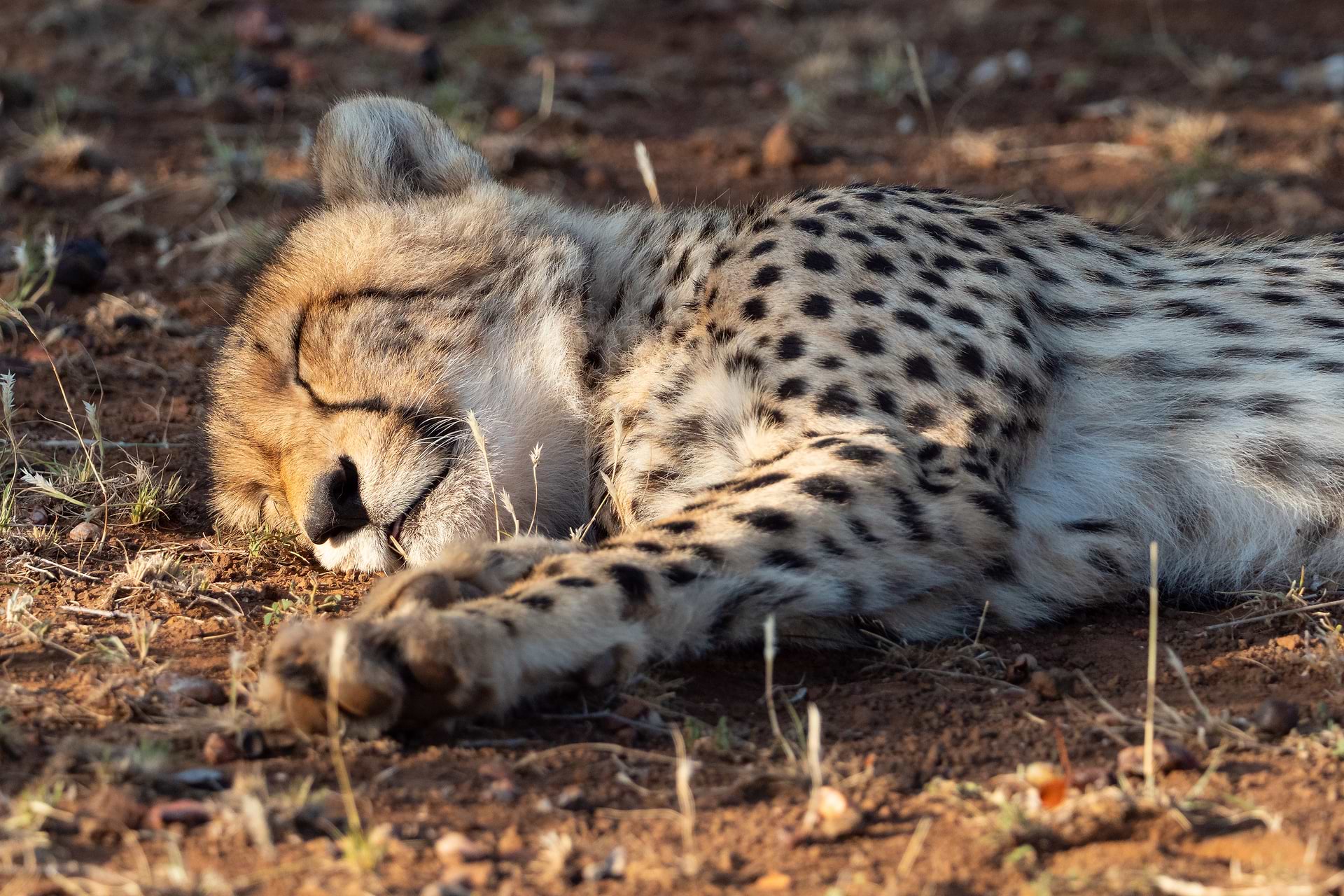
A cute lion cub is resting in the evening sun.
Kgosi Johan (Joe) Rakumako is credited as one of Botswana’s mountain bike pioneers.
A cute lion cub is resting in the evening sun.
and quickly foresaw the potential for a unique safari experience for adventurous and fit clientele. “Mountain biking has meant everything to me,” he says. “I have achieved much success and good health from riding.” Rakumako began bike guiding at Mashatu and has never looked back.
There are many advantages to mountain bikes over traditional jeep-based safari options. “It can be expensive to start a guiding company buying an aluminum land cruiser and all the camp supplies and maintenance costs,” says Rakumako. Bikes provide a more accessible entry point for local entrepreneurs, and as a result, he has mentored most of Botswana’s bike guides, including our guide Mario.
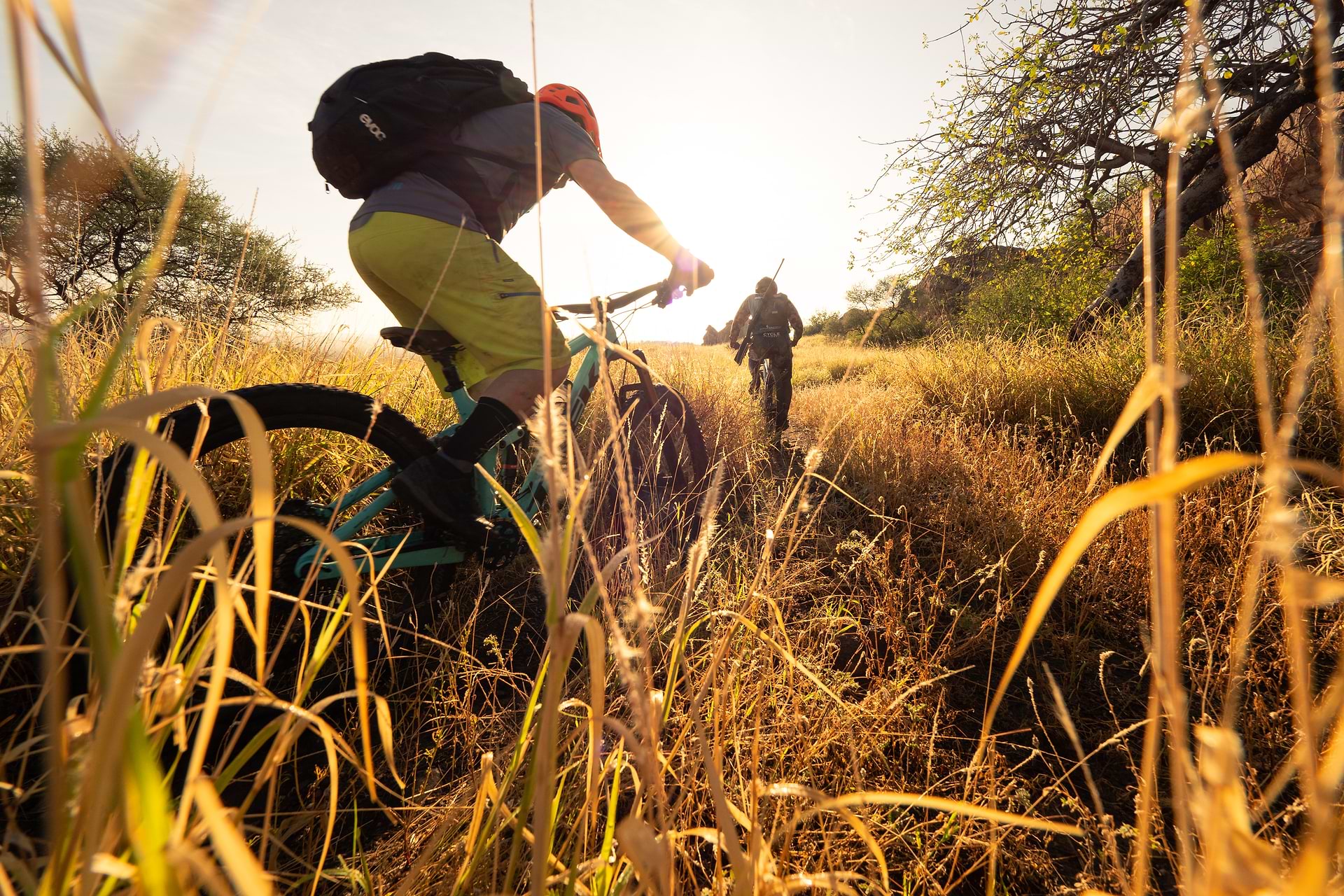
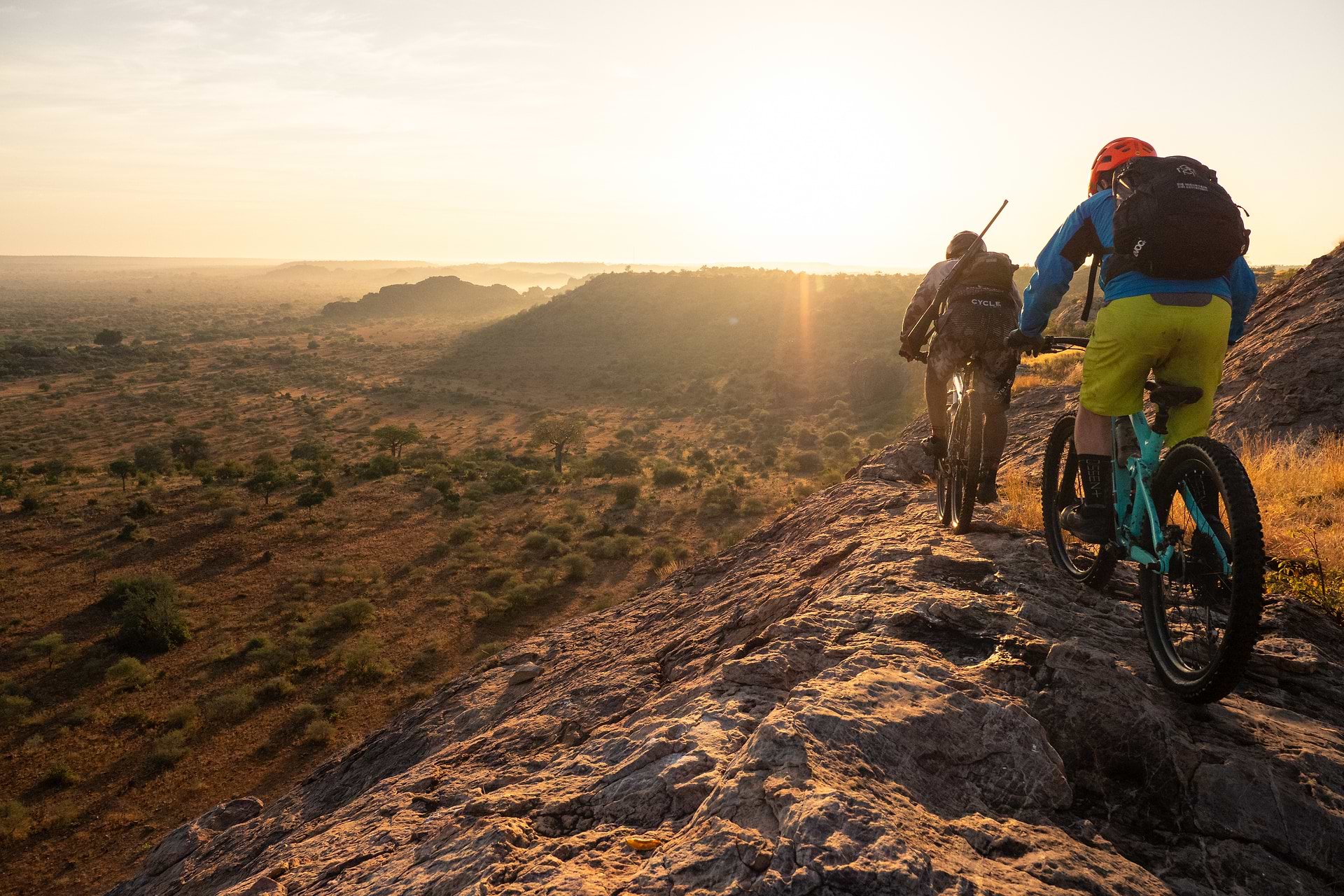
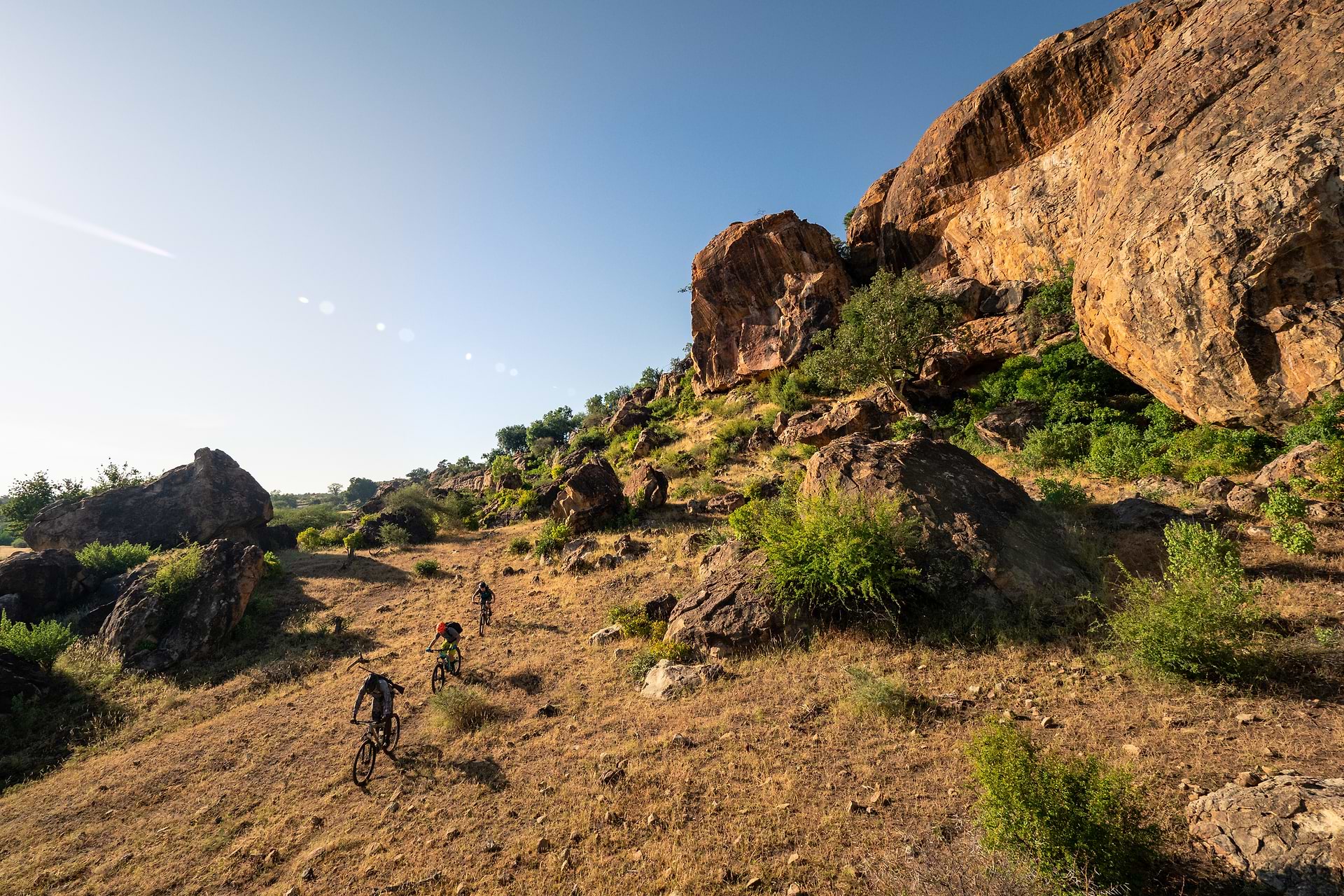
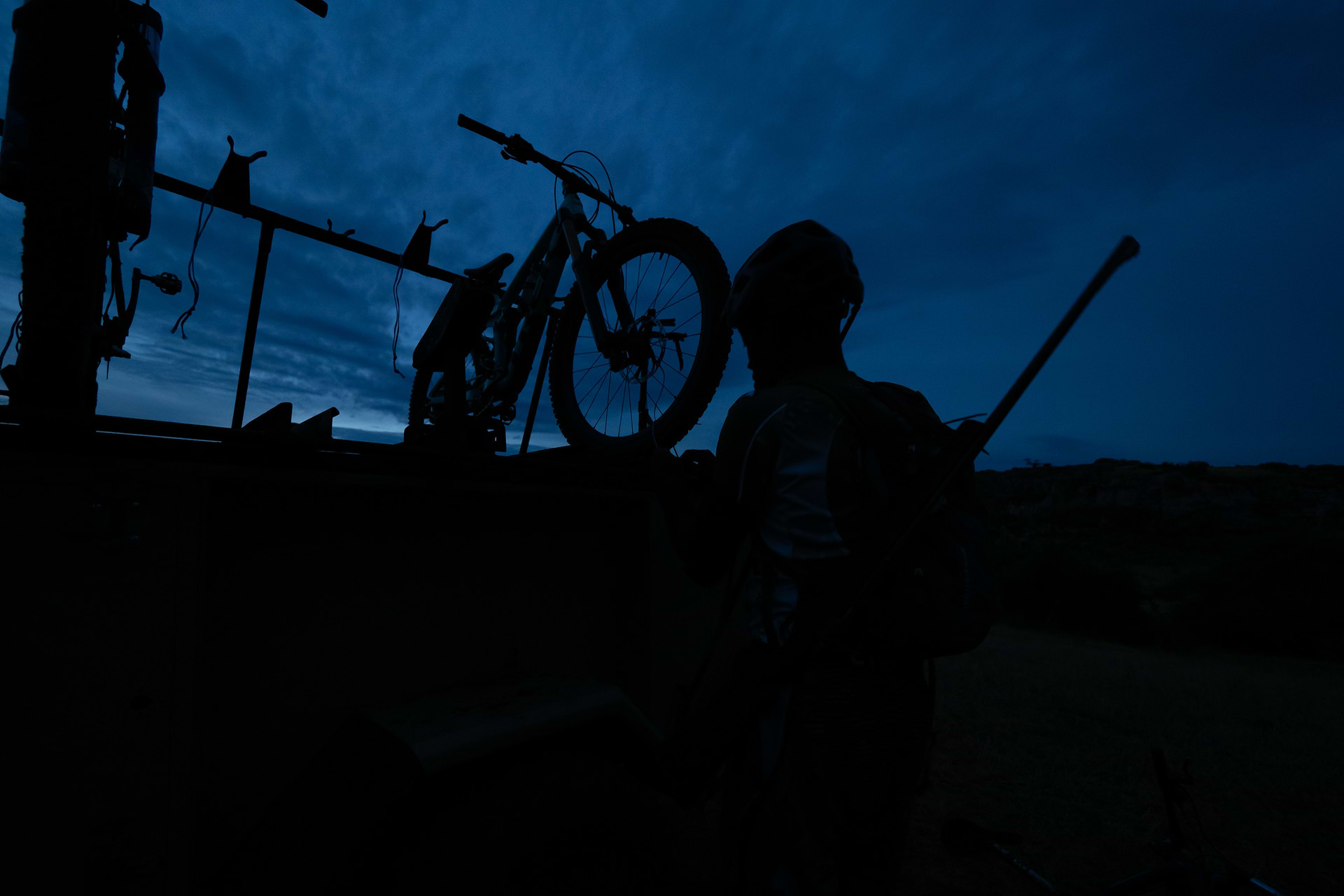
grew up in the wildlife paradise of the Okavango Delta and had been guiding in Mashatu since his early 20s. Beginning as a wildlife spotter, Ketshephamang advanced his skills, passing guiding exams in wildlife behaviour, wilderness safety, bush navigation and shooting. He has worked as a jeep driver and canoe guide, and the transition to mountain bike guiding six years ago has been his favourite incarnation to date. He loves the ability to cover ground, the exercise, and the unique interaction with wildlife. But the ever-present rifle slung over his back speaks to the potential dangers of the bike over traditional jeep safaris.
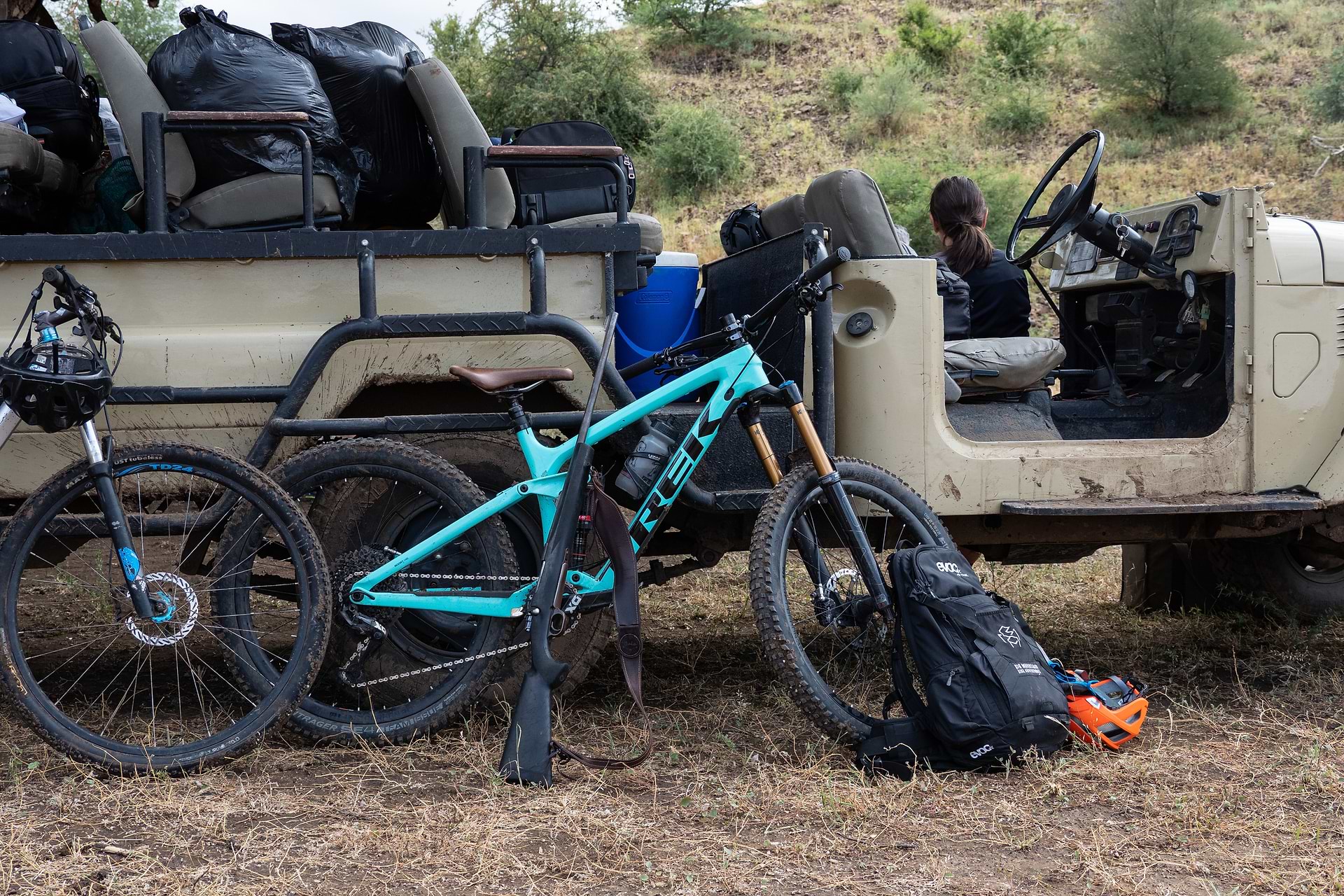
While pedalling through tall grass a few years ago, he startled a lioness with two cubs. In the split second of the encounter, there wasn’t time for him to unsling his rifle; all he could do was jump off his bike and hold it out in front of him as protection, yelling at the top of his lungs. The female lion retreated with her cubs, and Ketshephamang escaped with barely a scratch. But contrary to popular belief, lions are not the most dangerous animal to encounter while on two wheels.
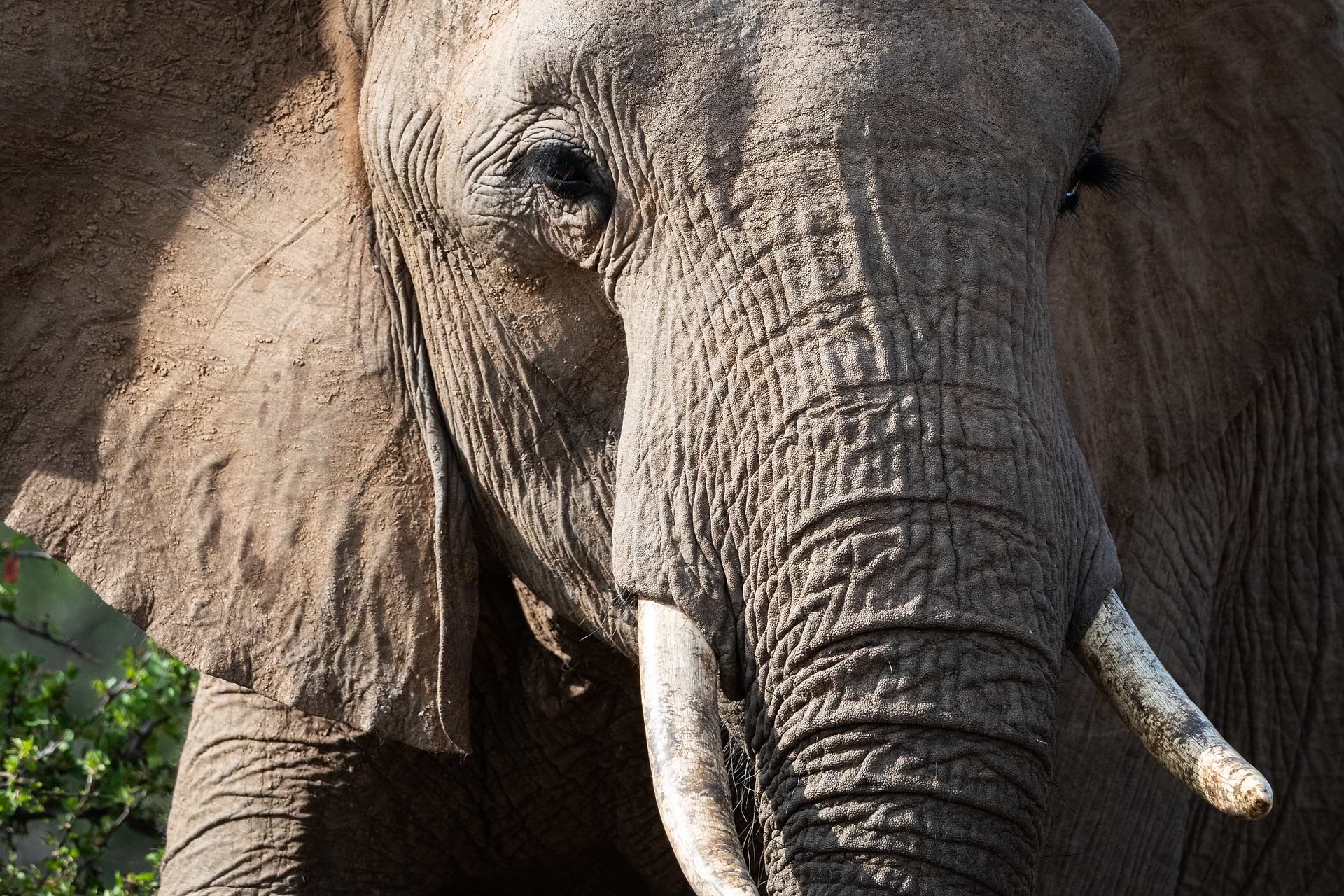
That honour goes to bull elephants, who are very protective of their herds. When Ketshephamang encountered two large bulls in a thick bush, he needed to act quickly again. Elephants avoid steep slopes, so he decisively ordered his group to run down the bank of a nearby river behind a large log Crisis averted once again. I now understood why he had been so cautious when encountering a herd of elephants in thick brush earlier in the day.
we heard the unmistakable haunting cackles of hyenas — unnervingly close. Ketshephamang shined his flashlight to illuminate half a dozen of these wolf-like beasts just behind our tent but reassured us that they wouldn’t bother us tasty humans behind the thin canvas walls of our tent. This wasn’t easy to believe, but it was also why we were here — to get up close and personal with Africa.
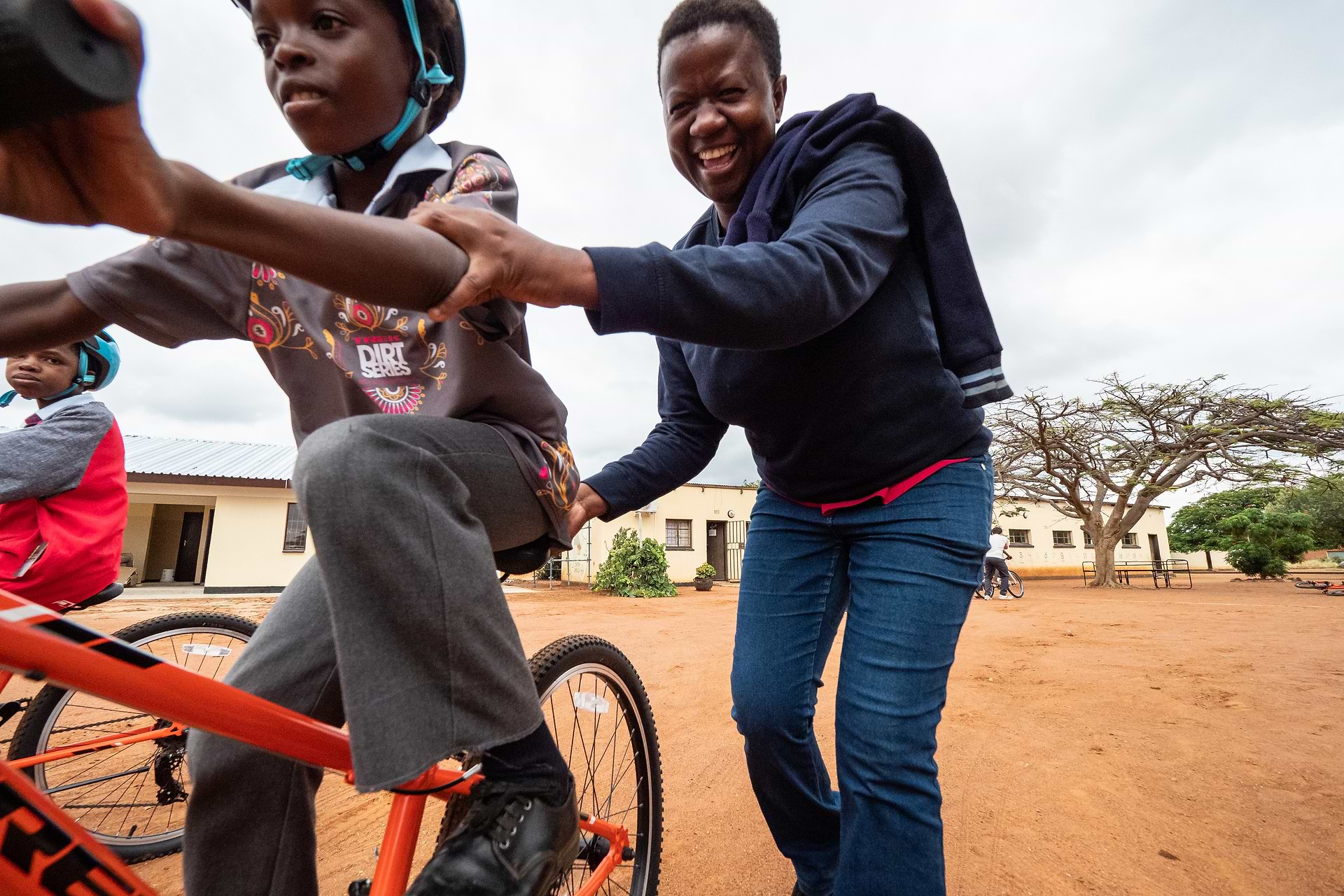
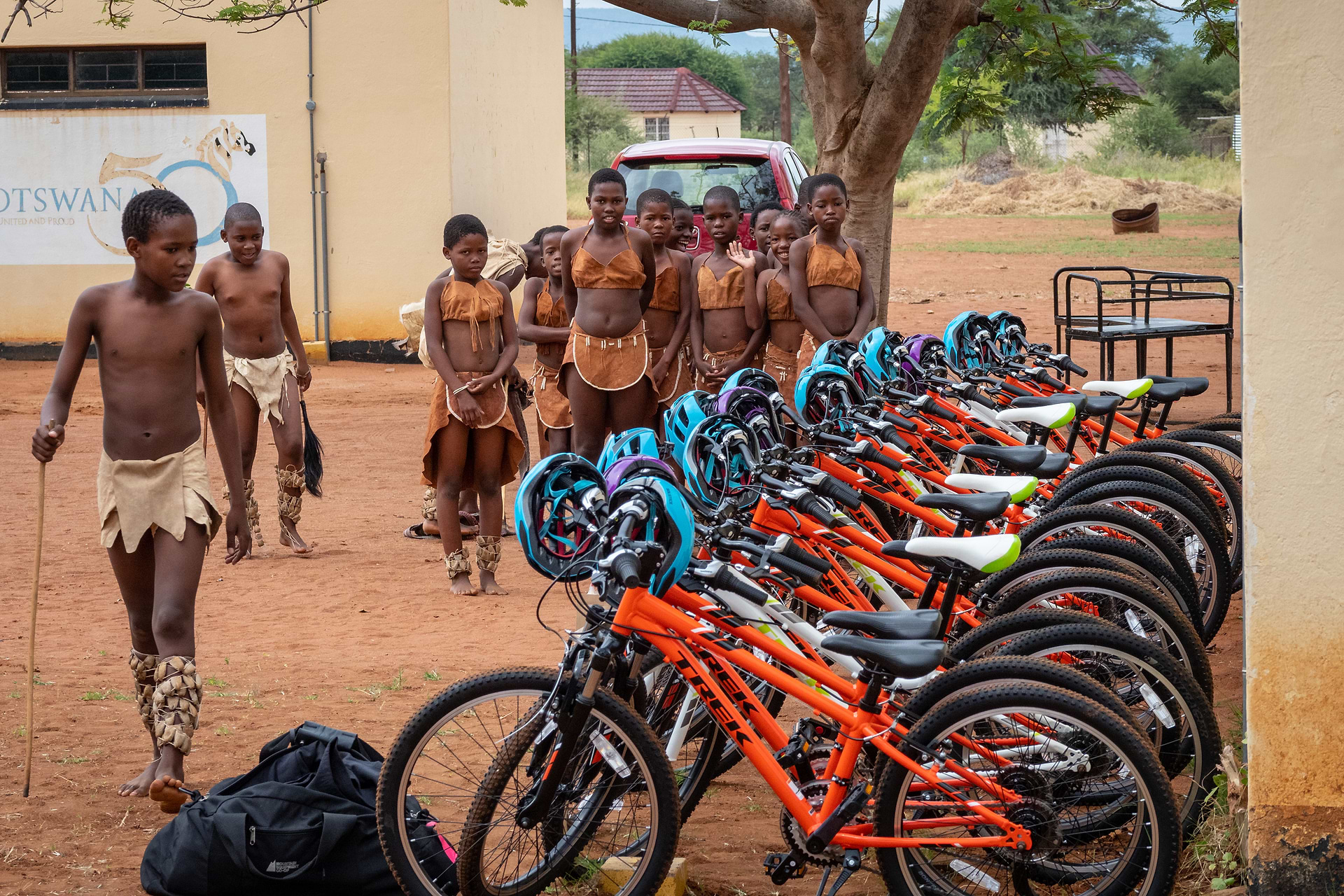
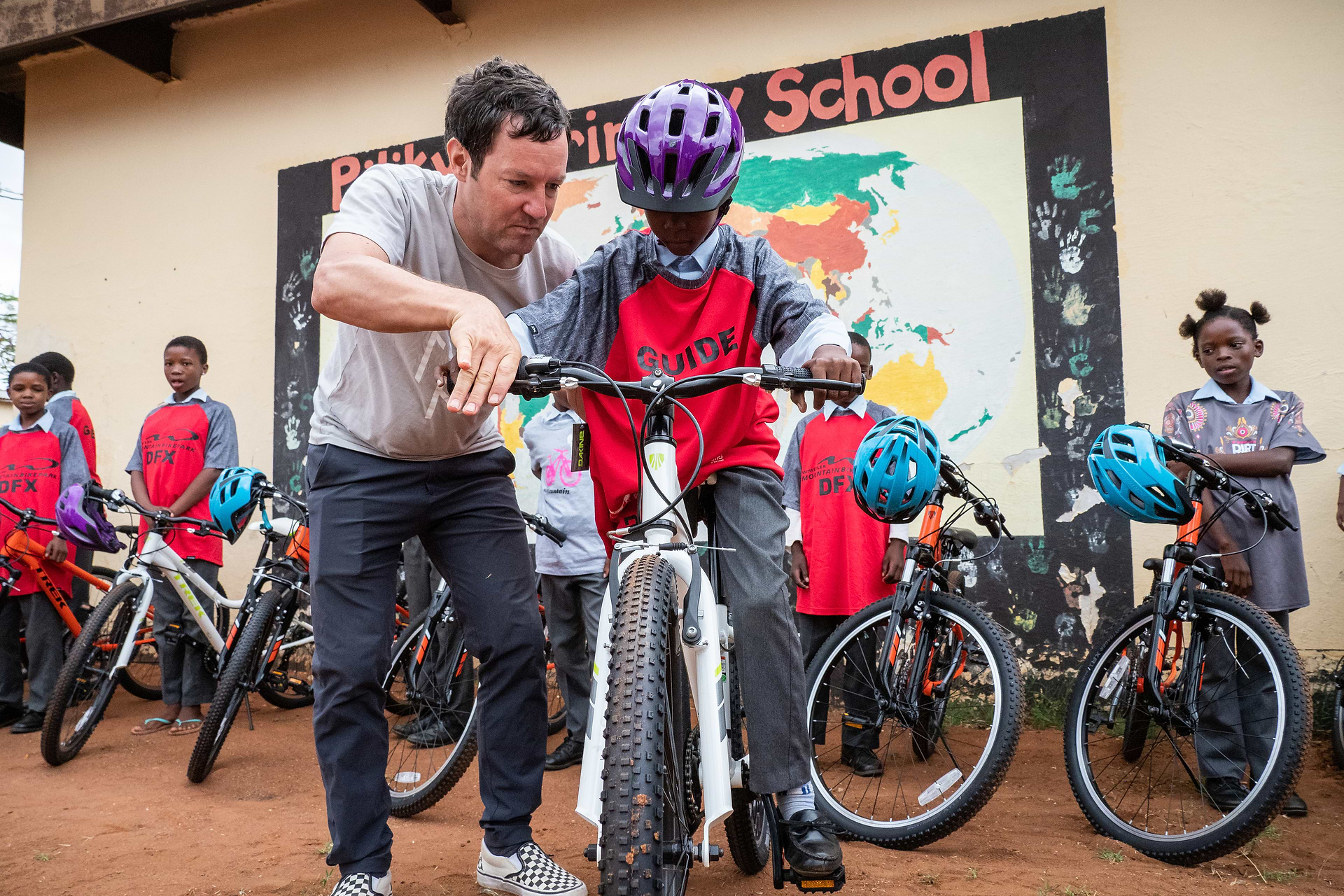
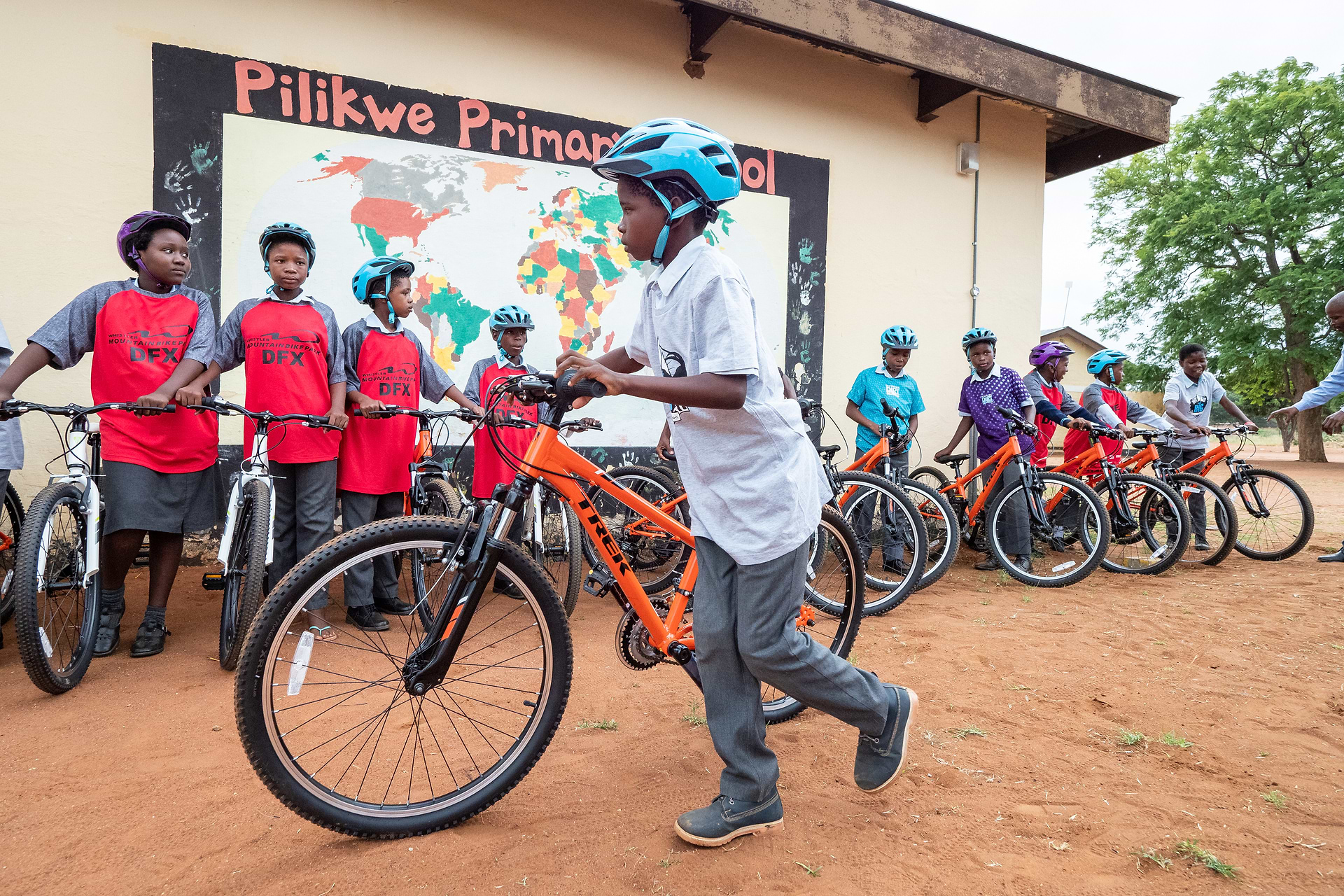
Back to Joe Rakumako. Recently, he took on his traditional role of hereditary chief of Pilikwe Village and passed the guiding torch to his mentees, but his influence remains strong. Pilikwe is equipped with a dozen shiny, modern mountain bikes for the local school through Pinkbike’s Share the Ride program and Canada-based Big Mountain Bike Adventures. Rakumako has also set up a skills camp to get local youth interested in mountain biking and guiding. As cars gradually replace bikes, he wants to remove the stigma of riding bikes as a lower-class form of transportation, instilling the joy of riding in the next generation. Female inclusion is high on his priority list, and Rakumako dreams of one day seeing an Olympic mountain bike athlete emerge from Botswana.
BEN HAGGAR With three generations in Kodak, Ben came to photography at an early age. He strives to tell purposeful, entertaining stories combining adventure and environmental stewardship. When he isn’t mountain biking or surfing at home in British Columbia, Ben works as a Polar Guide hanging out with penguins and polar bears or is searching out type 2 experiences in places that are hard to pronounce.
BEN HAGGAR With three generations in Kodak, Ben came to photography at an early age. He strives to tell purposeful, entertaining stories combining adventure and environmental stewardship. When he isn’t mountain biking or surfing at home in British Columbia, Ben works as a Polar Guide hanging out with penguins and polar bears or is searching out type 2 experiences in places that are hard to pronounce.
RELATED STORIES