An Analog Approach to Global Ski Culture
Kari Medig captures skiing like nobody else
Framed
Photos by: Kari Medig
Words by: Matthew Tufts
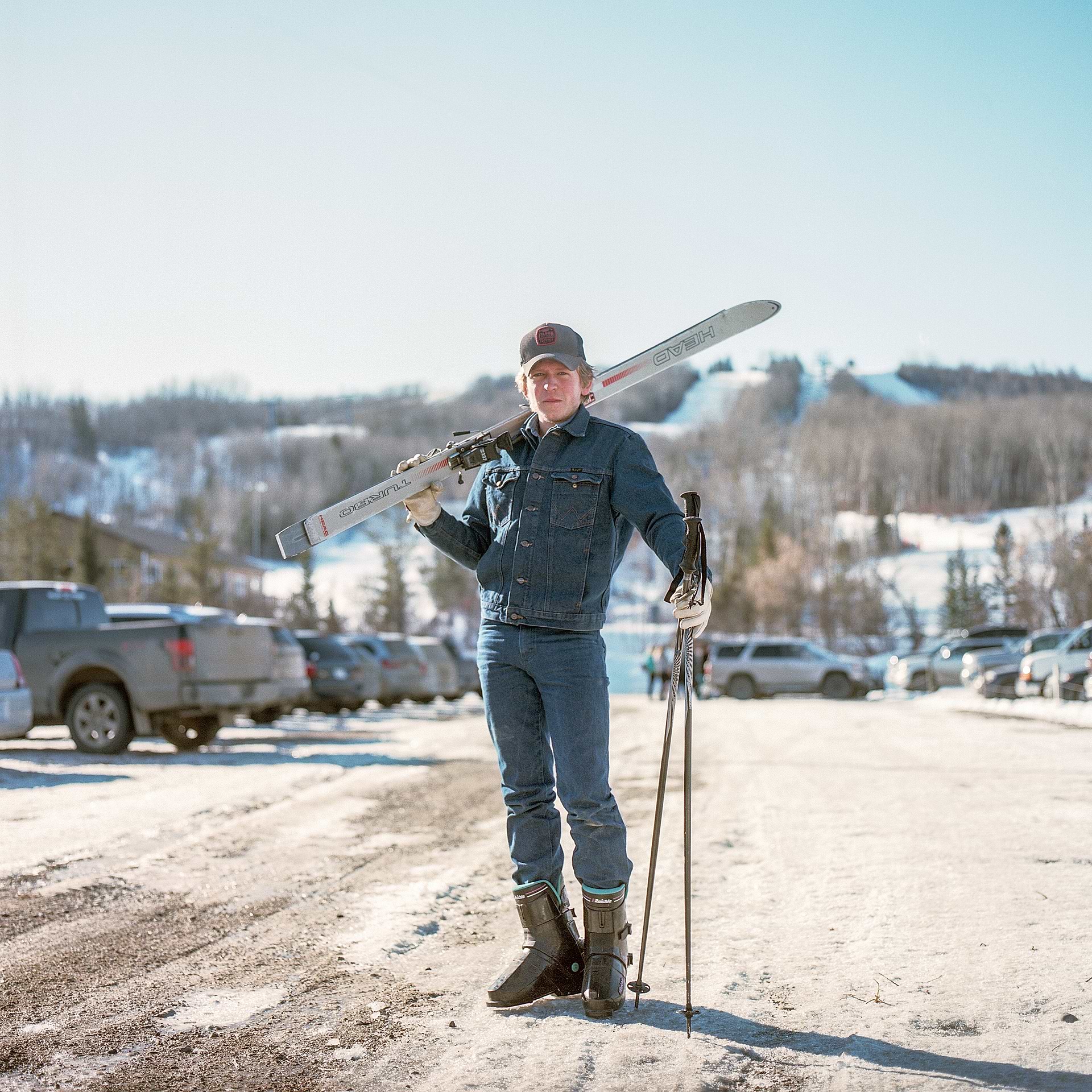
I met 19-year-old Eric Yllioja, a feedlot worker from Outlook, Saskatchewan, in the parking lot at Table Mountain Regional Park Ski Area while working on a story about skiing on the Canadian prairies. When I asked him what he liked about skiing, he said, “I don’t know, just going fast and hitting jumps.” This is one of my favourite photos in recent years because it shows what prairie skiing is all about. Eric was a quintessential prairie character, friendly, unpretentious and skiing in a denim outfit on a warm spring day without trying to be ironic.
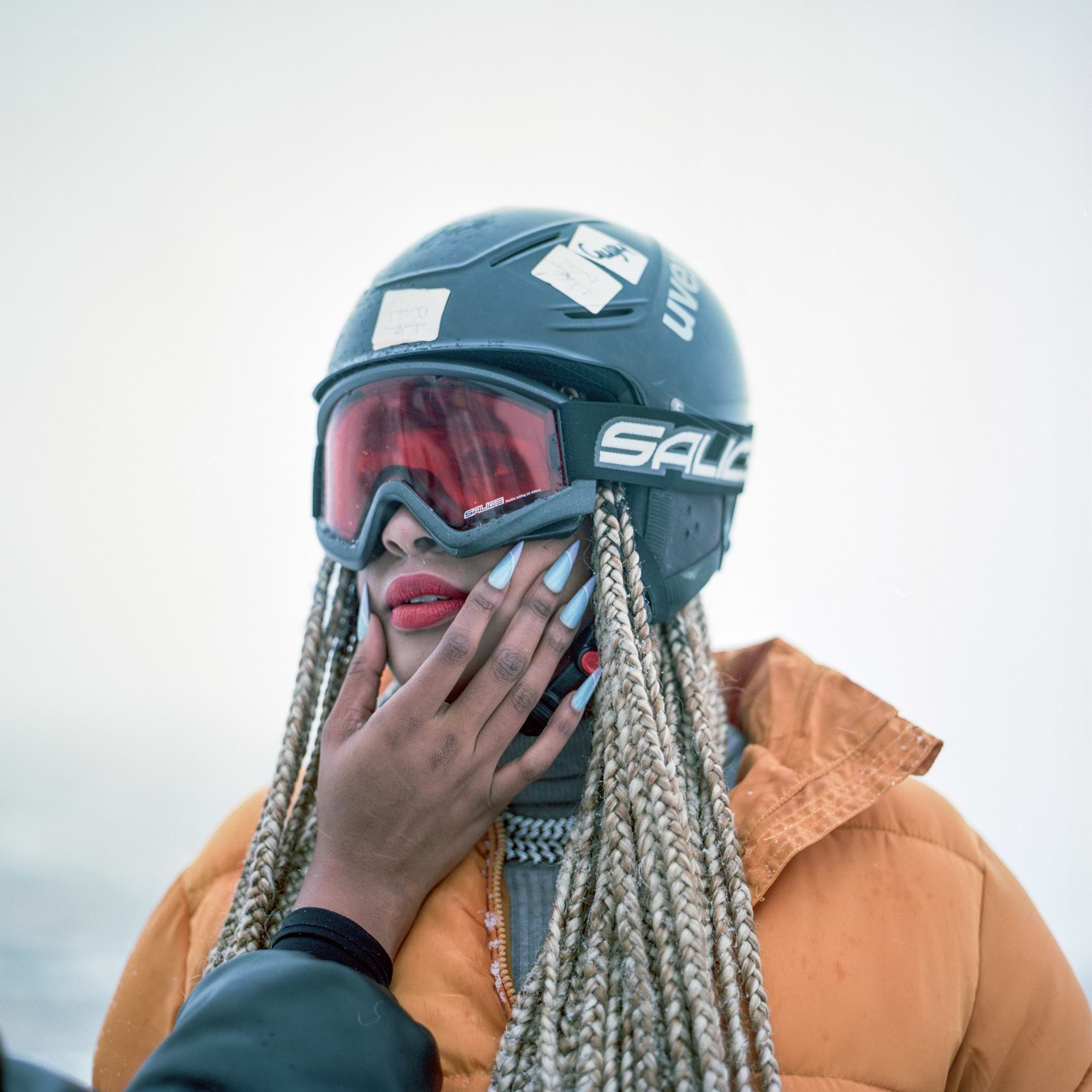
While on assignment for Outside Magazine, high in the Maluti Mountains of Lesotho, Africa, I found myself at the tiny ski hill called Afriski. My vision was to shoot the dry, snowless landscape with a narrow strip of machine-made snow down the middle. Of course, I was the only disappointed when it snowed 40 centimetres overnight… I found a group of South Africans skiing for the first time and asked if I could join them to take a few pictures. As I lined up a portrait of this young woman, her friend reached to fix her makeup.
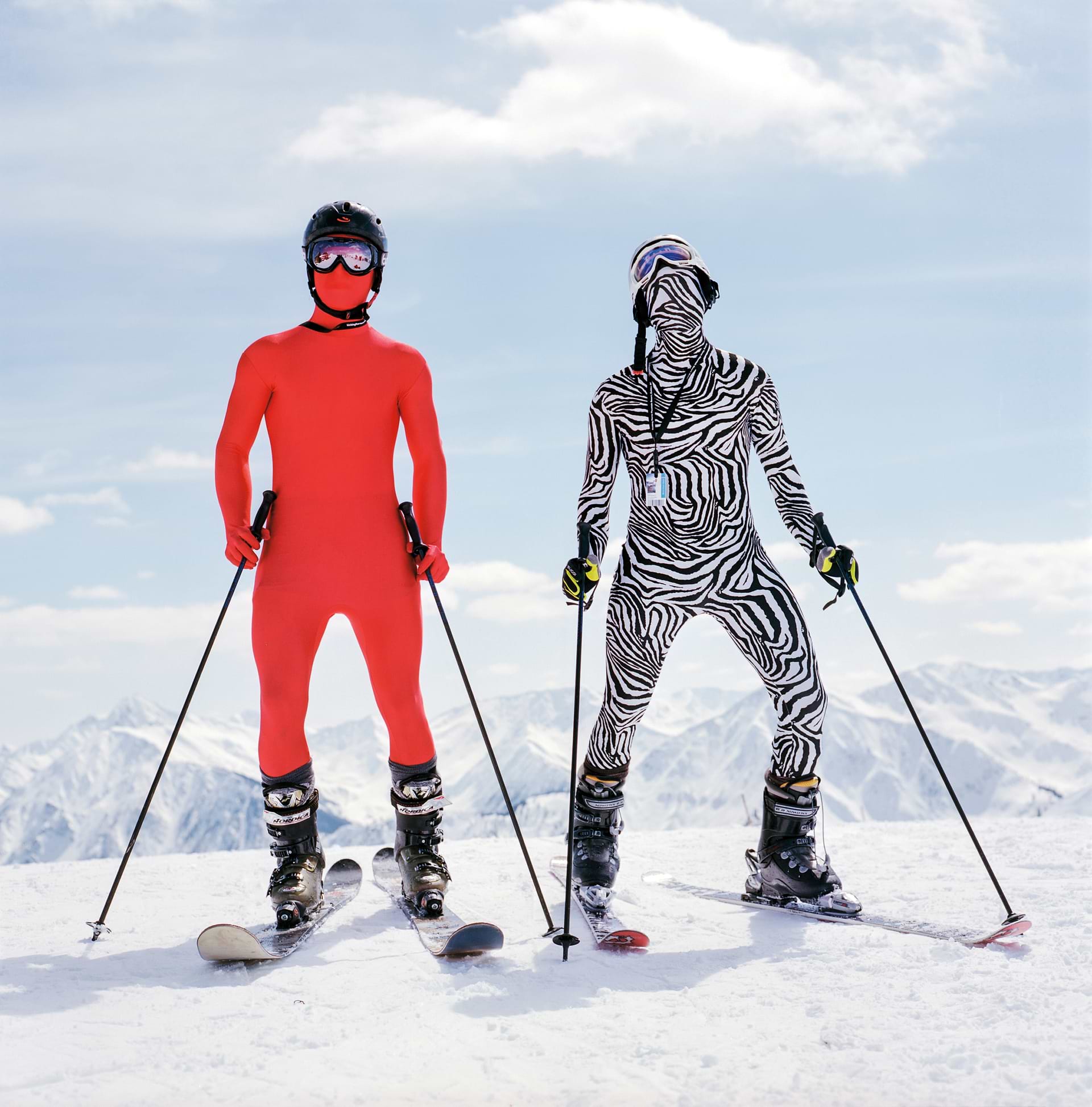
This photo is from an assignment for Air Canada’s enRoute Magazine at Kicking Horse Mountain in Golden, British Columbia. It was the era when “Green Men” were all the rage at Vancouver Canucks hockey games, and these guys were wearing variations of those suits. I got a couple of portraits, and enRoute chose a similar photo for their cover because it captured their desire for quirky, unorthodox images.
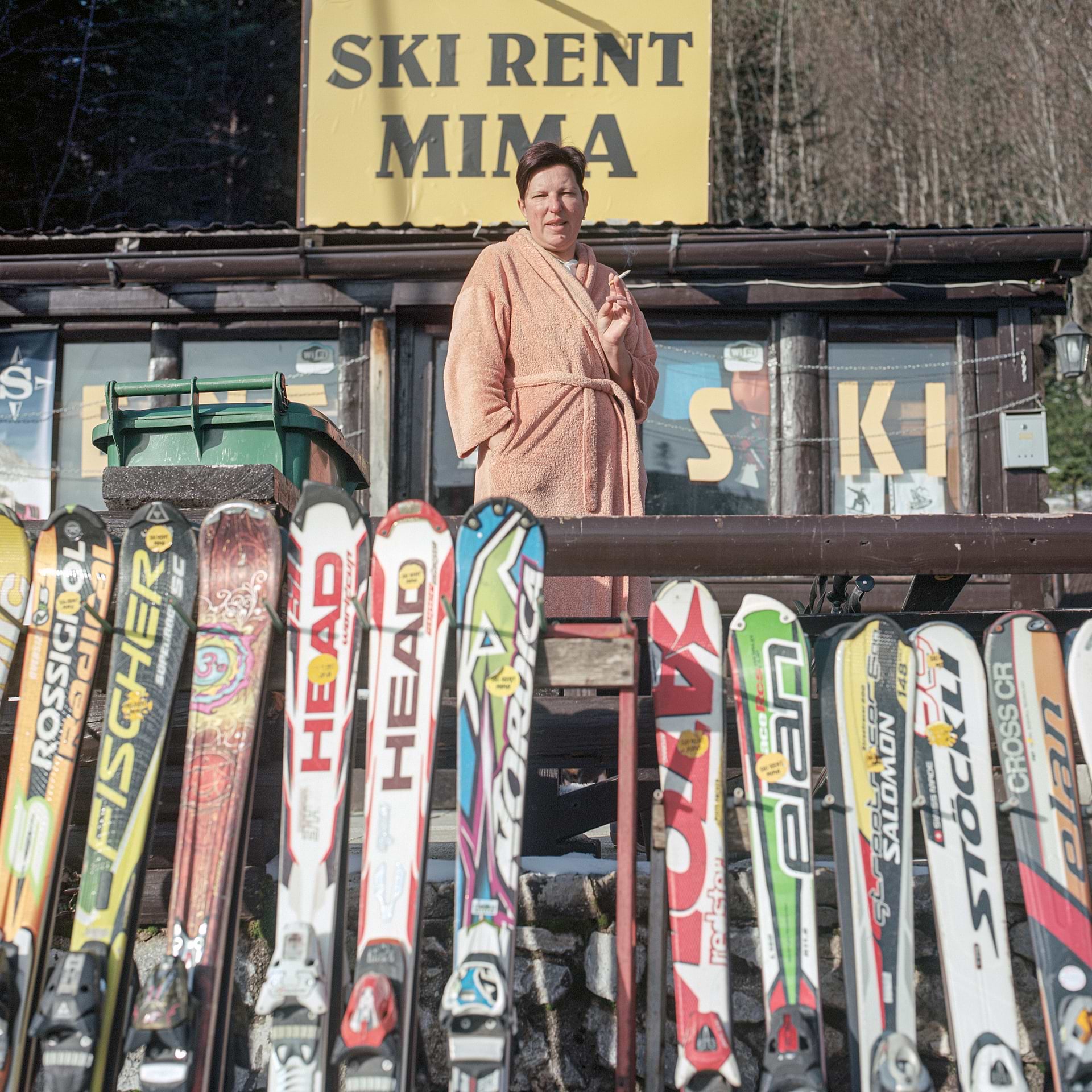
During my last day in Bosnia and Herzegovina, I wanted to sneak in a couple more hours of skiing in Bjelašnica. Unfortunately, I had experienced a bit of a photo block on the trip and was hoping I could at least get one solid frame before hopping on the plane back to Western Europe. I rented skis at this little shop, and the owner came out looking like this, so I immediately asked to photograph her portrait. She said yes but wanted to change clothes first. I insisted, “This is much more interesting!”. Surprisingly, she agreed — posing for this photo.
The process takes about two minutes,
from when Kari Medig pulls out his 1977 Hasselblad 500C to when the shutter clicks. He deftly navigates the manual focus of the medium format camera using a waist-level viewfinder, allowing him to maintain good eye contact with his subject. Medig is patient. He always asks his subject for a neutral expression — not a smile — and waits for the moment they let down their guard. Something about the analog camera and the 50-year-old, lightly-greying father of a three-year-old feels complementary — the camera is an extension of Medig, not a shield between him and his subject.
His decision to often eschew digital cameras with large megapixel sensors and higher frame rates may partially explain the powerful intimacy that resonates when you view Medig’s work. His images make you stop to look more closely. You feel curious and slightly uncomfortable thinking, “This is different.” However, the arresting quality of his photographs is due to more than his choice of equipment.
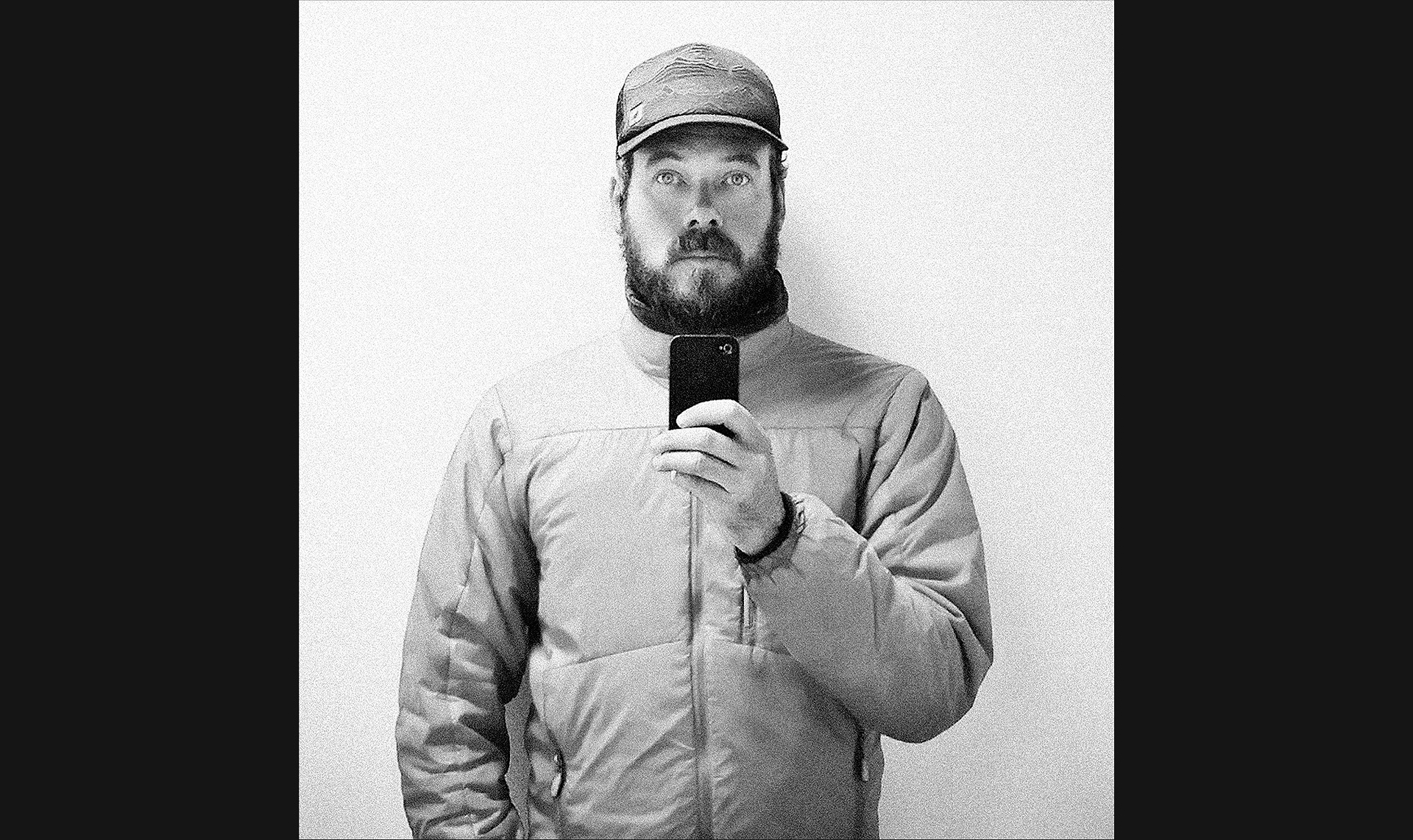
Medig’s unique vision and intentional approach became immediately evident when I met him at Whitewater Ski Area in his hometown of Nelson, BC — a stalwart of funky Kootenays ski culture, home to a bone-rattling washboard dirt road, a small yet world-renown cafeteria, and no lodging. Though the slopes of Whitewater are blessed with famous Kootenay cold smoke for much of the winter, Medig’s favourite canvas is the slushy parking lot below, with its assortment of old campers, new trucks, tired children, energetic dogs, Kootenay locals and eclectic visitors.
Fresh out of photography school, Medig apprenticed under Rick Collins, a multi-year winner of the Canadian News Photographer of the Year award, at a small newspaper in Chilliwack, BC. He was told to “shoot pictures, not film,” and learned the importance of visual storytelling.
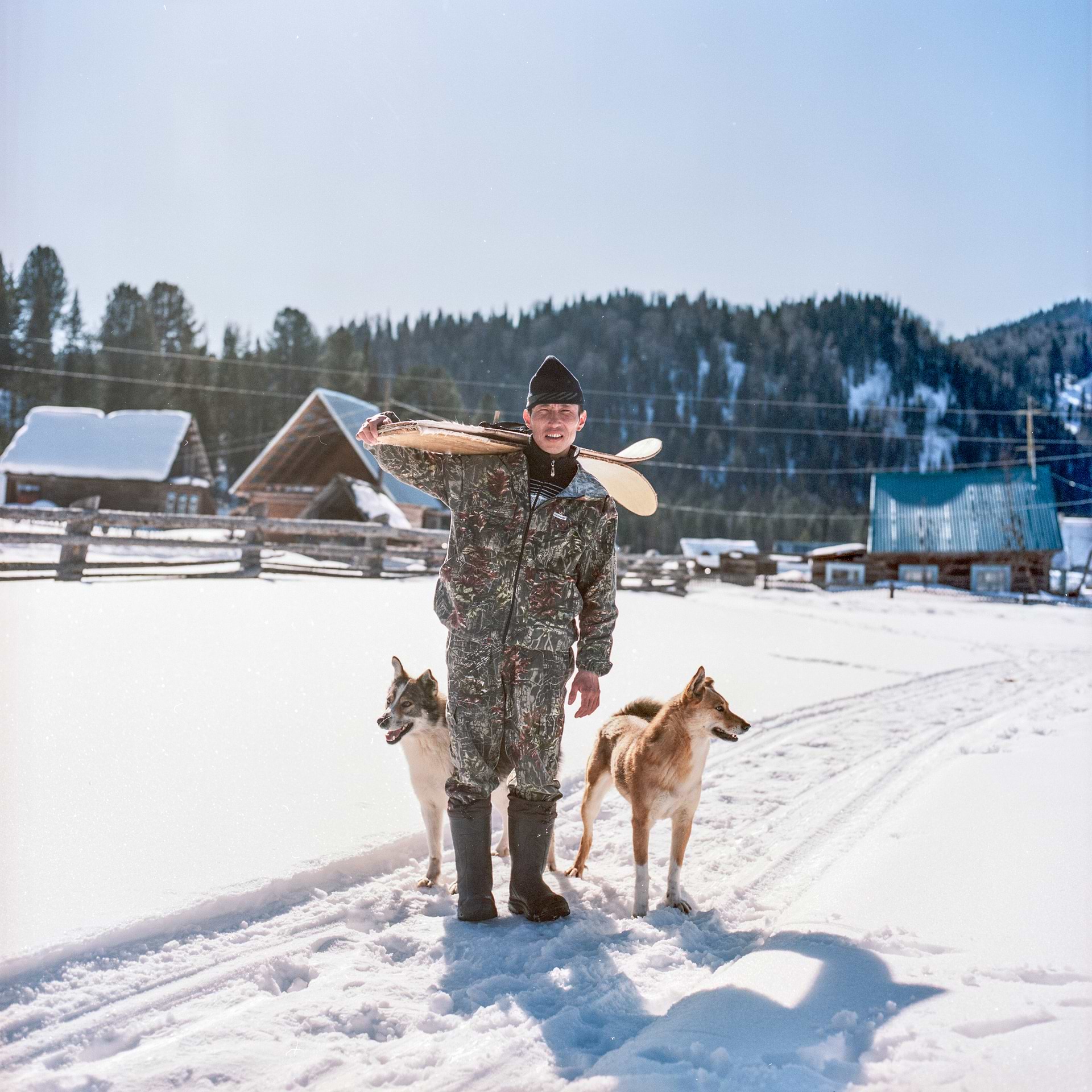
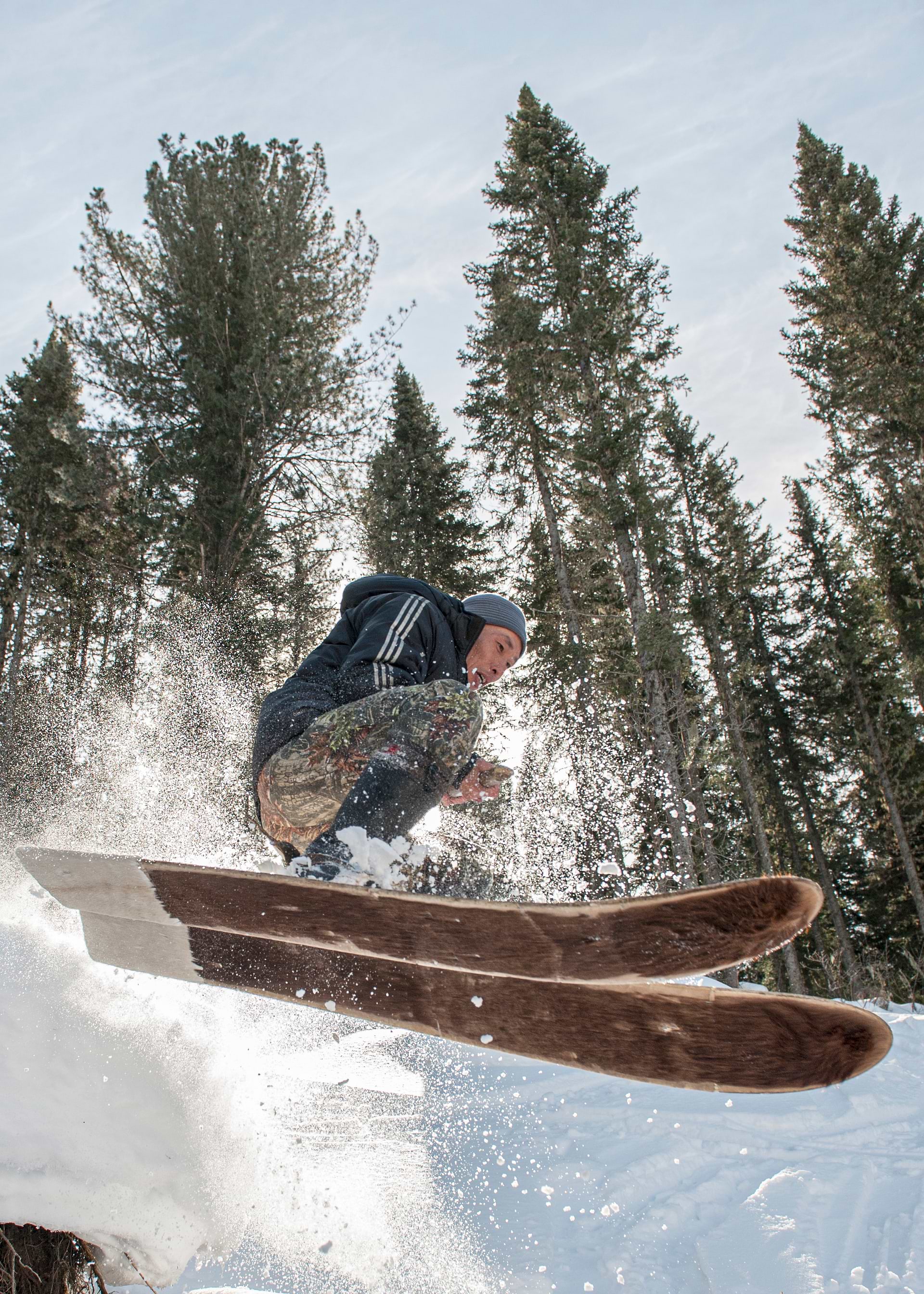
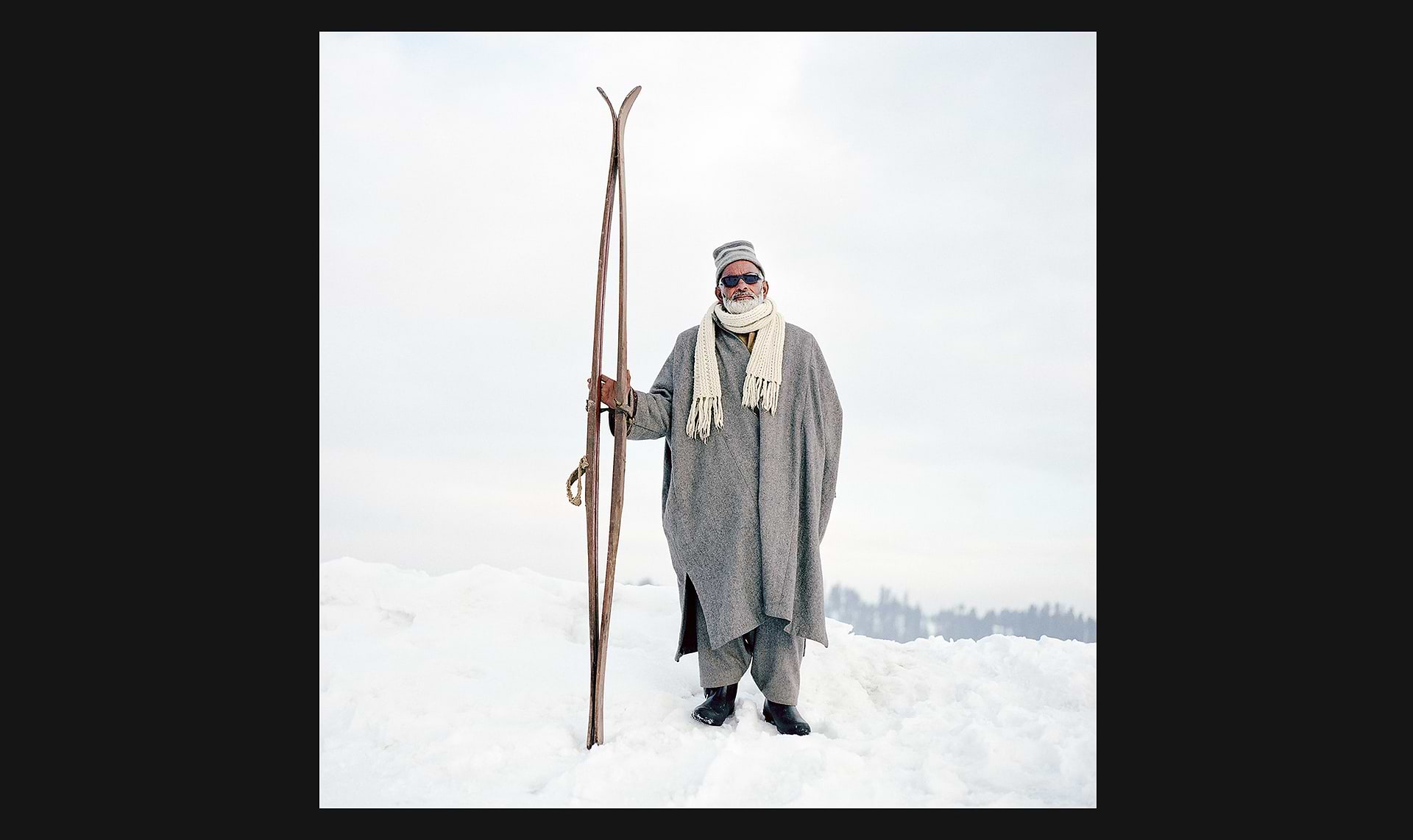
Years later, this foundation proved critical during his first ski assignment for SBC Skier Magazine in Kashmir, on the crenellated northern fringe of India. Medig and a crew of athletes were shooting at a new ski area in Gulmarg when the lift broke down.
“I was standing at the bottom, like, ‘What am I going to do?’” Medig recalls. “And that’s when I turned my lens to the local skiers. It just opened my eyes — almost an epiphany. When I handed in those pictures, those shots resonated with the editors, elevating the story to give it a greater sense of the bigger picture. The context of skiing in Kashmir.”
Years later, this foundation proved critical during his first ski assignment for SBC Skier Magazine in Kashmir, on the crenellated northern fringe of India. Medig and a crew of athletes were shooting at a new ski area in Gulmarg when the lift broke down.
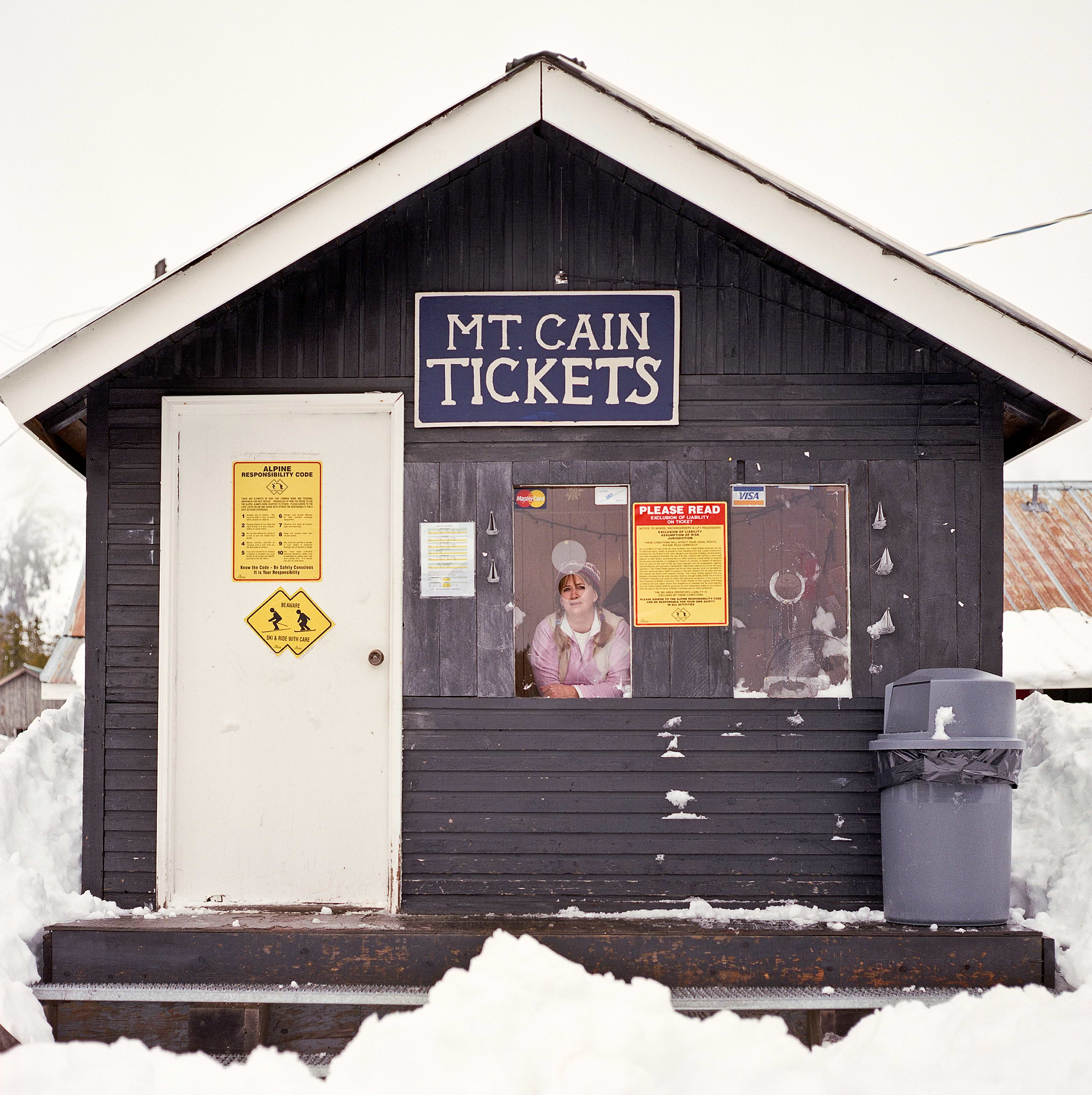
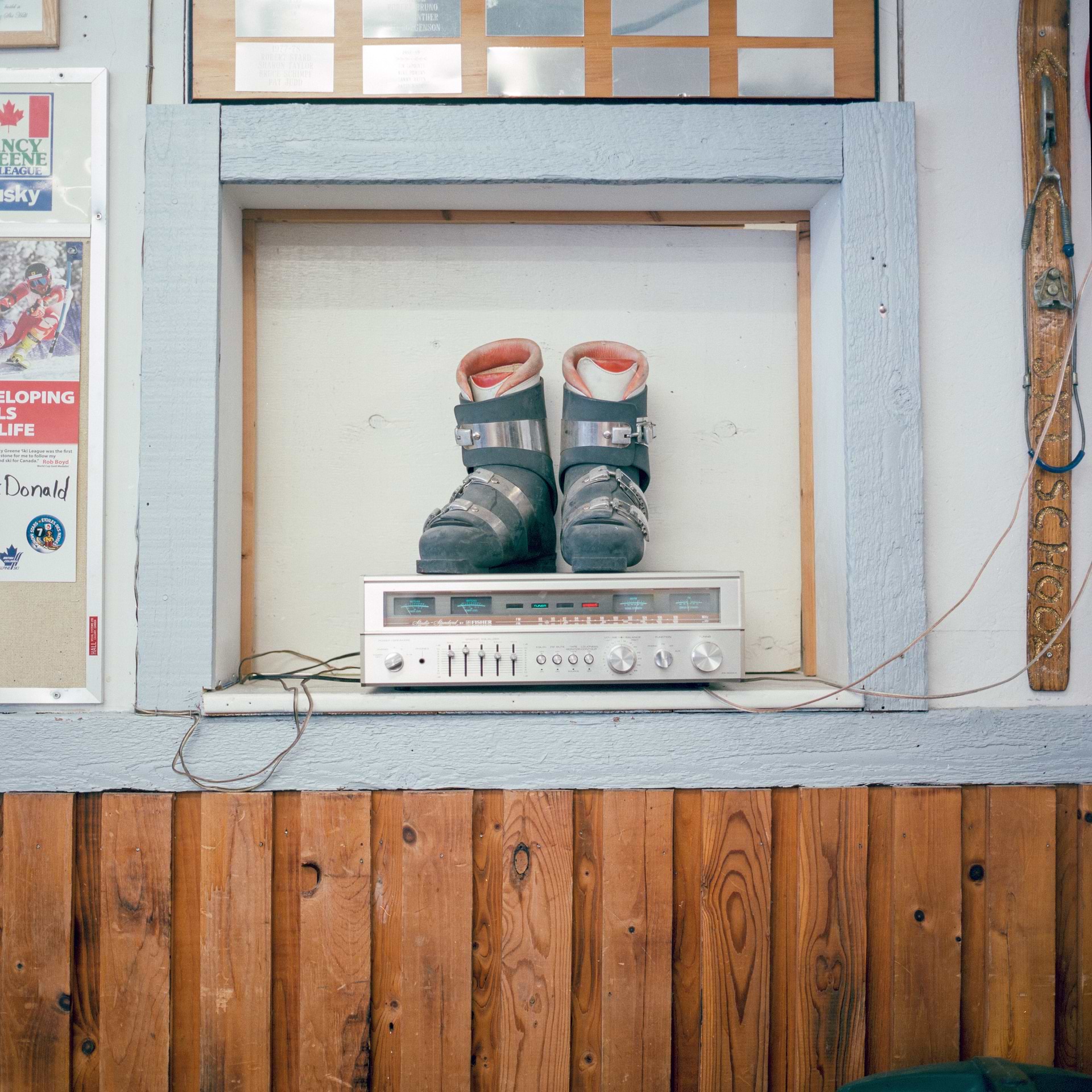
“I love the muted look, but also the slowness of it and how I need to think about what I'm shooting," says Medig. "It requires a lot more intention in the process of image-making.”
KARI MEDIG
Over the past few decades, Medig has documented cultural portraits of the global ski community from Central Asia to the Baltics to Korea in a poignant series, One Thousand Words for Snow. Portraiture, Medig explains, is one of the most challenging practices in photography, reliant on infinitesimal moments of vulnerability. “That moment where the [subject] relinquishes a slight bit of control — it’s what makes it special from one frame to the next.”
This unexpected window into the broader, more authentic world of ski culture has resonated with leading industry publications, including Powder, Forecast and SKI, which always seek to capture reader interest with something different. His tendency to turn his back on what is commonly seen as the accepted subject produces such unexpected images that Medig is also in high demand among publications significantly removed from the world of snowsports, including the Financial Times, National Geographic, and GQ.
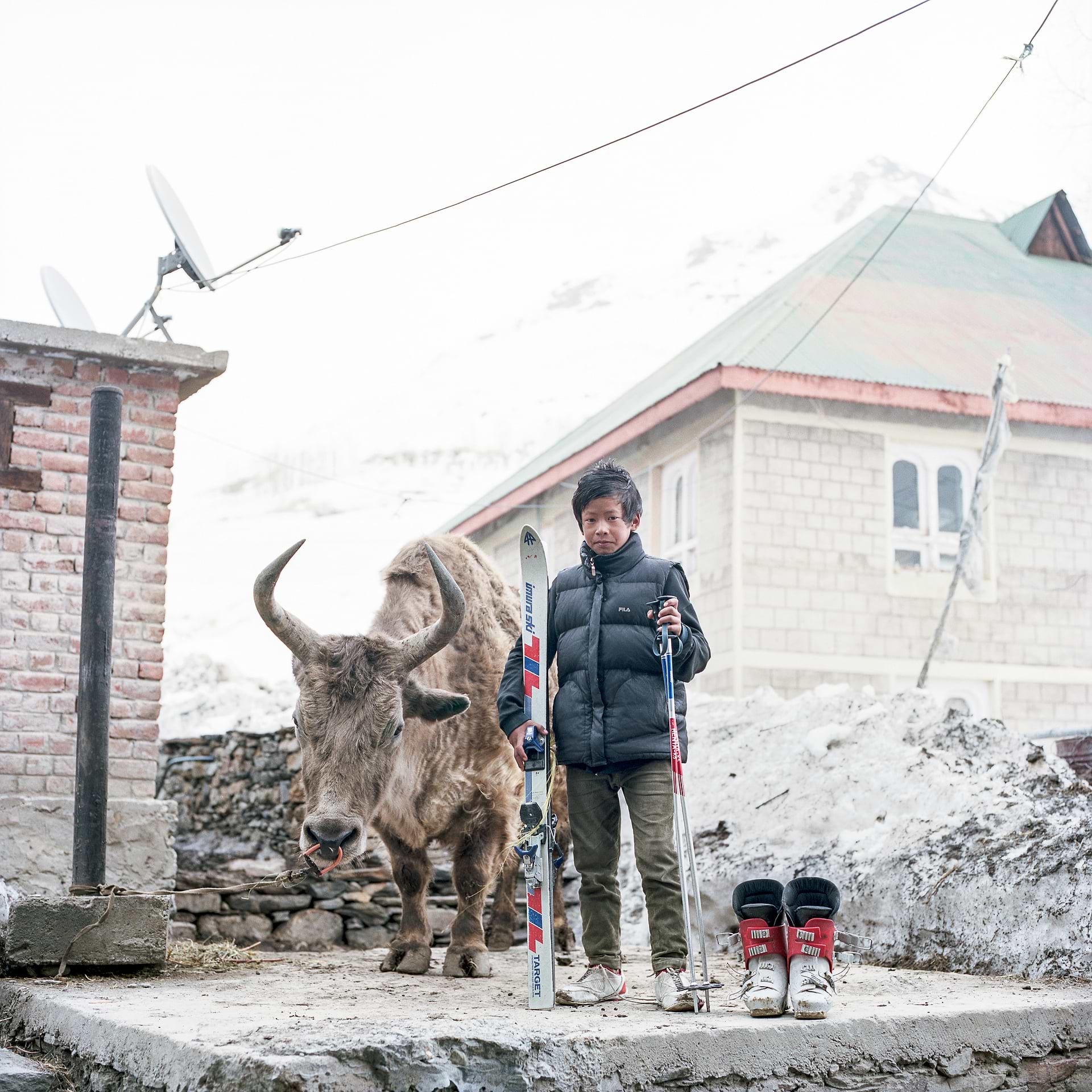
On a ski touring trip at Rohtang Pass, on the eastern end of the Pir Panjal Range of the Himalayas, my friends and I skied into the Lahaul Valley. Despite an avalanche hitting our truck, we eventually reached a small village called Sissu. Here, a group of young skiers spent their winter days climbing and skiing the small hills at the base of the tight valley surrounded by 6000-metre Himalayan giants. One young skier named Ricky posed with his family ox at the guesthouse where we were staying.
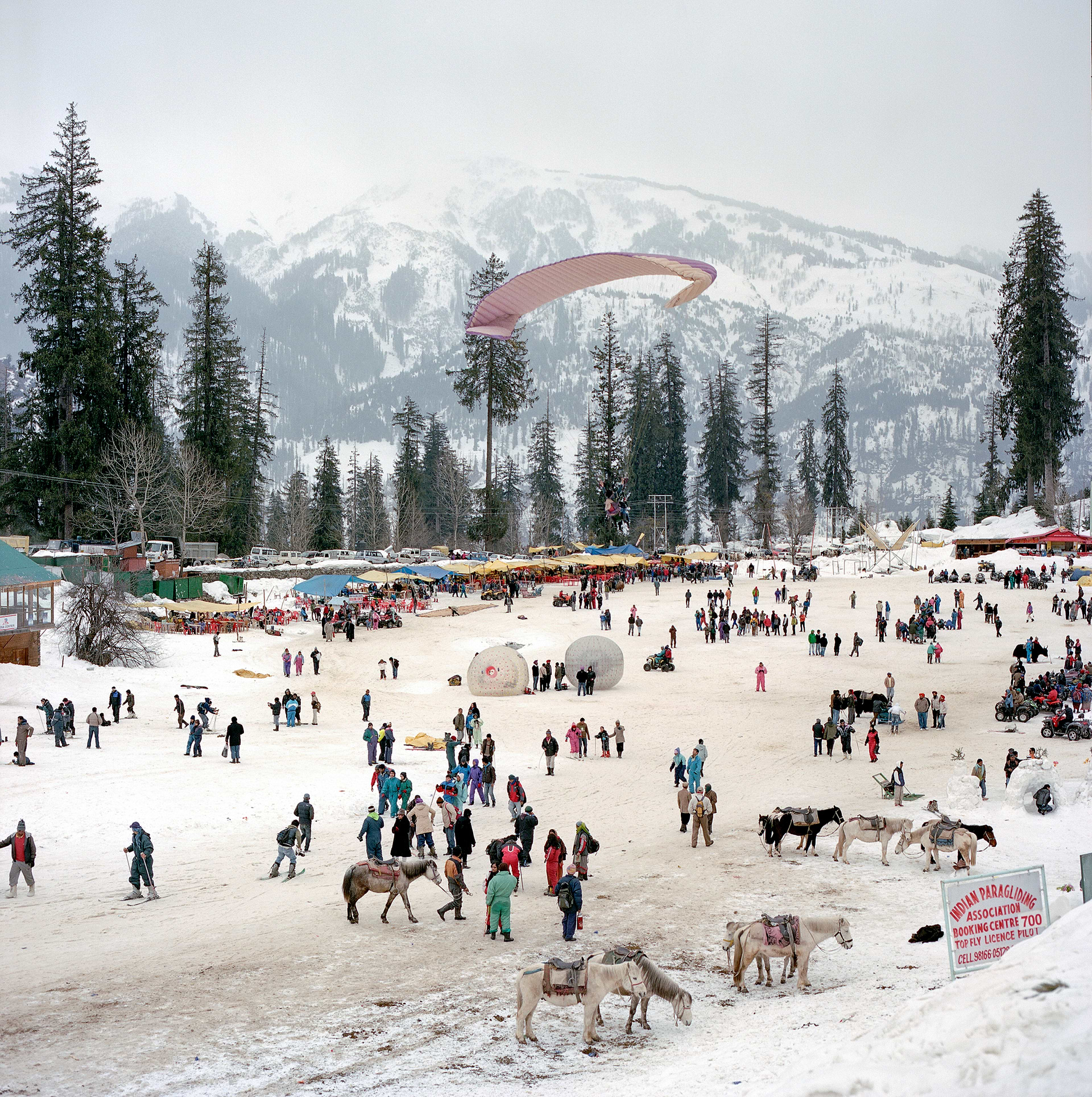
After finishing the ski touring trip at Rohtang Pass in the Indian Himalayas, I rented a motorcycle for the day. I went up the road past Manali to check out the small ski area called Solang Nala. It was the most chaotic—and wonderful—ski area I’ve ever visited. This image captures the intensity of all that is happening at the base of the ski hill.
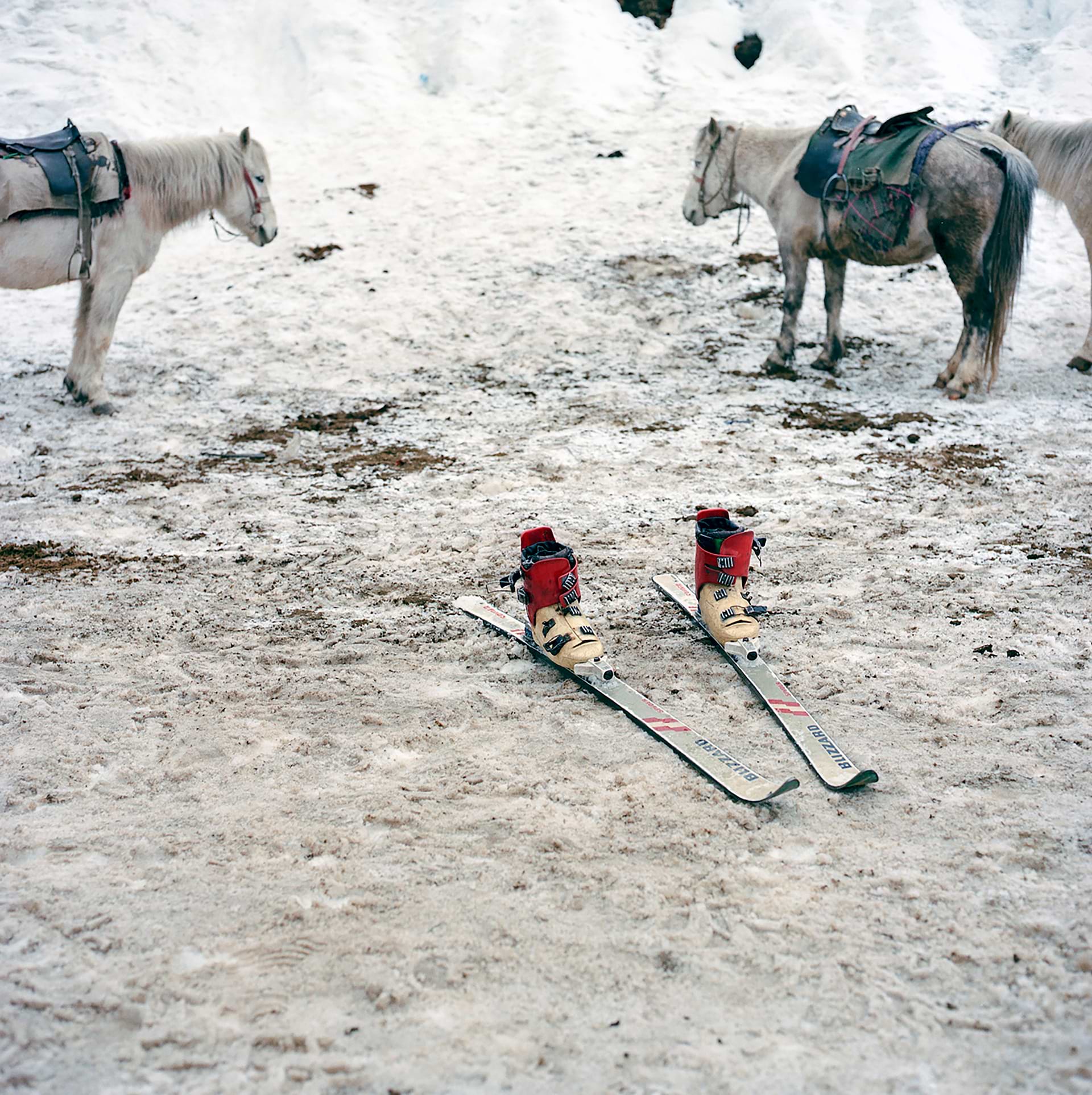
After finishing the ski touring trip at Rohtang Pass in the Indian Himalayas, I rented a motorcycle for the day. I went up the road past Manali to check out the small ski area called Solang Nala. It was the most chaotic—and wonderful—ski area I’ve ever visited. This image captures the intensity of all that is happening at the base of the ski hill.
On a ski touring trip at Rohtang Pass, on the eastern end of the Pir Panjal Range of the Himalayas, my friends and I skied into the Lahaul Valley. Despite an avalanche hitting our truck, we eventually reached a small village called Sissu. Here, a group of young skiers spent their winter days climbing and skiing the small hills at the base of the tight valley surrounded by 6000-metre Himalayan giants. One young skier named Ricky posed with his family ox at the guesthouse where we were staying.
After finishing the ski touring trip at Rohtang Pass in the Indian Himalayas, I rented a motorcycle for the day. I went up the road past Manali to check out the small ski area called Solang Nala. It was the most chaotic—and wonderful—ski area I’ve ever visited. This image captures the intensity of all that is happening at the base of the ski hill.
After finishing the ski touring trip at Rohtang Pass in the Indian Himalayas, I rented a motorcycle for the day. I went up the road past Manali to check out the small ski area called Solang Nala. It was the most chaotic—and wonderful—ski area I’ve ever visited. This image captures the intensity of all that is happening at the base of the ski hill.
A dedicated skier himself, Medig still feels the allure of skiing’s distant corners of the earth. Yet, some of his favourite works have come from the rural, understated community hills close to home in Canada’s Prairies. It’s part of his commitment to show every facet of the ski community.
“It's sort of ironic because, weirdly, what I'm capturing is outwardly less glamorous and perhaps boring." Medig laughs. "[But] it's more real."
KARI MEDIG
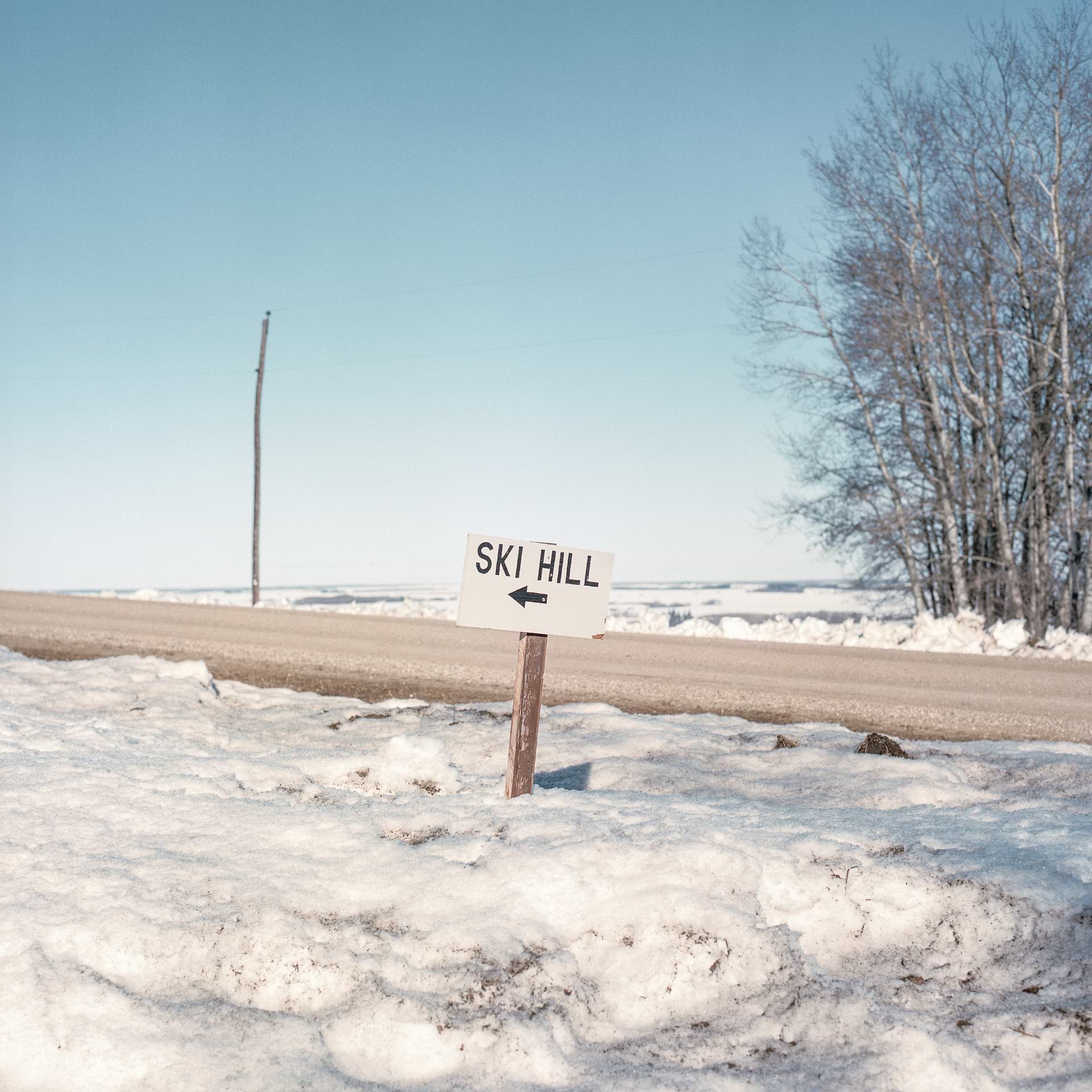
This is perfectly illustrated in his cover shot for Forecast Ski Magazine Photo Annual from a few years ago, which is starkly different from the usual fare. In a placement typically reserved for the most bottomless face shots and alpenglow-bathed sunset, Medig’s image of a lone wooden sign beside a gravel road against an endlessly flat horizon may be the antithesis of what we expect in a cover shot. Black hand-painted lettering on the white sign depicts an arrow and two words: Ski Hill.
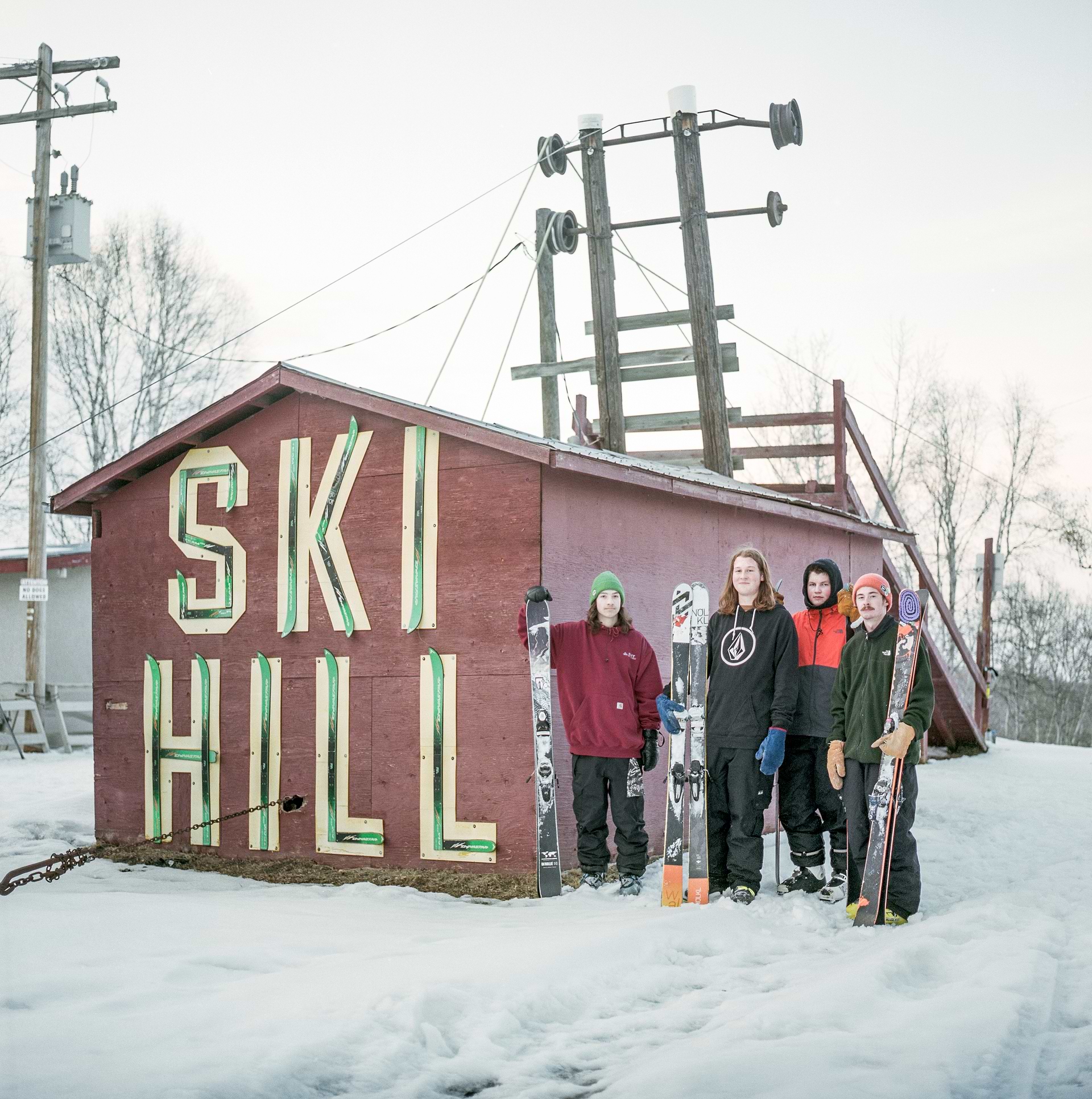
A few years ago, I visited Innisfail, Alberta, a small town between Calgary and Edmonton. It’s the tiniest ski hill I have ever been to. Established in 1960, the hill drops only 21 meters, and skiers use an old rope tow to get back to the top. I spent an afternoon with an enthusiastic group of young skiers who showed me the simple joy of skiing on the Canadian prairies.
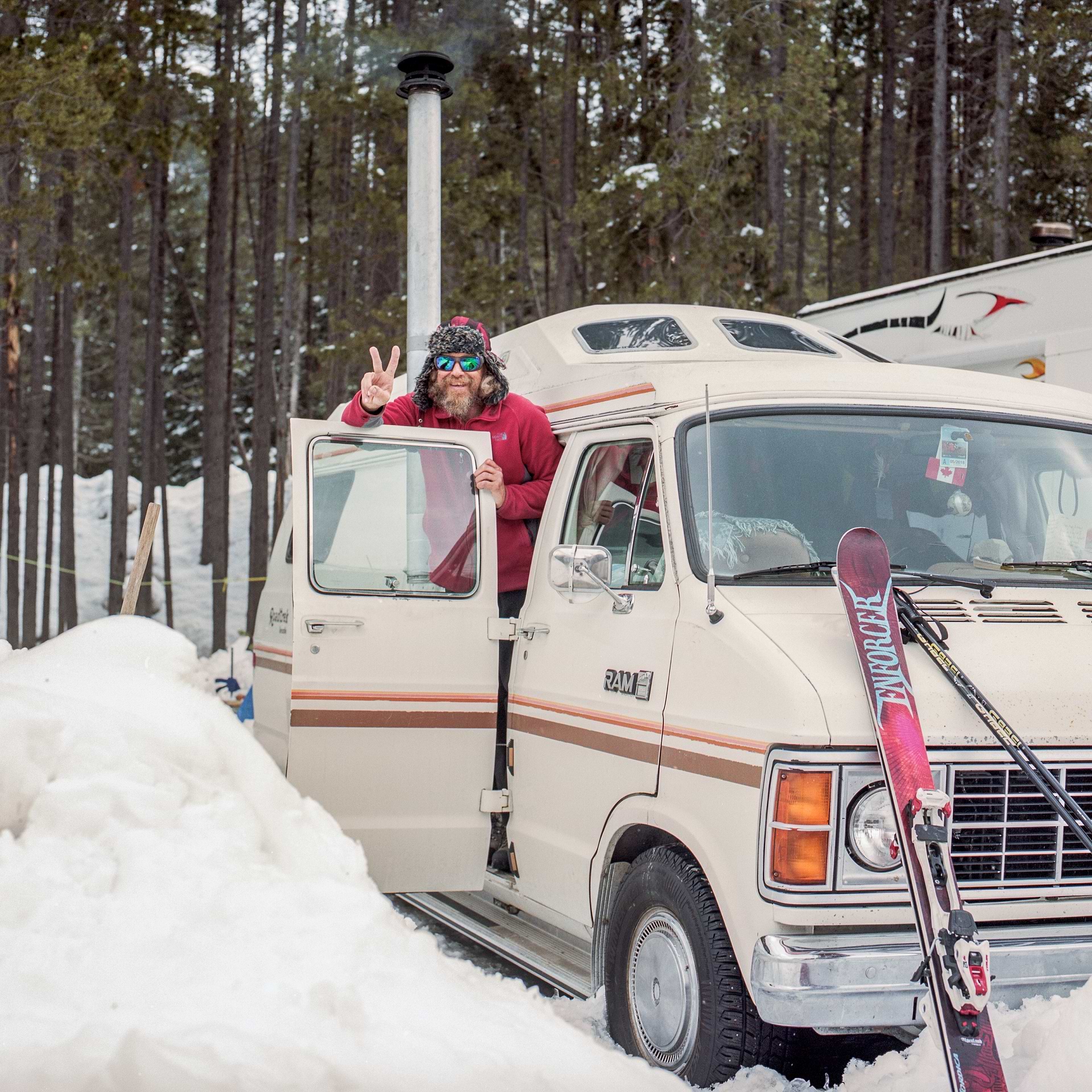
While wandering around the Castle Mountain, Alberta, parking lot, I met 58-year-old Rick, who lived in a van at the edge of the lot. He shared his story of being a recent survivor of a severe form of cancer and how he now lives to ski. After hearing his story, I felt an added responsibility to get an image of him that captured his enthusiasm for the sport we all love. I photographed a handful of portraits, and this frame captured the essence of this man the best.
“There's a tension between what you intellectually think a ski hill should be and what it is in some places,” says Medig. He calls the cognitive disconnect in this image a “sense of startle” — an intangible quality or secret sauce -- that catapults the photo beyond the audience’s preconceptions. “There are a lot of tropes in the ski world, a lot of things we've come to expect, and it's neat to play with ideas on the edge of it,” Medig continues. “It's an area where many more of us exist than the guy hucking off the cliff.”
By that measure, Medig’s images from the seemingly far-flung fringe of skiing are not outliers insofar as they are mirrors of ourselves. More of us exist in that sphere of odd juxtapositions than in the familiar refrain most ski photographers seek. Despite the inclination to note something out of place in Medig’s photos, his images resonate when skiers recognize themselves and realize they’re not cast from a homogenized mould.
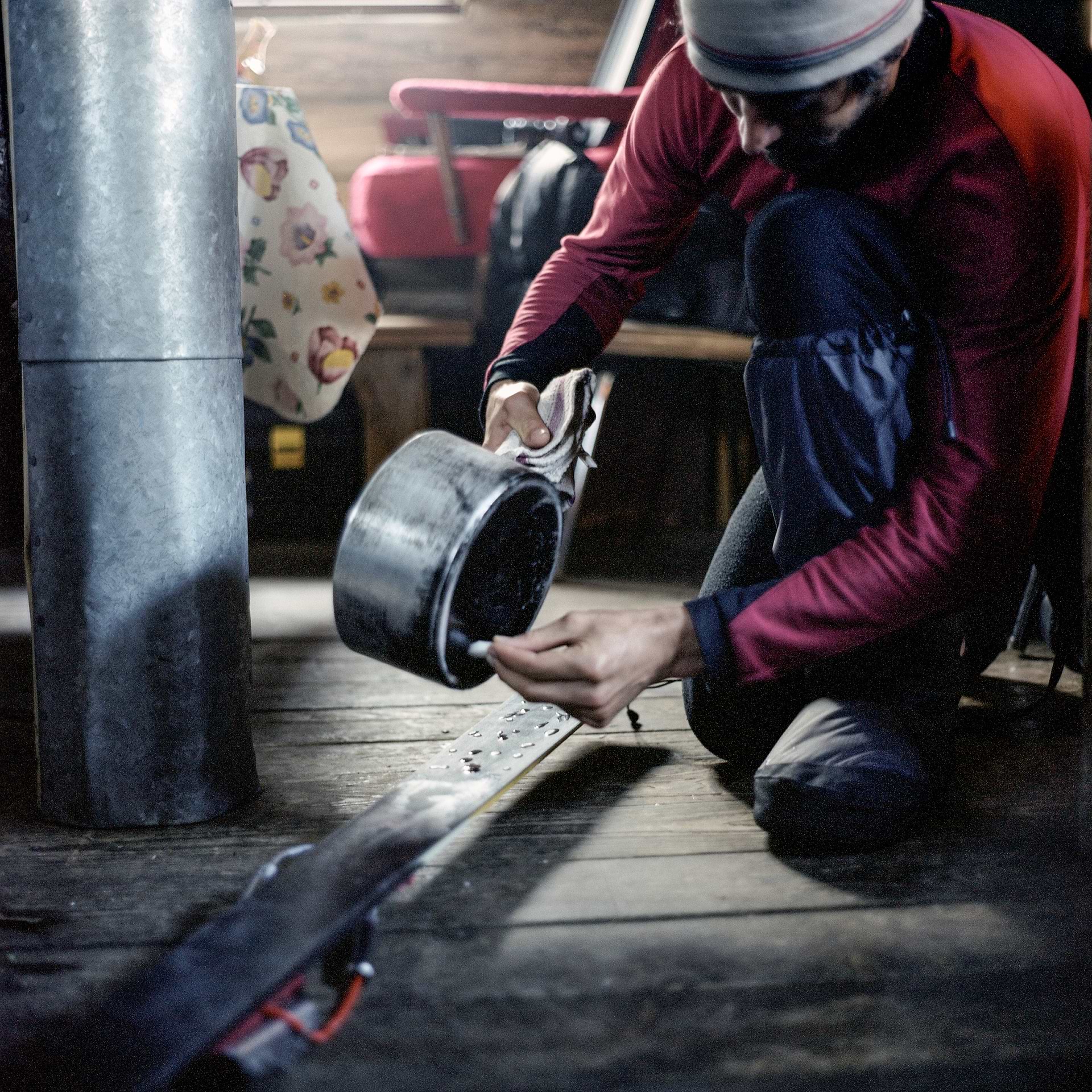
Years ago, my friend Nelson Rocha and I embarked on an unplanned side trip while doing the Hurley Traverse near Pemberton, B.C. One day, we could see on the map that we were just a short distance from a little backcountry hut. So, we made the side trip to the hut and dropped our packs to do some powder skiing. Nelson soon discovered that his old tele–skis weren’t gliding well, so he used a candle and an old pot to give them a hot wax, which worked well.
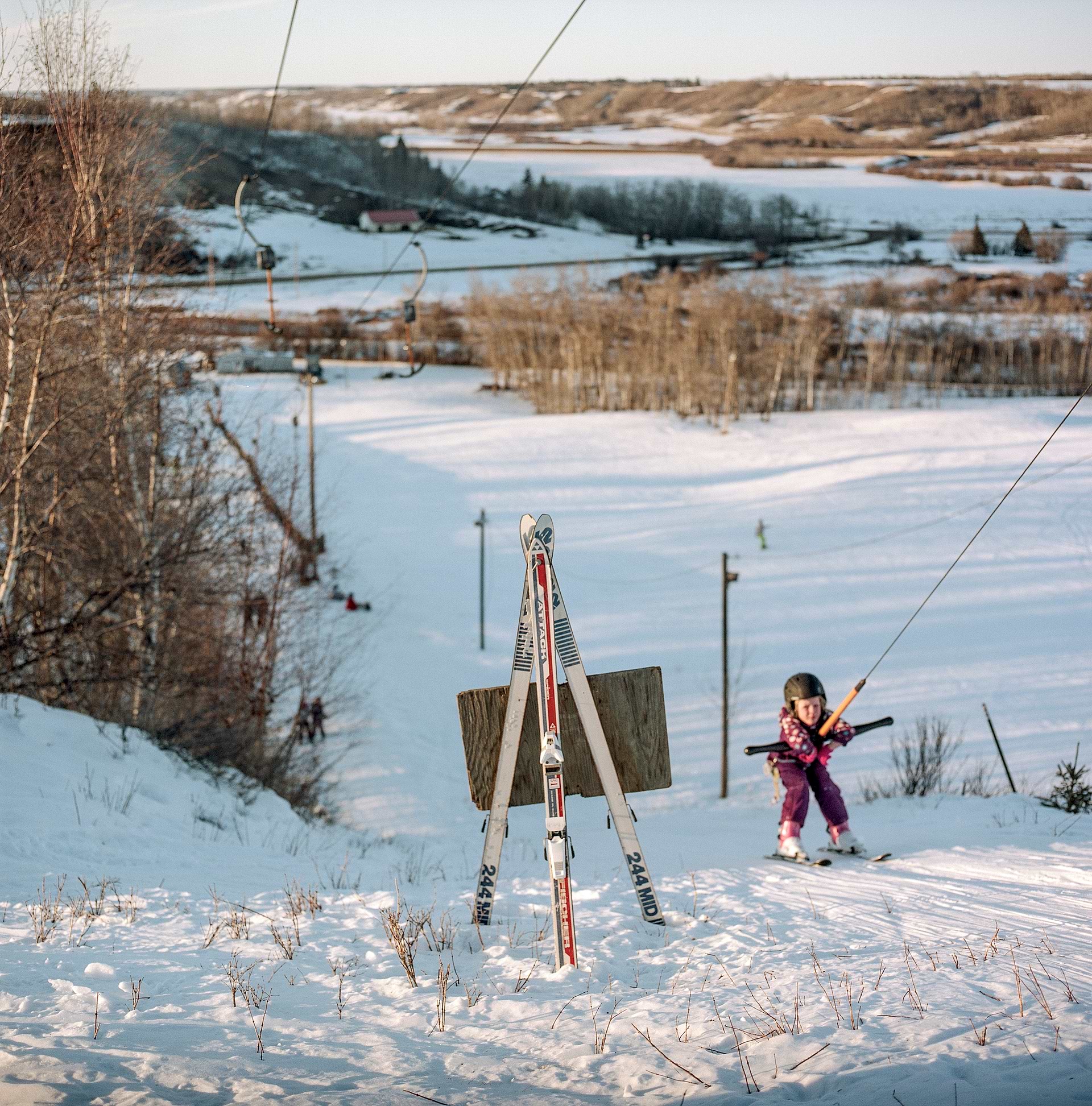
On a 10-day road trip in Alberta, I visited over 15 ski hills from Edmonton to Winnipeg and back. I put over 5000 kilometres on my rental car and countless double-doubles, which any Canadian will tell you is the best coffee/cream/sugar combo to keep you awake during a long solo drive. This frame is from a little ski hill called Gwynne Valley in eastern Alberta.
Years ago, my friend Nelson Rocha and I embarked on an unplanned side trip while doing the Hurley Traverse near Pemberton, B.C. One day, we could see on the map that we were just a short distance from a little backcountry hut. So, we made the side trip to the hut and dropped our packs to do some powder skiing. Nelson soon discovered that his old tele–skis weren’t gliding well, so he used a candle and an old pot to give them a hot wax, which worked well.
On a 10-day road trip in Alberta, I visited over 15 ski hills from Edmonton to Winnipeg and back. I put over 5000 kilometres on my rental car and countless double-doubles, which any Canadian will tell you is the best coffee/cream/sugar combo to keep you awake during a long solo drive. This frame is from a little ski hill called Gwynne Valley in eastern Alberta.
One of his recently published images came with an innocuous caption: “Still continuing to capture the edge of the ski world.” An Austrian skier saw the image and expressed a different take. “That looks like the centre of the ski world to me because it's a little hill somewhere,” she told Medig.
Medig smiles. “She was right in a way. It’s funny how every day in skiing has become the fringe in terms of imagery and how skiing portrays itself.”
Despite the herd mentality of many action photographers, or perhaps because of it, Medig is very content to let others chase milliseconds of flying powder. At the same time, he uses his unique vision and instincts to capture the genuinely timeless moments of snowsports – the overlooked moments of ski culture - often hidden in plain sight and that most of us fail to see until captured by one of his images.
KARI MEDIG grew up in a cabin in the boreal forest of northern British Columbia, Canada. As a photographer, he has worked on editorial and commercial projects for clients such as National Geographic, Outside and Patagonia. In 2015, Powder published Dawn In Siberia, the magazine’s debut book inspired by Medig’s photos while he travelled on assignment across Russia.
Recent accolades include inclusion in American Photography 40 (2024) and American Photography 39 (2023) anthologies. Medig’s editorial work has received recognition from Canada’s National Media Awards Foundation, the North American Travel Journalists Association, and the Society of American Travel Writers.
In addition to photography, Medig has been part of numerous ski expeditions, including the first 700-kilometre traverse of the St. Elias Mountains in Yukon and Alaska. He now lives with his family in Nelson, British Columbia.
KARI MEDIG grew up in a cabin in the boreal forest of northern British Columbia, Canada. As a photographer, he has worked on editorial and commercial projects for clients such as National Geographic, Outside and Patagonia. In 2015, Powder published Dawn In Siberia, the magazine’s debut book inspired by Medig’s photos while he travelled on assignment across Russia.
Recent accolades include inclusion in American Photography 40 (2024) and American Photography 39 (2023) anthologies. Medig’s editorial work has received recognition from Canada’s National Media Awards Foundation, the North American Travel Journalists Association, and the Society of American Travel Writers.
In addition to photography, Medig has been part of numerous ski expeditions, including the first 700-kilometre traverse of the St. Elias Mountains in Yukon and Alaska. He now lives with his family in Nelson, British Columbia.
RELATED STORIES