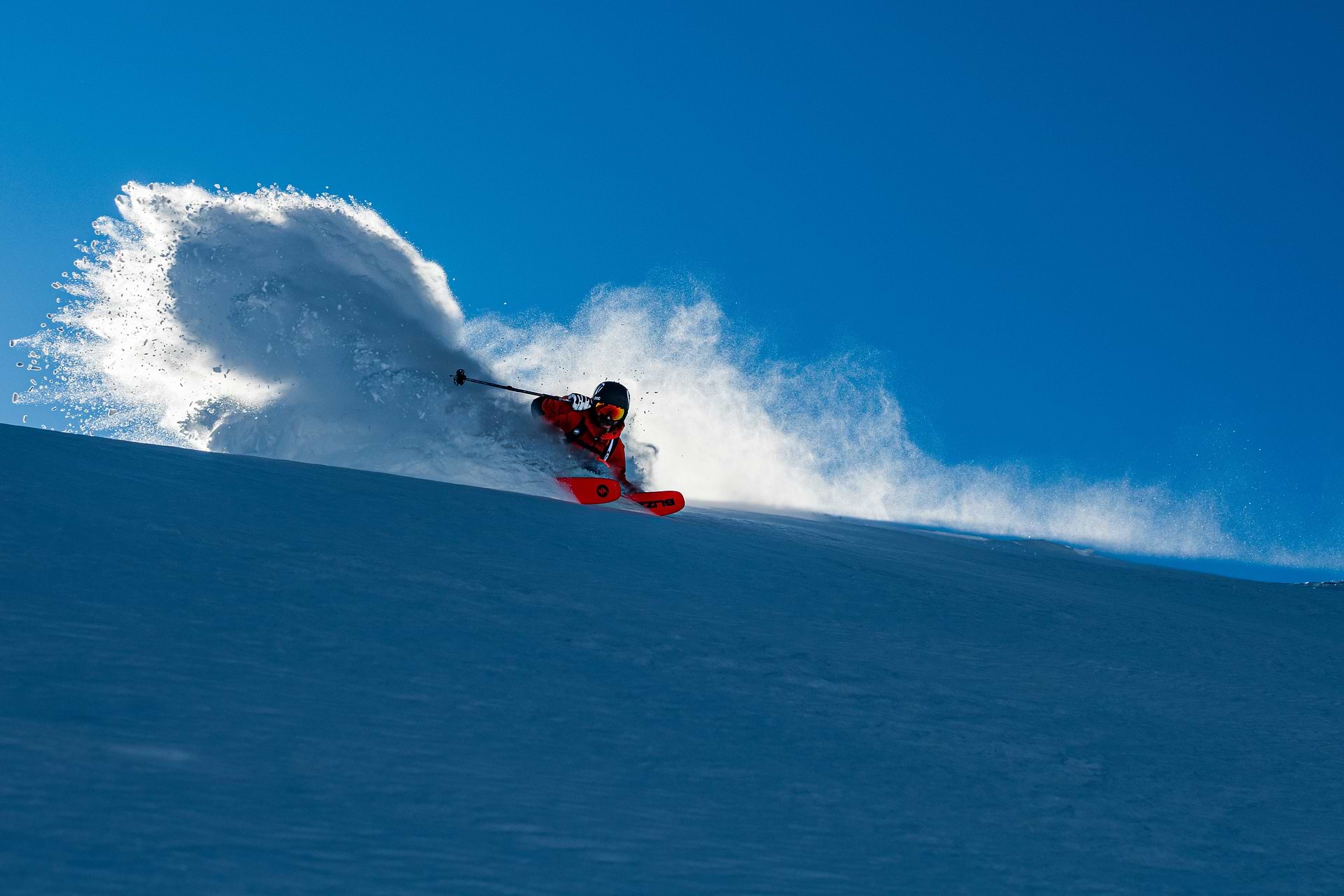
Dylan Siggers is getting trenched deep in British Columbia’s Monashee Mountains at Blanket Glacier Chalet. Filmed by Nick Nault
Perfect Powder
The Crucial Intersection of Mind and Body
Feature
Words by: Leslie Anthony
Photos by: Mattias Fredriksson
“To us, powder means freedom, with an emphasis not on how you do it, but just on doing it more...”
—Powder Magazine, 1972
One time,
for a special issue, a magazine sent writer-photographer pairs far and wide in search of The Soul of Skiing. When it was published, bits and pieces of this elusive commodity had indeed been found in many places: with the lifties and patrollers who made skiing their life in the big resorts or the septuagenarians who rode a local tram every day clinging to their old-school long skis like a best friend; with folks who camped out in parking lots all winter, or in the small, river-valley ski areas of the flatlands.
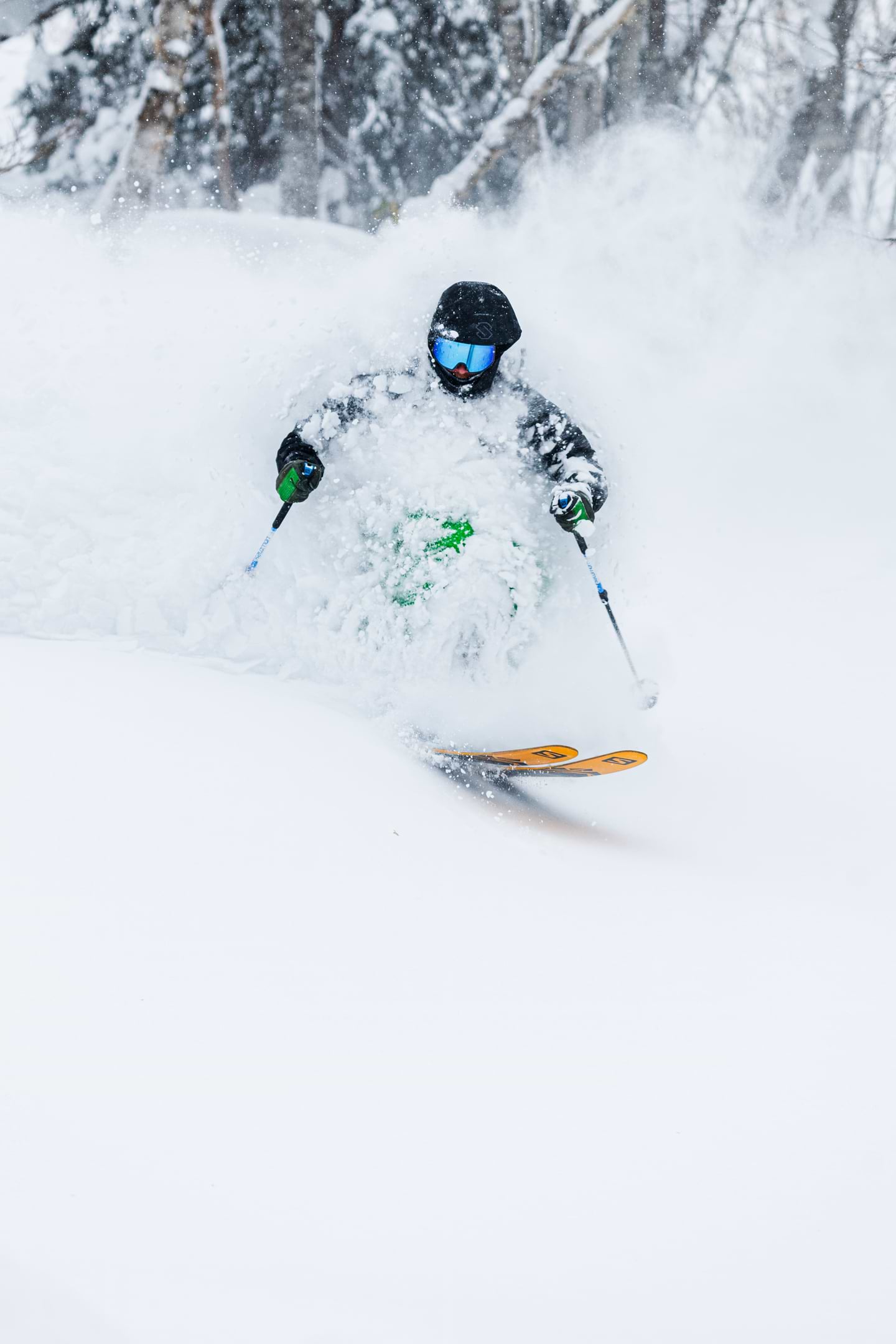
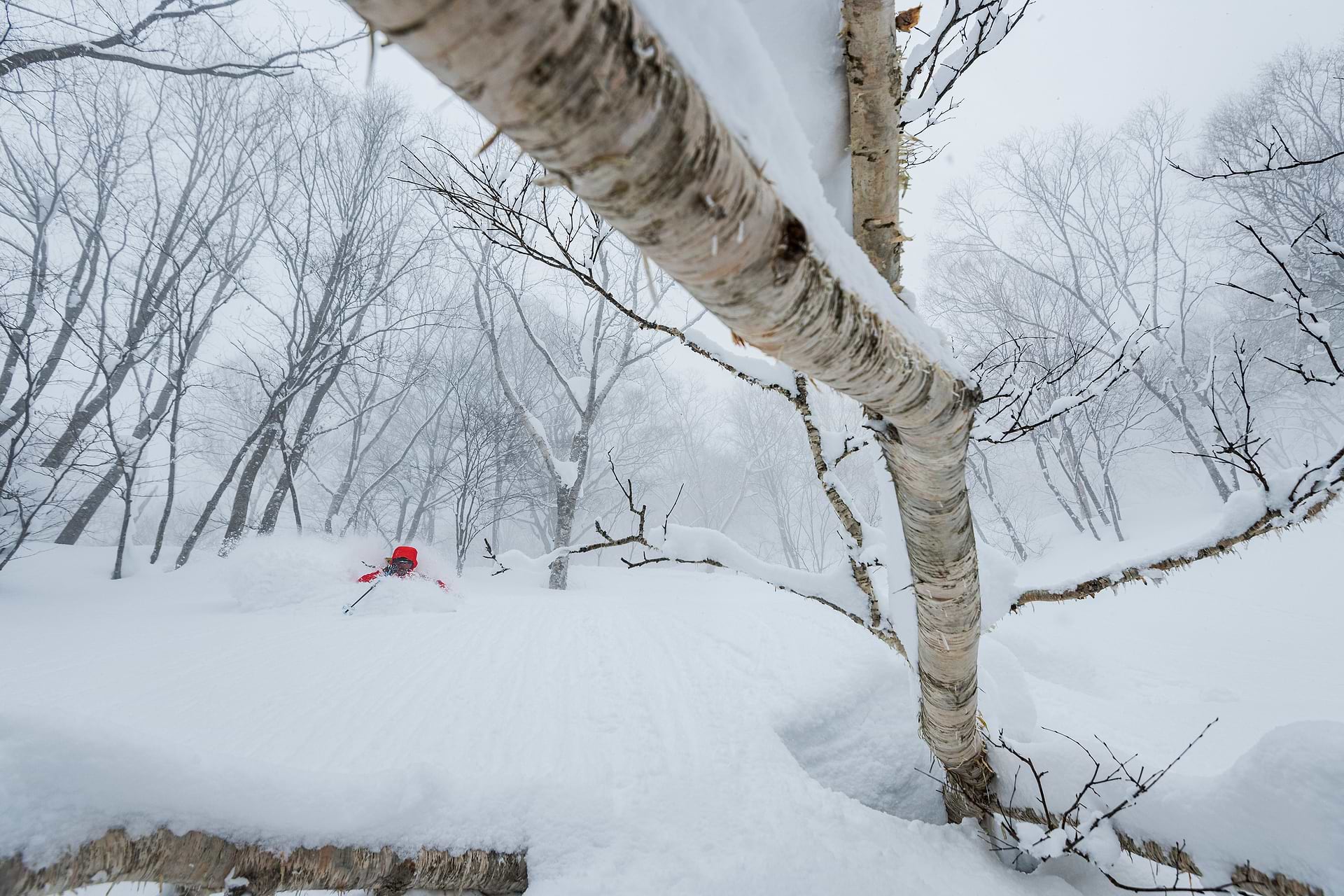
Few places globally are as consistent regarding powder snow as Hokkaido, Japan’s northernmost island. David Kantermo was captured near Asahikawa in central Hokkaido.
Heartwarming imagery
showed that soul could be what you made it and that every chairlift, cafeteria or pair of goggles held at least a few molecules. But those of us who’d been on the quest knew the truth because every person we’d met had said the same thing: the real soul of skiing lay buried in untracked snow — powder, nieve polvo, pulver schnee, le Poudre.
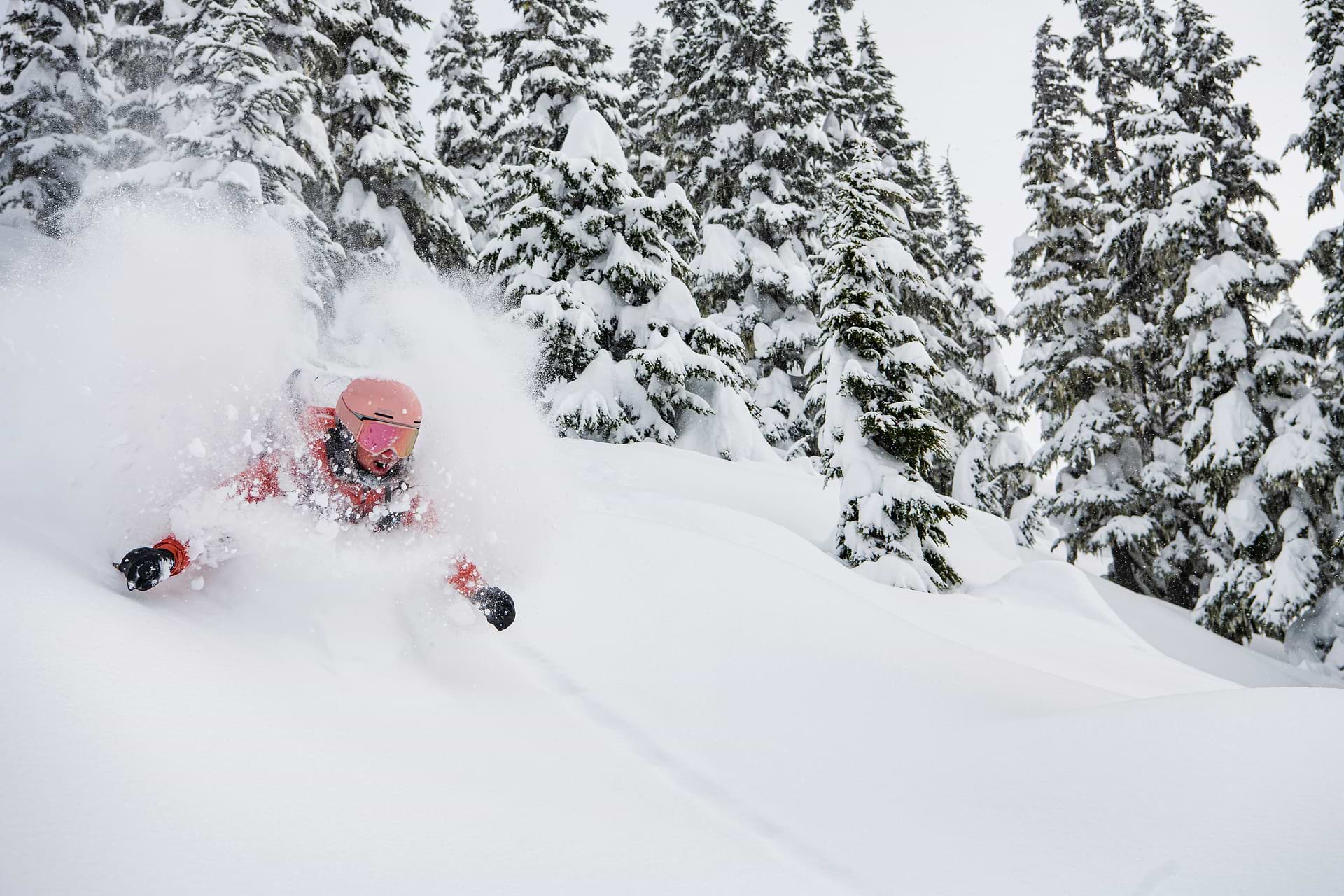
Just as “getting barreled” by a breaking wave is the most sought-after surf experience, the Holy Grail of skiing or snowboarding was a “face shot” in powder.
Naturally, you’ll find a healthy dose of soul in those places you go to chase powder, as well as worn on the sleeves of the people you share the experience with. As Powder magazine famously put it: Powder to the People.
And this is the very idea that many, bored with the manufactured environment of their local ski hill, have reawakened to. Or maybe it’s the spectre of climate change and the worry we don’t have much time left to enjoy the phenomenon of fresh snow. Or perhaps, as the tired cliché goes, powder is a powerful drug — once you’ve tried it, you only crave more.
Fresh, sparkly and clean. What’s not to love with powder skiing? Johan Jonsson enjoys his favourite winter hobby near Kopparåsen in Swedish Lapland.
Fresh, sparkly and clean. What’s not to love with powder skiing? Johan Jonsson enjoys his favourite winter hobby near Kopparåsen in Swedish Lapland.
There’s a lot about powder snow to recommend it.
It’s natural, for one thing. Fresh. Clean. Sparkly. And it doesn’t hurt when you fall. But true aficionados know it’s about a lot more.
There’s a certain transcendence to moving through powder that cuts to the heart of the entire ski experience, something that can’t adequately be described and must be experienced to understand fully. Some have stated that explaining powder skiing to a neophyte is like explaining sex to a virgin — all mechanics and no je ne sais quois. It's trite but true, but I’ll try anyway.
Powder skiing is about words and being unable to speak. About telling but unable to describe. About the silence that surrounds — but how the quiet somehow amplifies the pounding of your heart, the rasping of your breath, the wind in the trees. It’s about involuntary grunts of effort and unconscious squeals of delight. It’s about inspiration. Desperation. Broken marriages. Bad poetry. Grins. Silliness. Frozen toes and ice-cream headaches. First tracks and lost skis. The magical feeling of sinking followed by momentary weightlessness. It's about trudging, navigating, and riding over, through and around boilerplate, sastrugi, crust, slab, crud and lousy snow to get to the good stuff. It’s a way of feeling. A way of thinking. A way of life. A way of sharing.
That last bit is essential. The relationship of powder to the friends you experience it with is also complicated to describe. But I’ll give that a try, too.
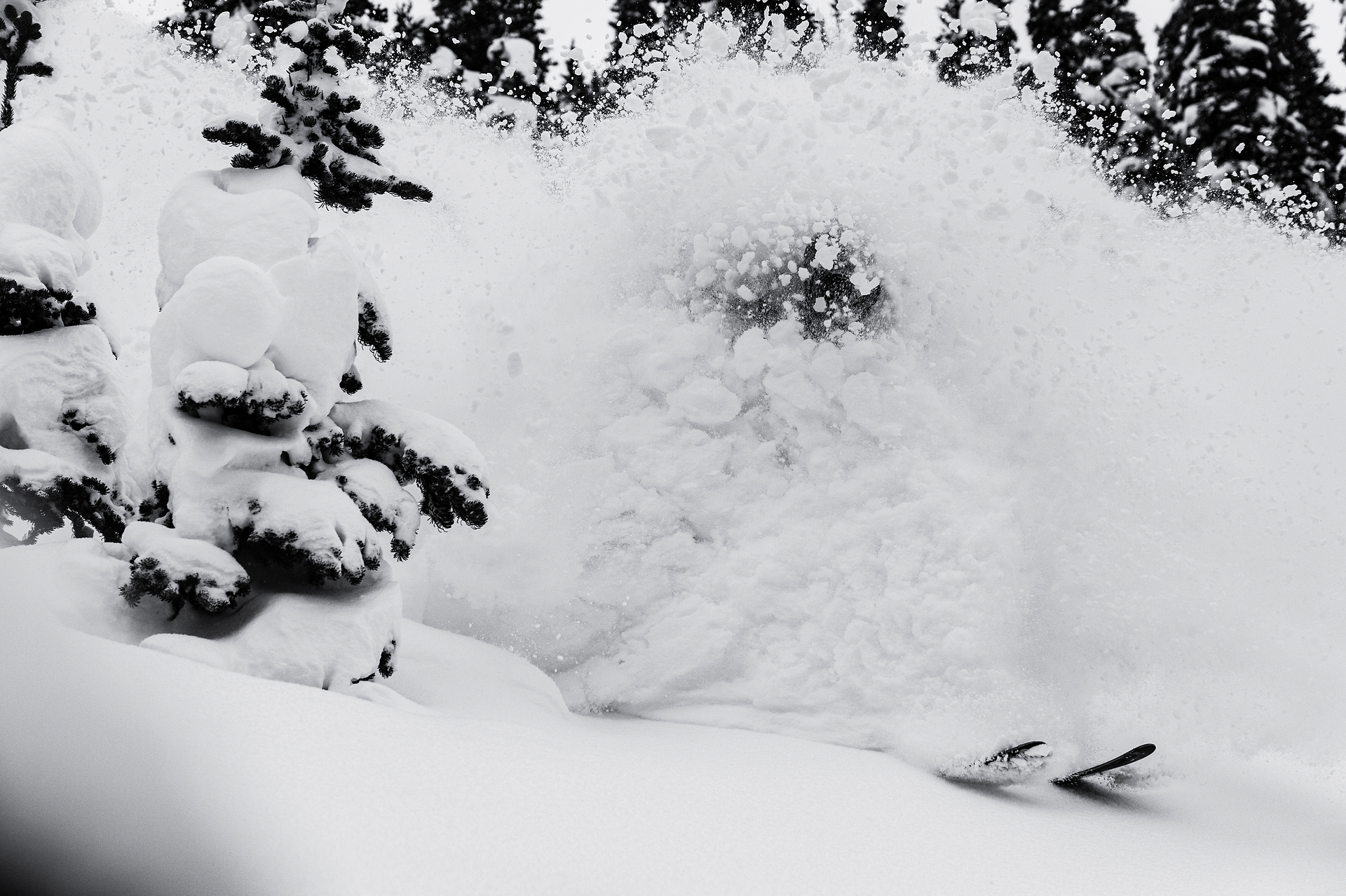
Powder-skiing doyenne Dolores LaChapelle
said that if joy is the response of a lover receiving what he loves, then this is the joy we feel when skiing powder with friends. An overflowing gratitude that produces the absurd smiles flashed to each other at the bottom of a run. You never see these kinds of grins anywhere else in life — not on someone leaving a tennis court, a golf course, or a hockey rink; not on someone stepping off a podium from a great speech or leaving a club after a fabulous evening of dancing. Nothing else comes close to the smiles shared in powder because they reflect a life fully lived together in a blaze of reality.
Many are so enraptured by the feeling that skiing powder engenders them, travelling the world to chase it in as many different places as possible. When you pilgrimage to a new land and mountain range in search of snow, you’re looking for more than exotic sliding. What you truly wish for is to mix this with the culture of the moment and the friends of the day — a new experiment in the winter laboratory.
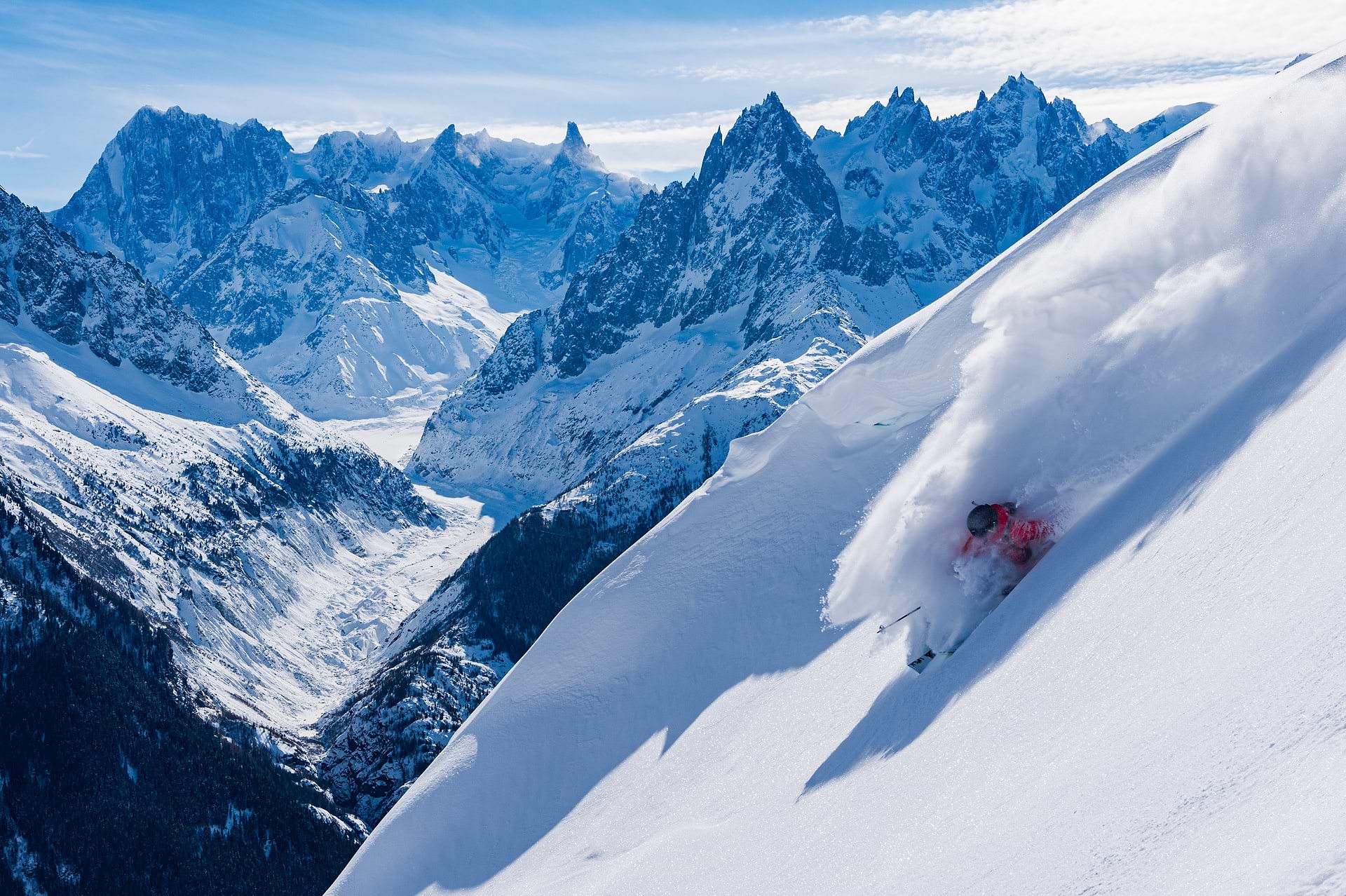
Whether in Europe, Alaska, Canada, Scandinavia, New Zealand, or Japan, the essential ingredients are the same — rock, ice, peaks, slopes, and snow. Yet all are also so deliciously different — a new latitude, unique local light, strange forests, and exciting snow formations.
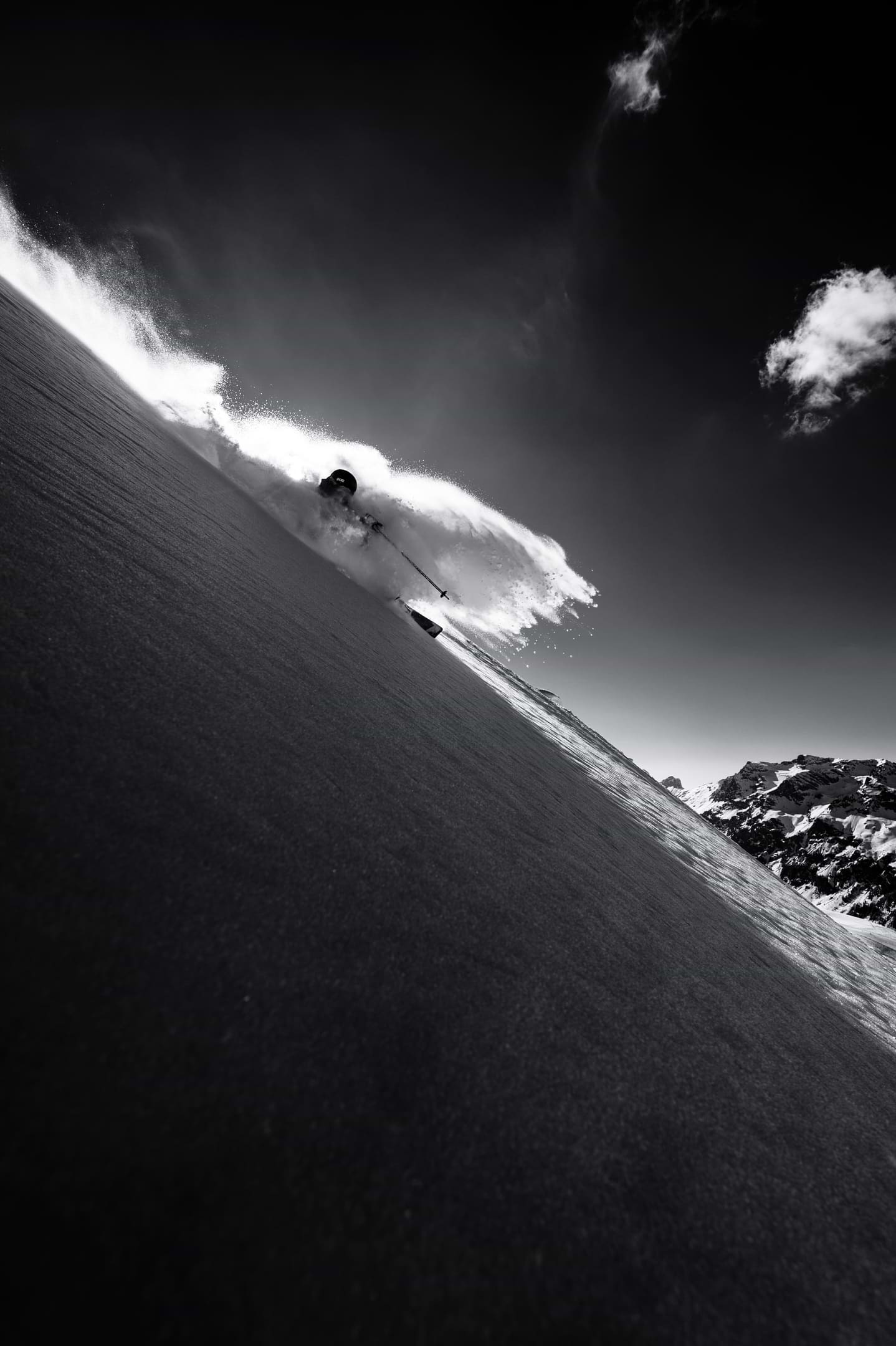
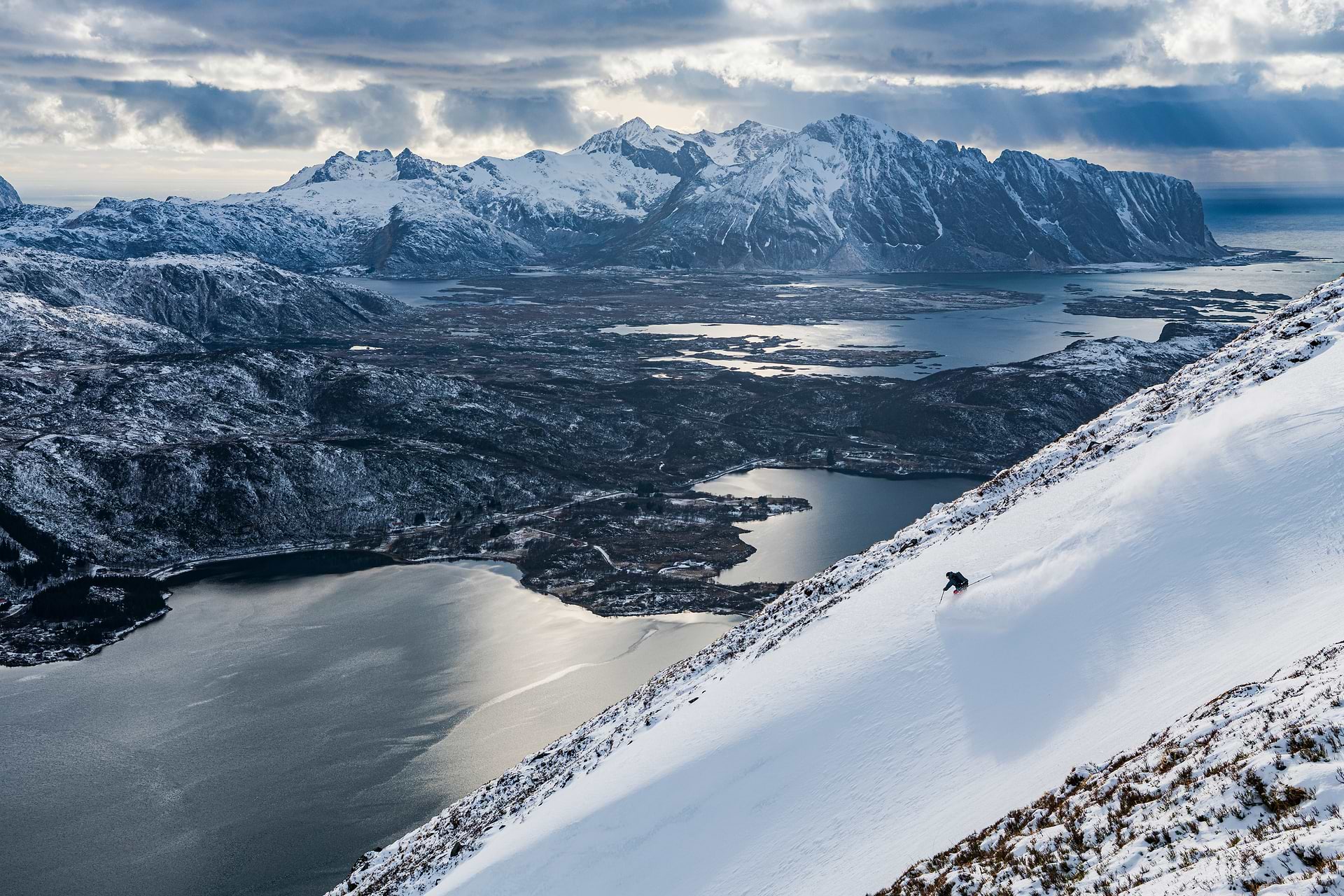
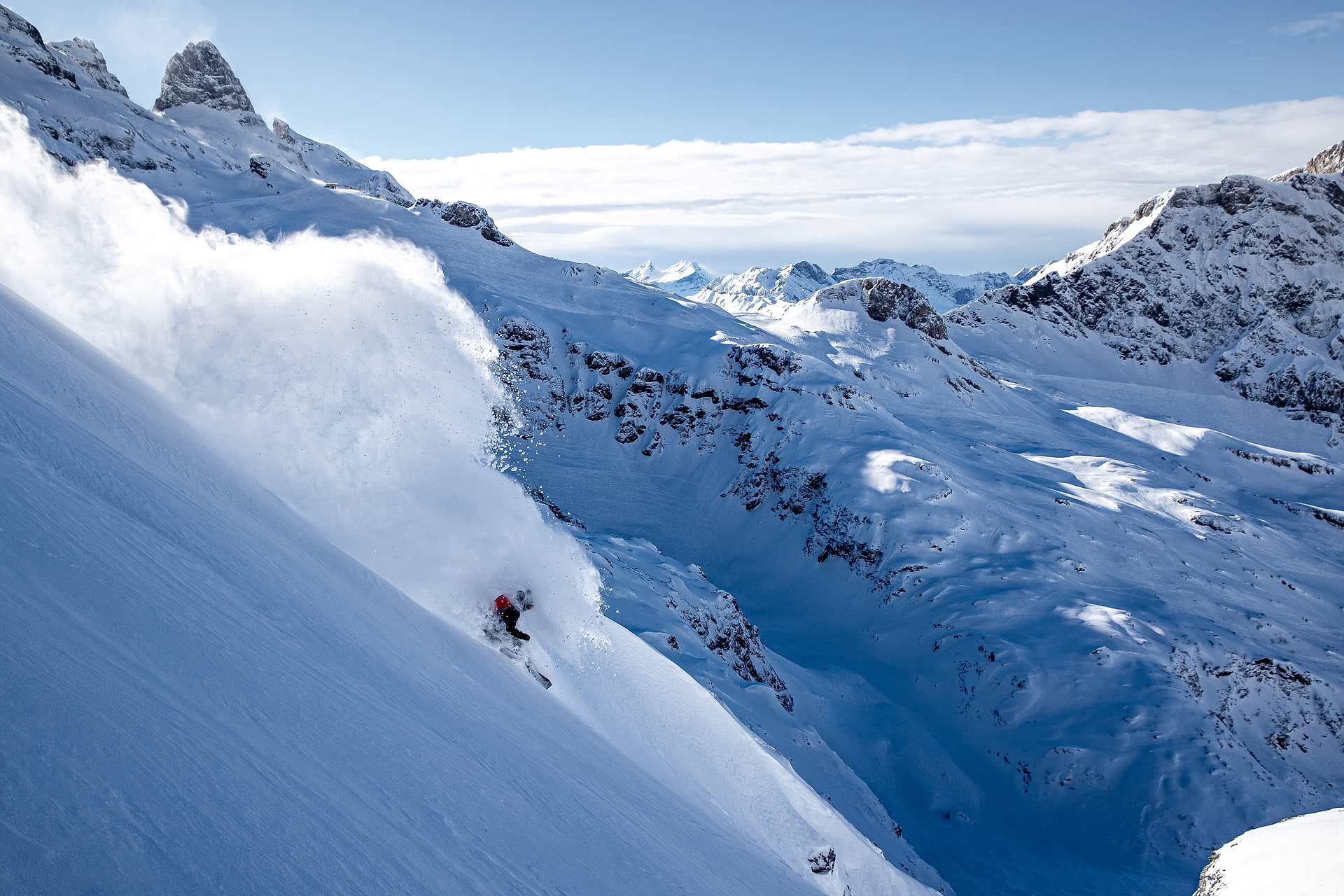
Although the Engadin Valley in Switzerland claims 320 sunny days per year, St Moritz is sometimes an excellent place for powder skiing. Just as Sverre Liliquist.
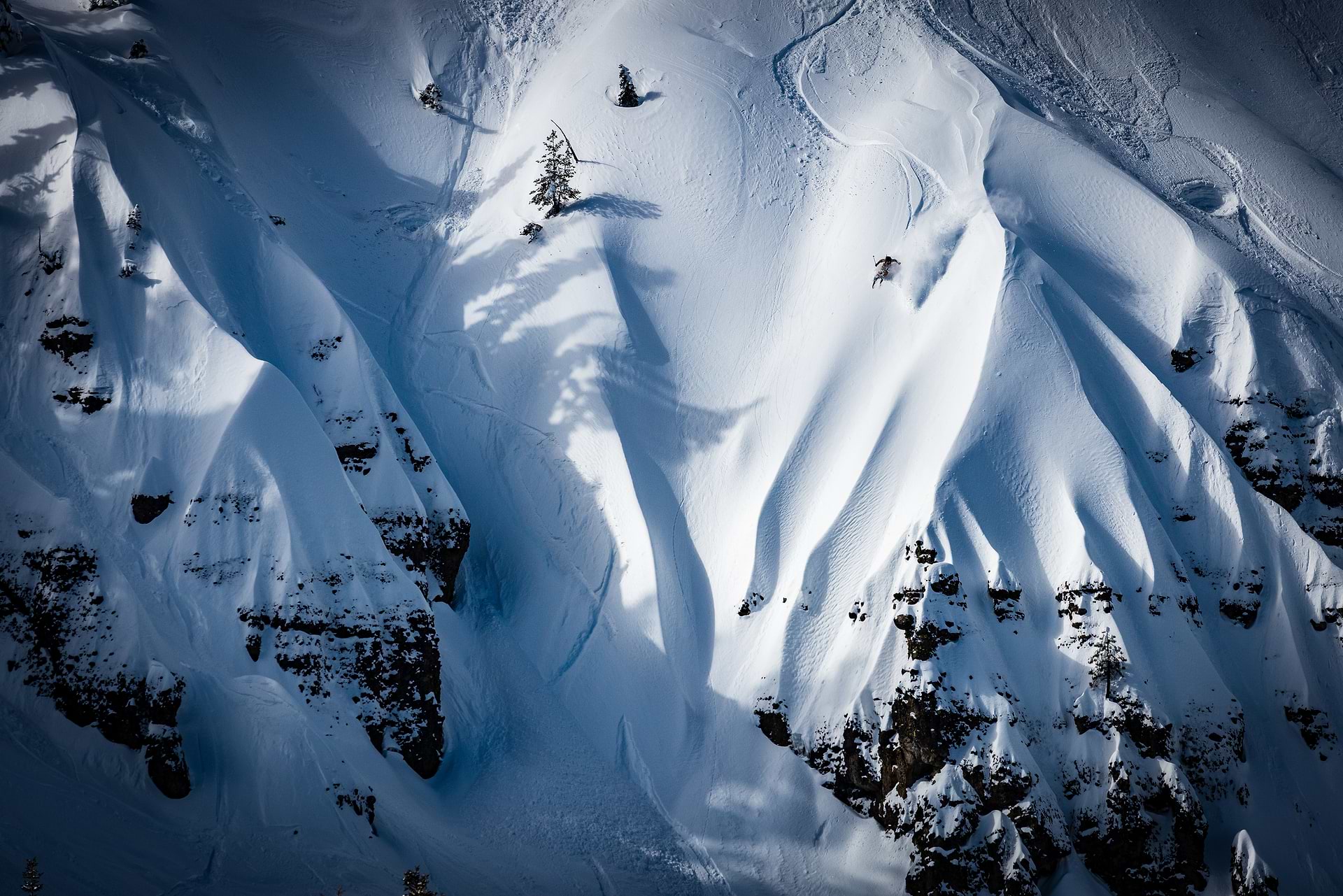
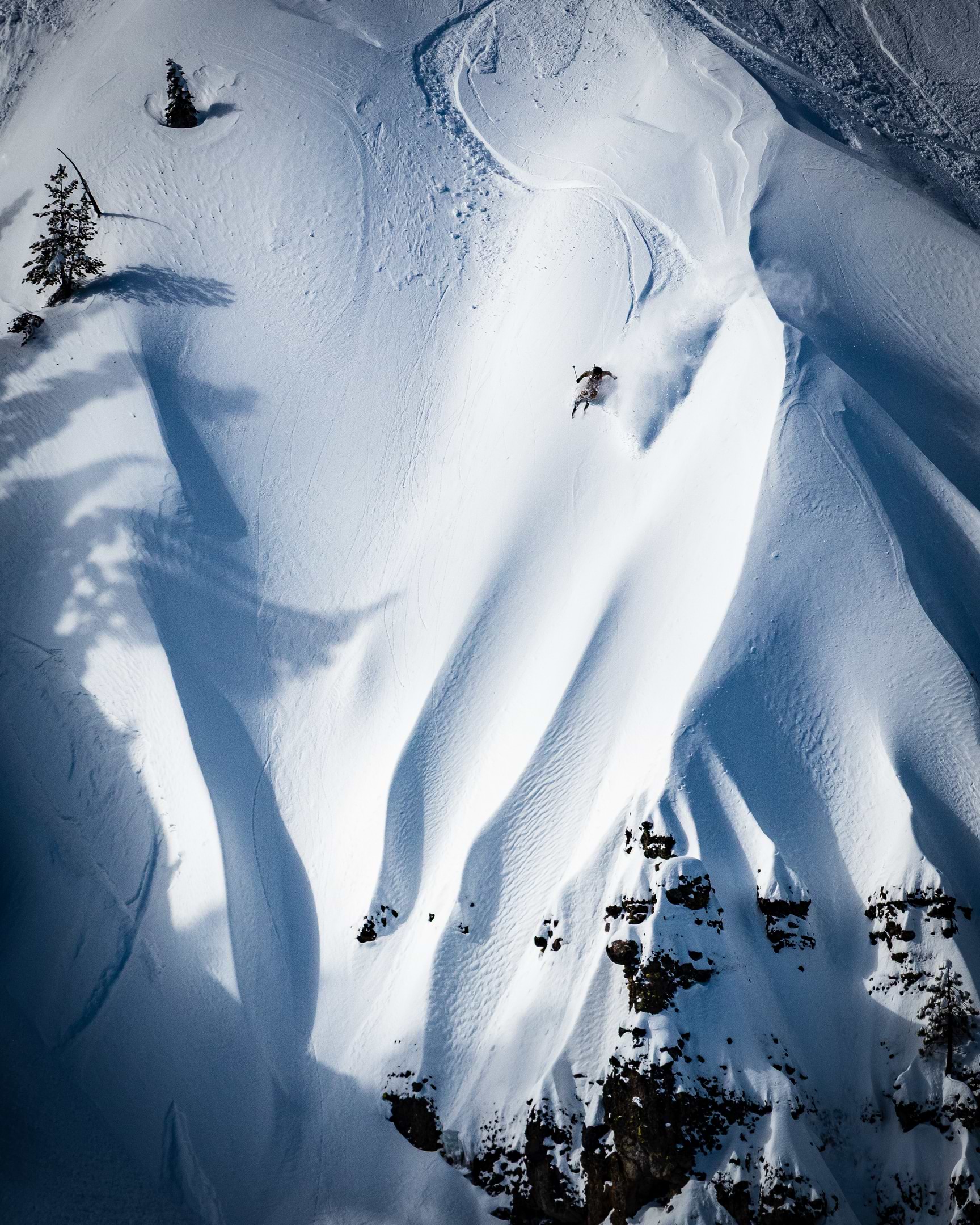
When it snows in Tahoe, it really snows. Xander Guldman takes full advantage of a massive storm last winter near his home in Sugar Bowl. Filmed by Mark Abma
Because tracking the soul of skiing
means following its footprints through snow belts that wrap around the globe, big resorts played to this theme to create an international destination market. Yet many of the truly top players in the deep-powder sweepstakes long kept their riches on the down-low — whispered about in lift lines, beta passed between bettys and bros.
As demand increased, this couldn’t last. Travel operators tapped into a growing public appetite for unique destinations, wilderness, and untracked powder, and traditionally sleepy corners like northern Japan, Turkey, and Bulgaria now host ever-increasing numbers of international powder-seekers. Many U.S. and European resorts that never imagined doing so have opened areas on or adjacent to their mountains to accommodate the influx of powderhounds demanding access to unmanaged terrain. And the explosion in backcountry operations like lodges, hut-to-hut systems, cat-skiing and heli-skiing is unparalleled. In British Columbia alone, the backcountry ski industry’s capacity has more than tripled over the past decade, and demand still exceeds capacity.
Compare this to the current global glut of spas that can never be filled. Clearly, the therapeutic benefits of a shot in the face of cold snow exceed those of aromatherapy and a line of hot rocks down your back.
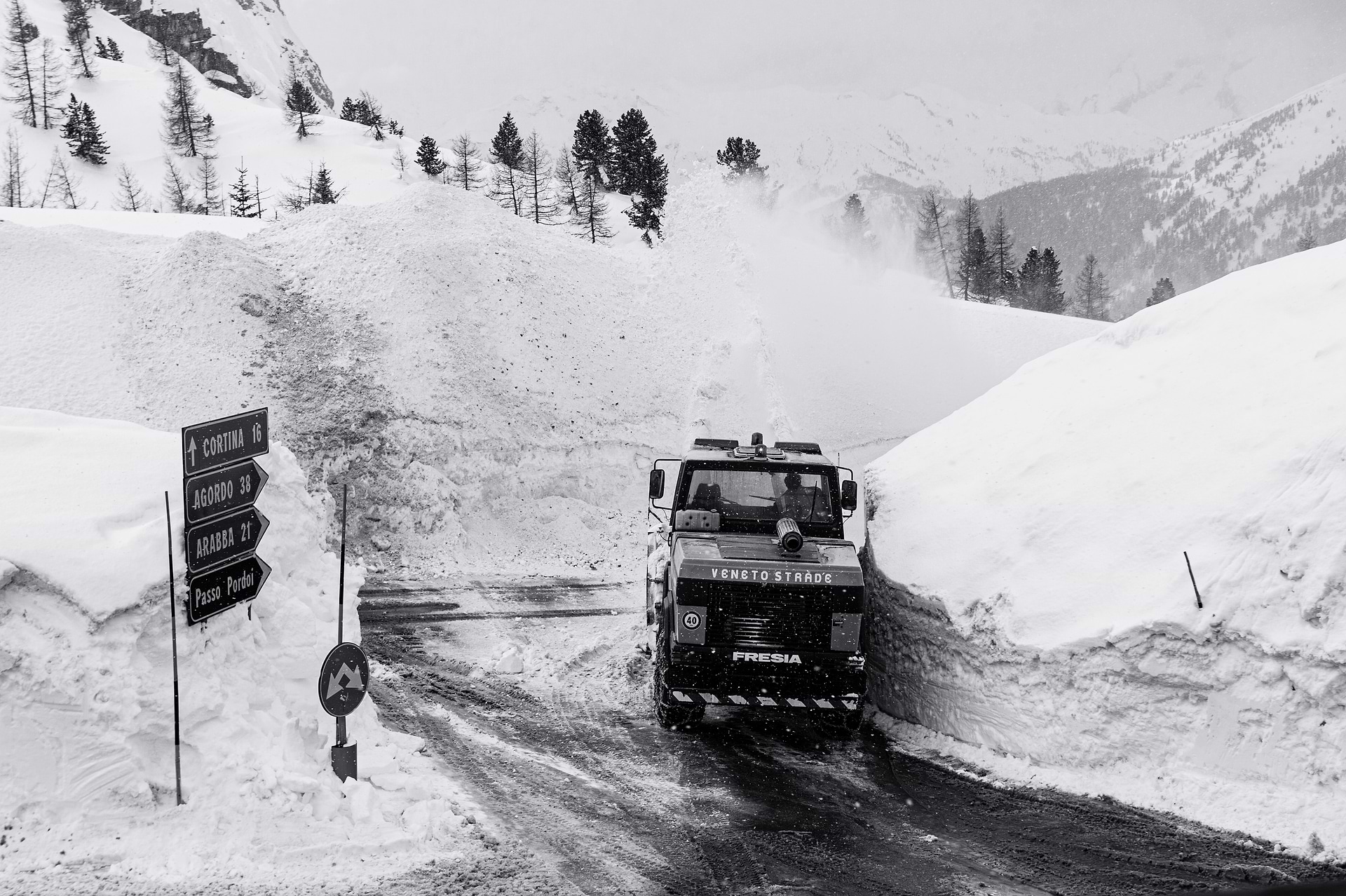
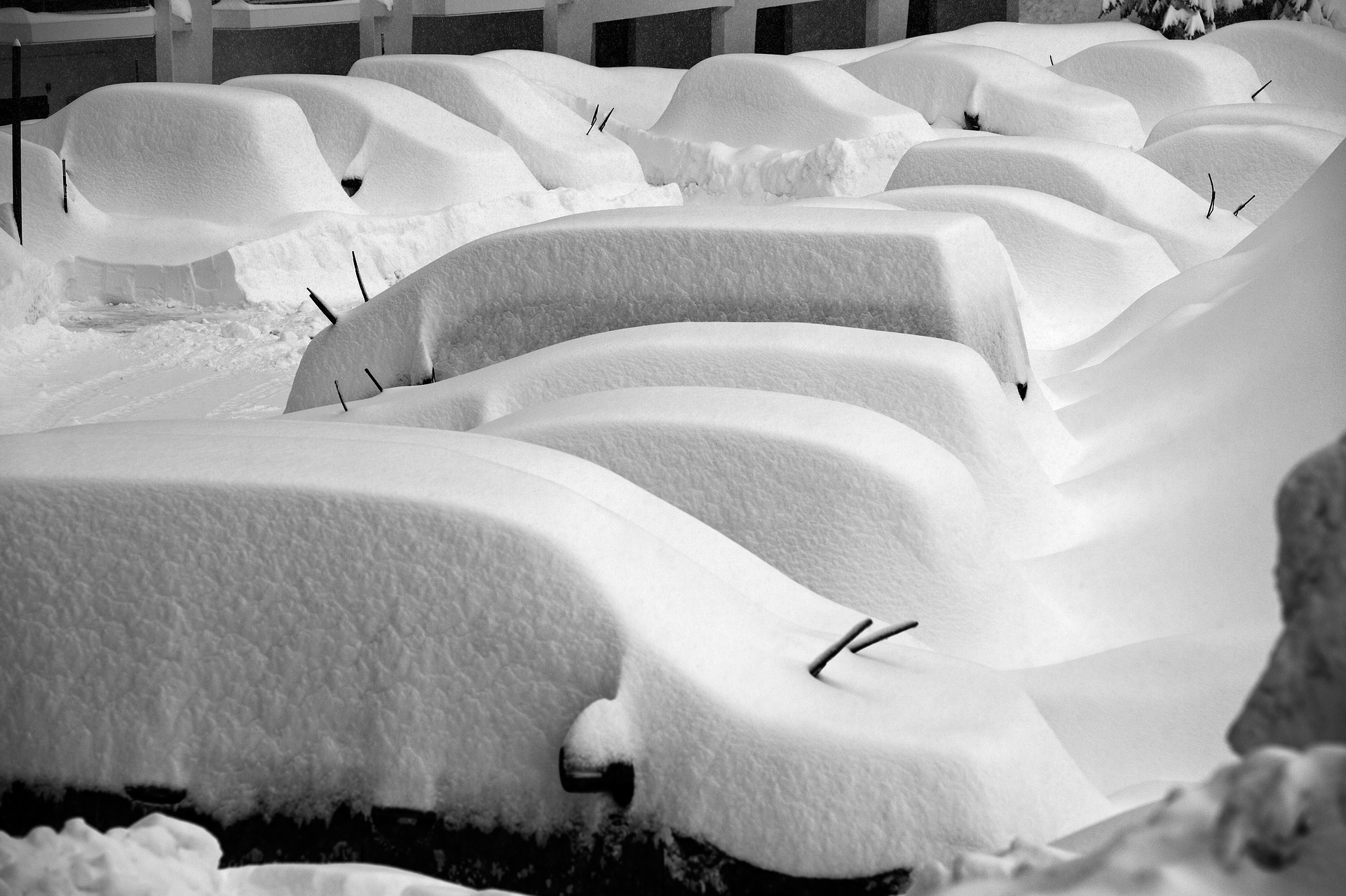
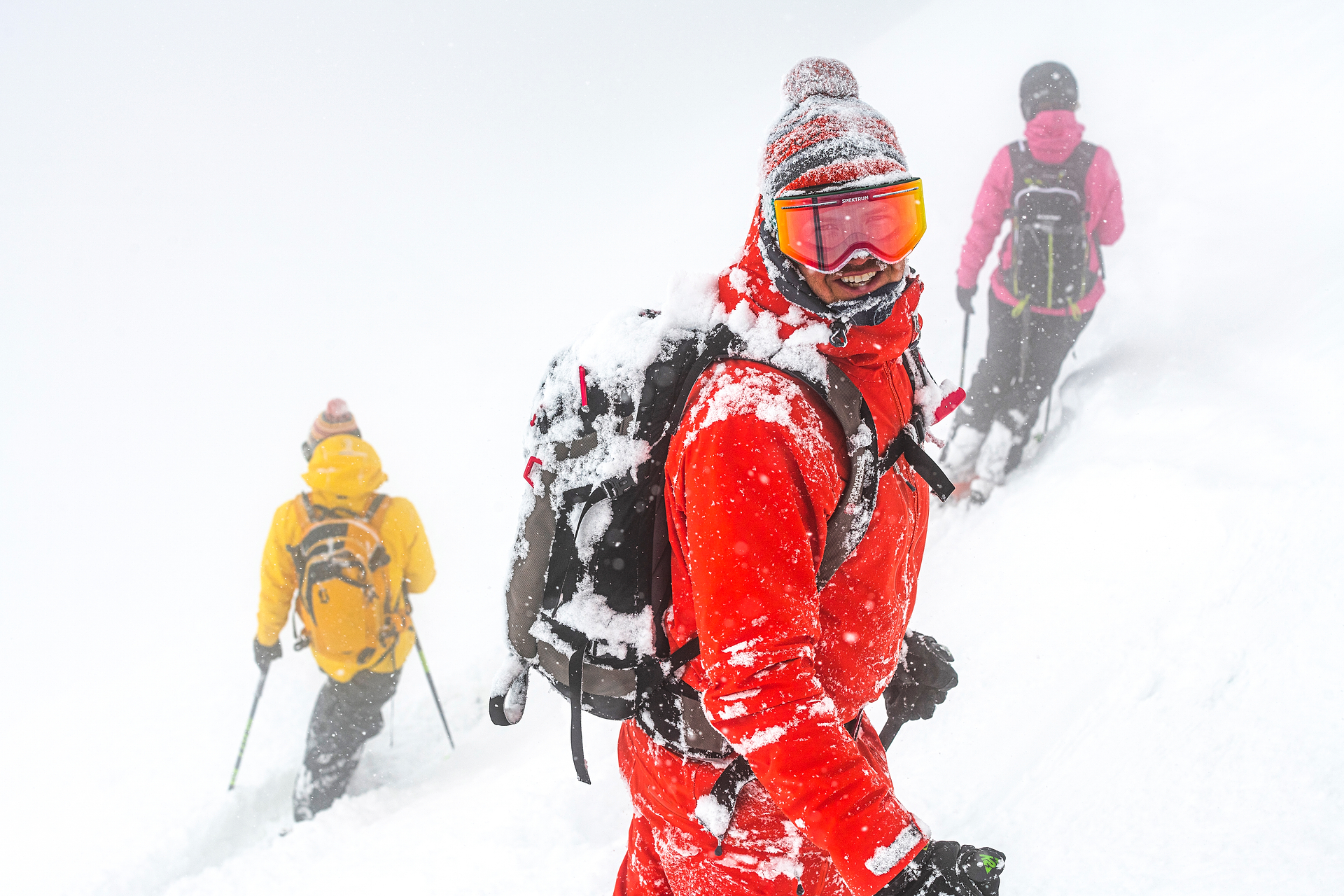
When you get right down to it, skiing powder isn’t about the outer experience but the inner. It’s about that crucial intersection of mind and body, where thinking and feeling cannot be teased apart. It’s about stopping at the bottom of a slope and looking back up at a line you’re convinced was the best run of your life, hanging on your pole straps and sucking air through a grin that doesn’t belong just to you but to everyone who’s ever stood with their legs quaking this badly.
Though a good ski run in powder sparks the kind of greed that makes your brain want more and think that the next time will always be better, you also know this: after a run like that, you’ll be fine if you never make another.
And nothing is more soulful than that.
Geographic area: Swiss Alps
Place: Engelberg (engelberg.ch).
Powder Maker: Blessed by altitude, poised at the leading edge of storms from all directions, and benefitting from the inexplicable weather-making tendencies of Lac Lucerne.
Terrain: Everywhere you look, another chunk of hidden terrain reveals itself, from smallish glaciers to couloirs, chutes, trees, arguably the world’s best resort powder run (The Laub), and plenty of lengthy off-piste descents.
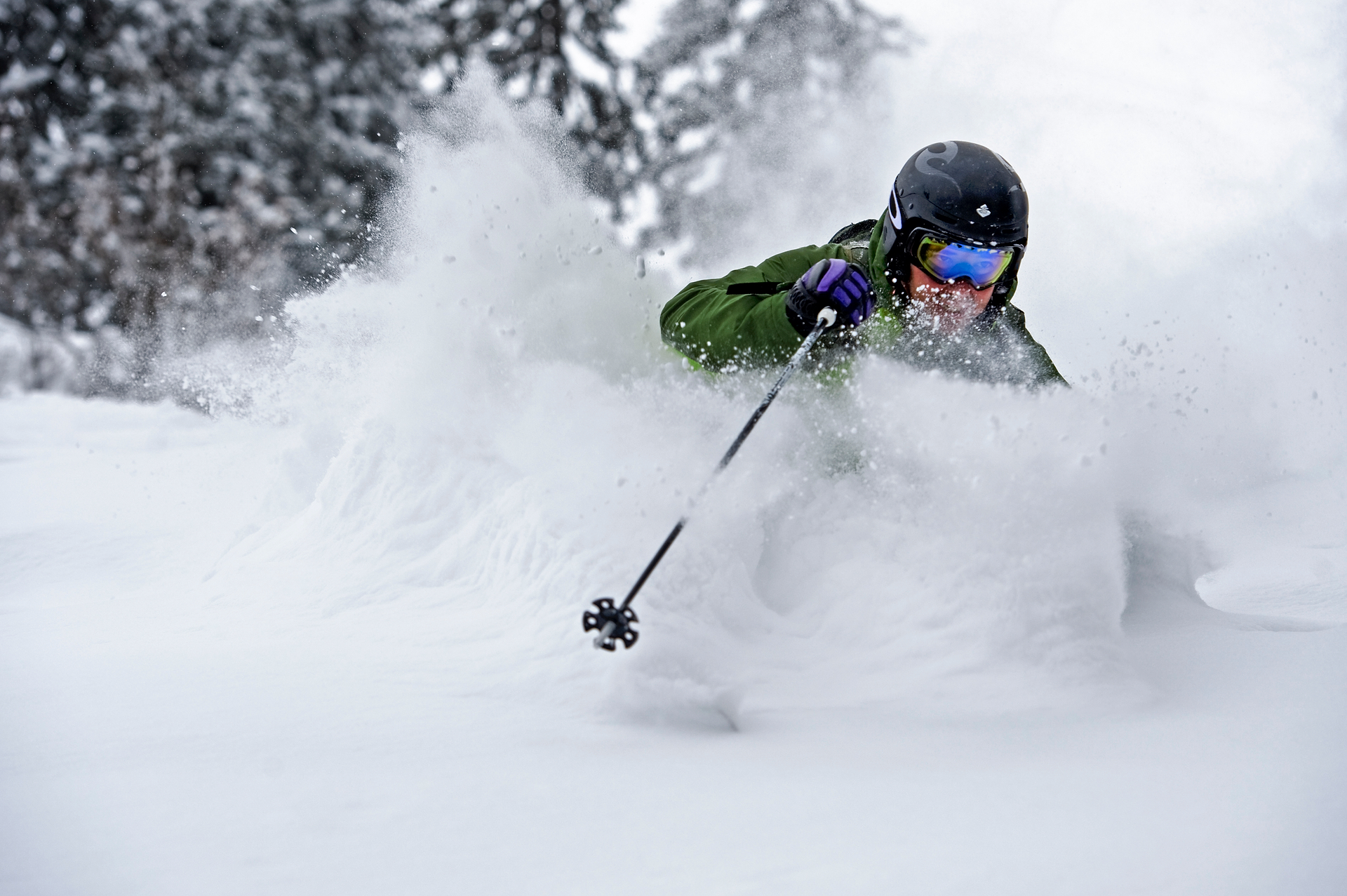
Geographic area: Austrian Alps
Place: St. Anton am Arlberg (stantonamarlberg.com)
Powder Maker: Close enough to the Mediterranean to milk its moisture and draw full benefit from the cold fronts of northern Europe and graced by altitude, glaciers, and lofty peaks.
Terrain: Endless high alpine, incredible glaciers, and a smattering of everything else translate to fabulous touring with long, luxurious backcountry powder runs between resorts.
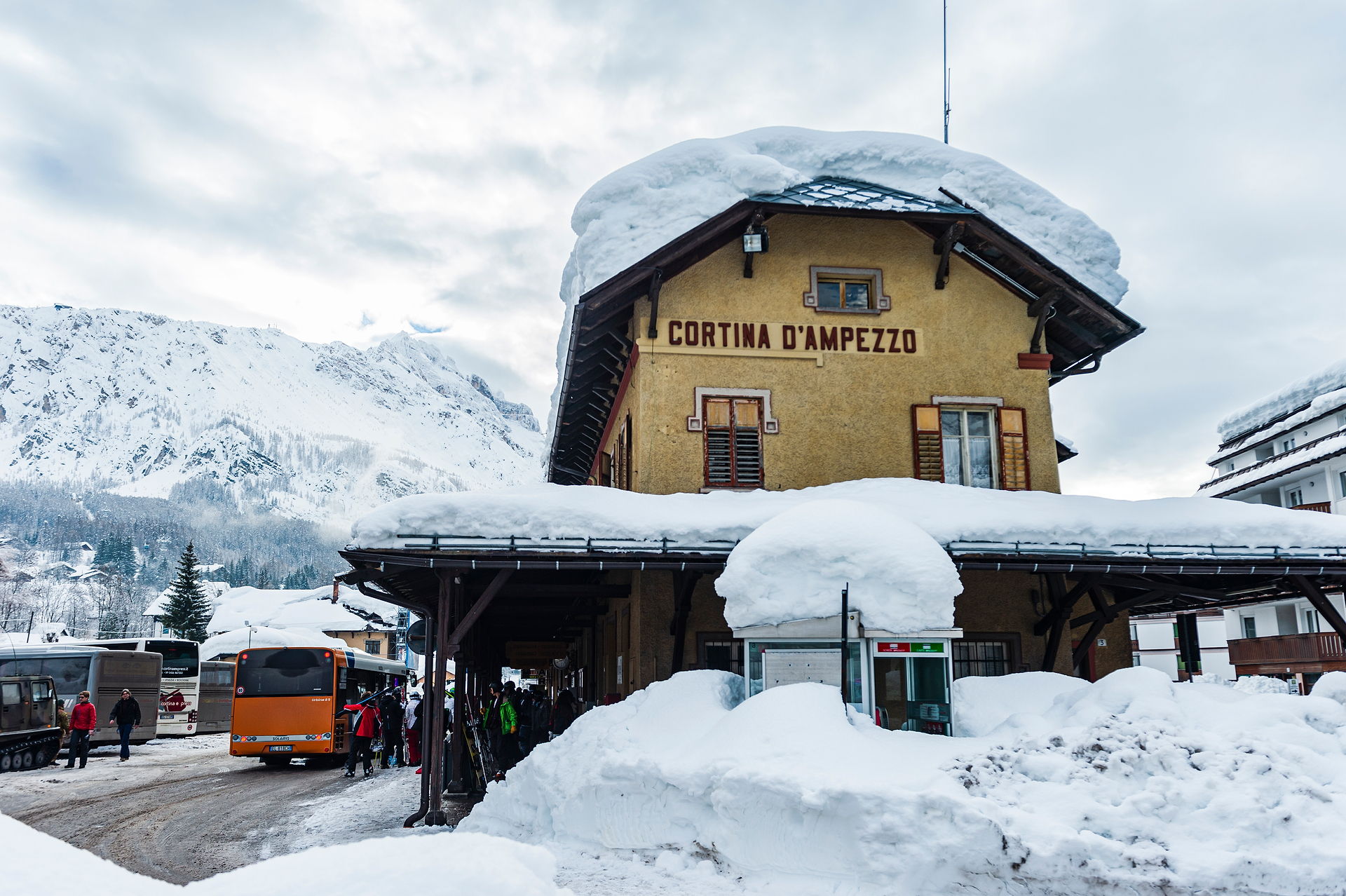
Geographic area: The Dolomites
Place: Cortina d’Ampezzo (cortina.dolomiti.org).
Powder Maker: Far enough away from the Mediterranean to deflect its moderating effects, the altitude, glaciers, and cloud-snagging peaks are home to crazy snow depths.
Terrain: The walls and towers that make the Alps famous are commonplace and filled with nooks and crannies, as exemplified in Cortina’s famous couloirs, which are long, narrow, and often twisted lines that cleave peaks from top to bottom.
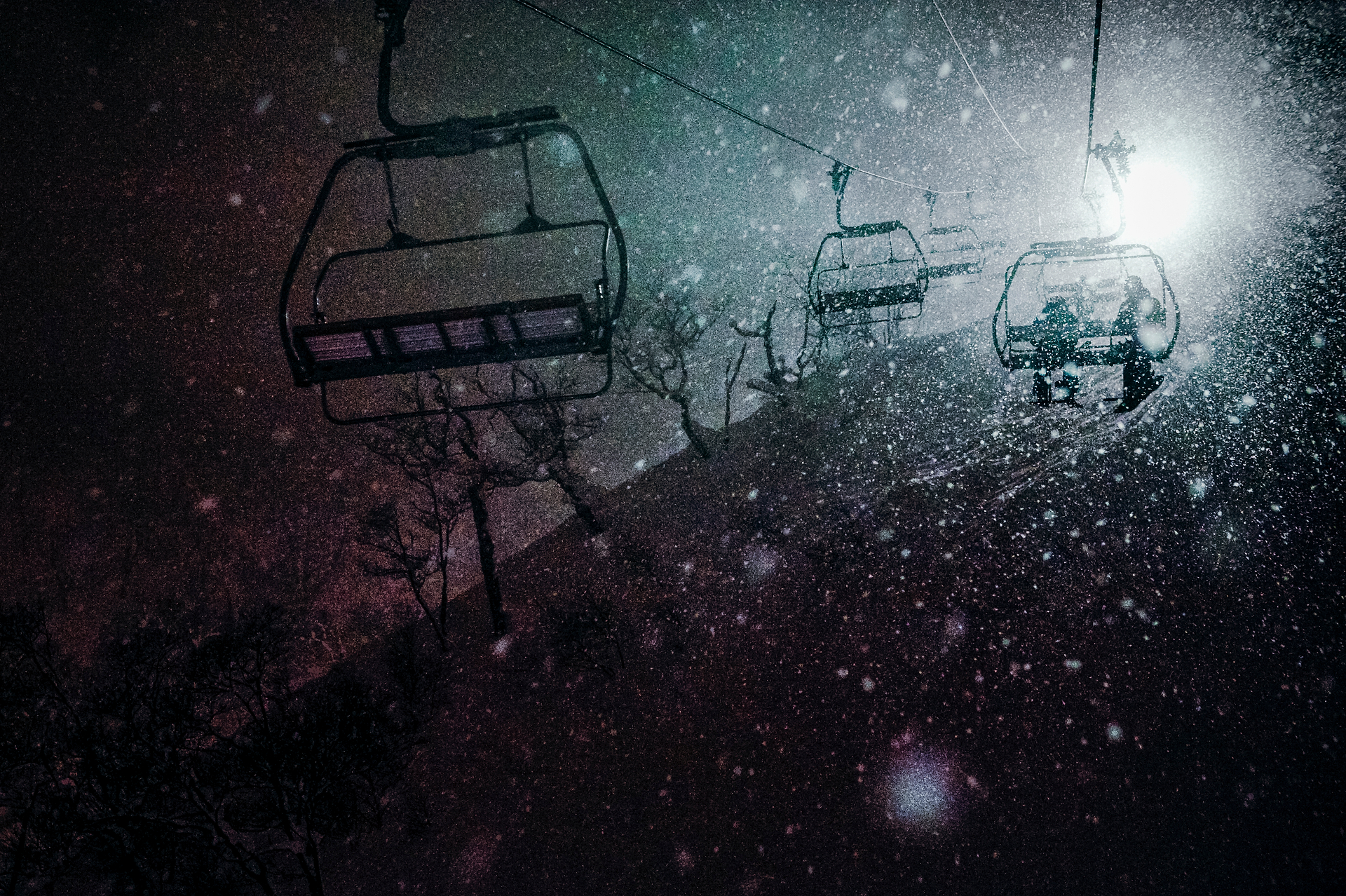
Geographic area: Hokkaido, Japan
Place: Niseko (grand-hirafu.jp)
Powder Maker: Icy winds from Siberia moving over the Sea of Japan and the Sea of Okhotsk make snow even when the pervasive low-pressure system wavers offshore.
Terrain: Ski areas abound on both ancient and active volcanoes; their general angle may be moderate, but they sport steep-sided gullies and snow-magnet ravines dotted with hardwood trees spaced far enough apart to drive a truck between them.
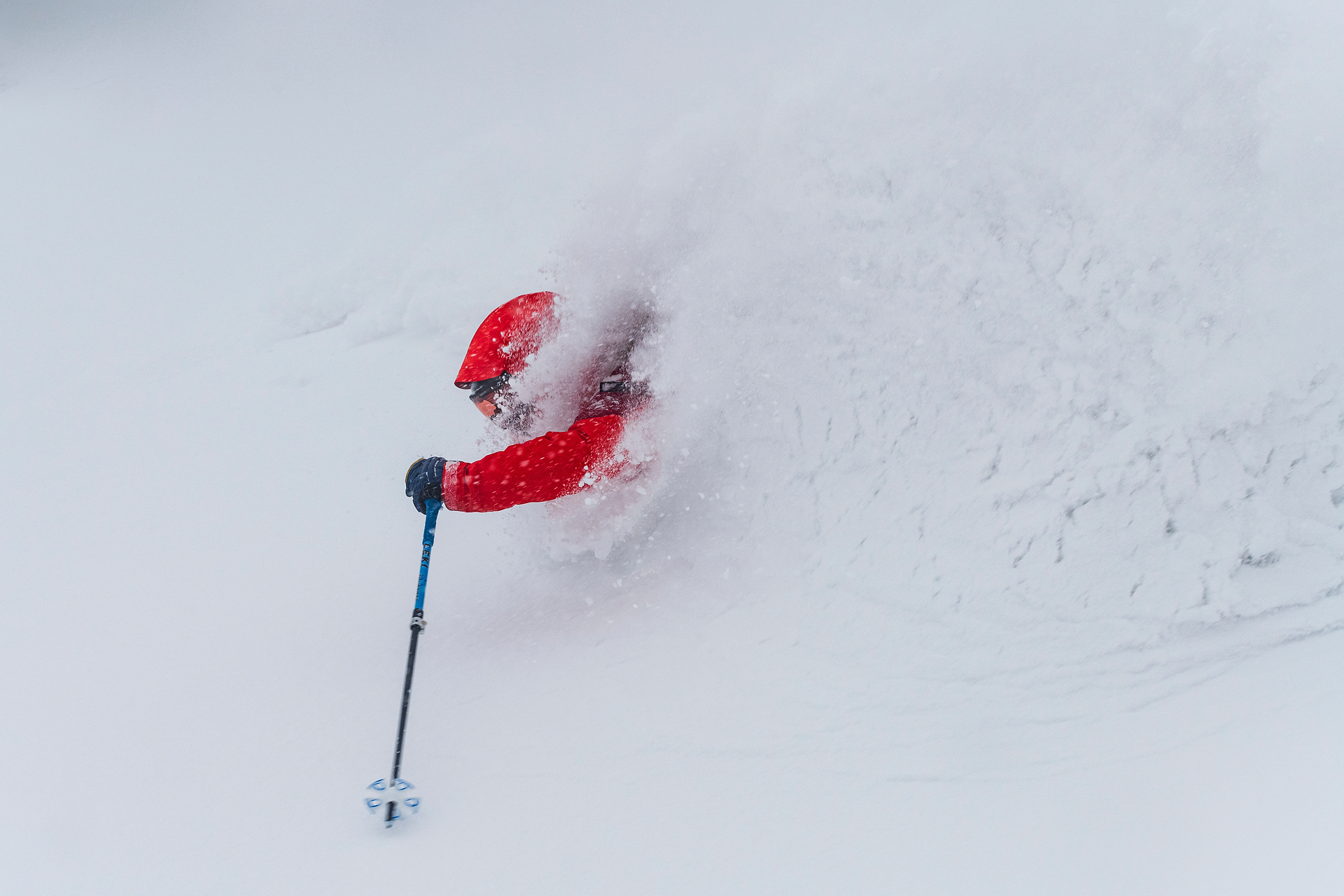
Geographic area: Teton Range, Wyoming, USA
Place: Jackson Hole (jacksonhole.com) and Grand Targhee (grandtarghee.com)
Powder Maker: Storms descend on the Tetons from every direction, but the most notable originate in the southwest, drawing strong moisture-laden northwest winds.
Terrain: Big vertical but no glaciers -- just substantial powder dumps and steep, wide-open riding.
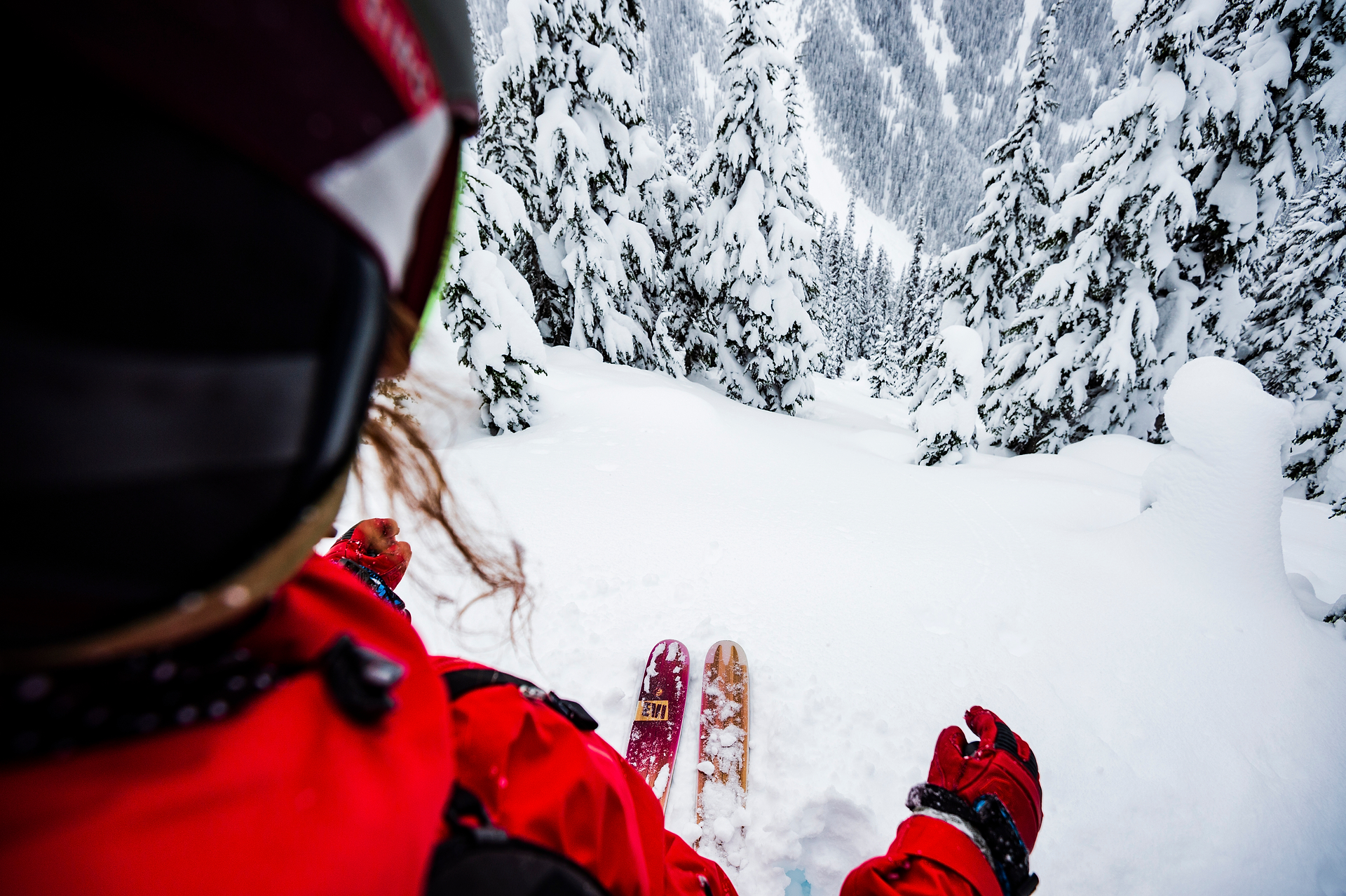
Geographic area: Interior British Columbia, Canada
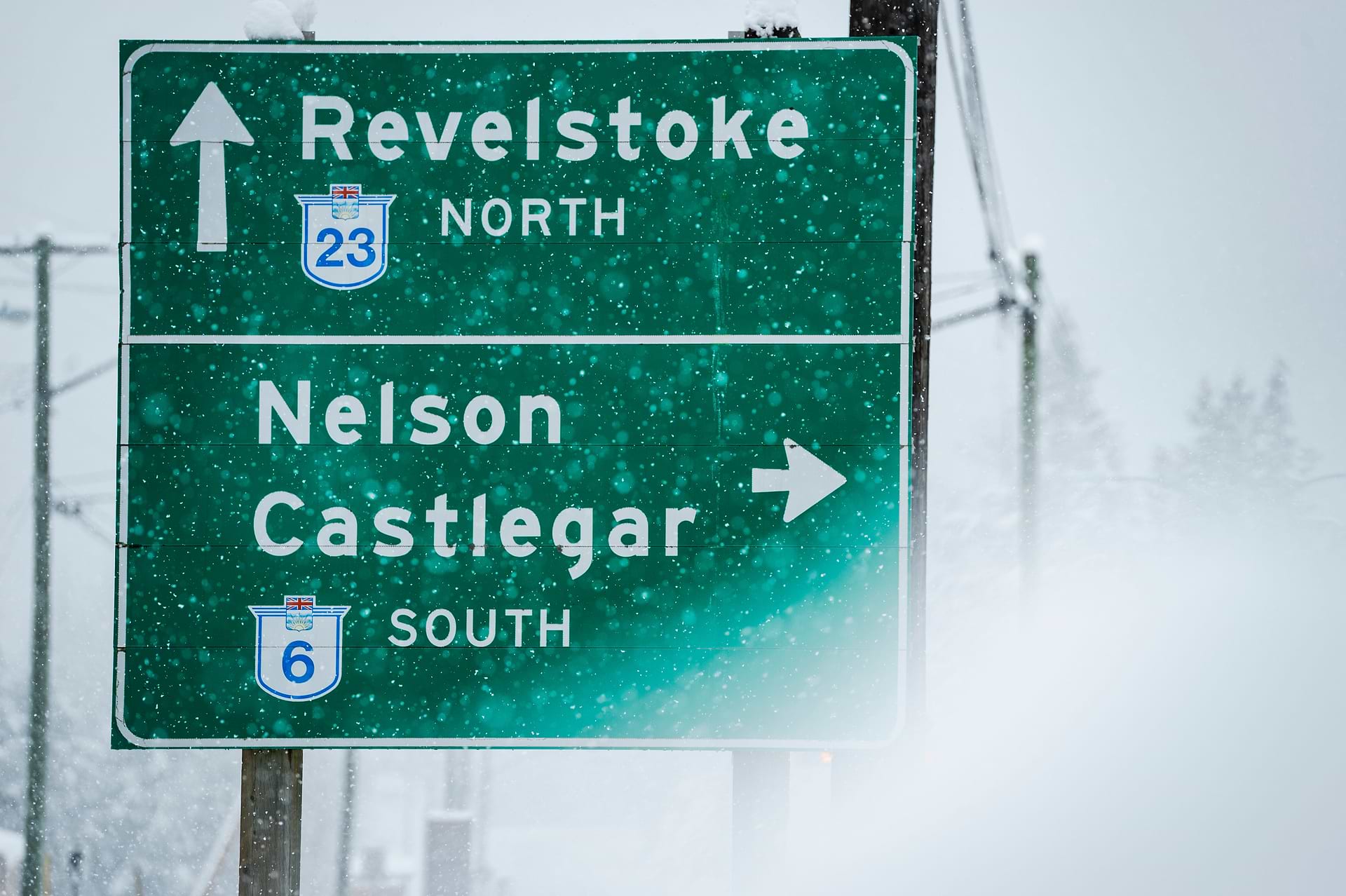
Place: There are so many resorts, cat and heli operations, and so little time; get a pre-made plan at Super Natural BC.
Powder Maker: Energetic Pacific storms carrying tons of moisture are cooled as they contact the legendary Kootenays, Purcells, Selkirks, Monashees, and Bugaboos.
Terrain: A dozen mountain ranges mean everything imaginable: huge verticals, massive glaciers, ridiculous pillows, and the steepest and deepest trees on the planet.
Geographic area: Swiss Alps
Place: Engelberg (engelberg.ch).
Powder Maker: Blessed by altitude, poised at the leading edge of storms from all directions, and benefitting from the inexplicable weather-making tendencies of Lac Lucerne.
Terrain: Everywhere you look, another chunk of hidden terrain reveals itself, from smallish glaciers to couloirs, chutes, trees, arguably the world’s best resort powder run (The Laub), and plenty of lengthy off-piste descents.
Geographic area: Austrian Alps
Place: St. Anton am Arlberg (stantonamarlberg.com)
Powder Maker: Close enough to the Mediterranean to milk its moisture and draw full benefit from the cold fronts of northern Europe and graced by altitude, glaciers, and lofty peaks.
Terrain: Endless high alpine, incredible glaciers, and a smattering of everything else translate to fabulous touring with long, luxurious backcountry powder runs between resorts.
Geographic area: The Dolomites
Place: Cortina d’Ampezzo (cortina.dolomiti.org).
Powder Maker: Far enough away from the Mediterranean to deflect its moderating effects, the altitude, glaciers, and cloud-snagging peaks are home to crazy snow depths.
Terrain: The walls and towers that make the Alps famous are commonplace and filled with nooks and crannies, as exemplified in Cortina’s famous couloirs, which are long, narrow, and often twisted lines that cleave peaks from top to bottom.
Geographic area: Hokkaido, Japan
Place: Niseko (grand-hirafu.jp)
Powder Maker: Icy winds from Siberia moving over the Sea of Japan and the Sea of Okhotsk make snow even when the pervasive low-pressure system wavers offshore.
Terrain: Ski areas abound on both ancient and active volcanoes; their general angle may be moderate, but they sport steep-sided gullies and snow-magnet ravines dotted with hardwood trees spaced far enough apart to drive a truck between them.
Geographic area: Teton Range, Wyoming, USA
Place: Jackson Hole (jacksonhole.com) and Grand Targhee (grandtarghee.com)
Powder Maker: Storms descend on the Tetons from every direction, but the most notable originate in the southwest, drawing strong moisture-laden northwest winds.
Terrain: Big vertical but no glaciers -- just substantial powder dumps and steep, wide-open riding.
Geographic area: Interior British Columbia, Canada
Place: There are so many resorts, cat and heli operations, and so little time; get a pre-made plan at Super Natural BC.
Powder Maker: Energetic Pacific storms carrying tons of moisture are cooled as they contact the legendary Kootenays, Purcells, Selkirks, Monashees, and Bugaboos.
Terrain: A dozen mountain ranges mean everything imaginable: huge verticals, massive glaciers, ridiculous pillows, and the steepest and deepest trees on the planet.
LESLIE ANTHONY is a writer and editor who knows a thing or two about snow. Longtime Creative Director of SKIER, former Managing Editor of POWDER, and author of the book White Planet: A Mad Dash Through Modern Global Ski Culture, the resident of Whistler, British Columbia, continues to appear regularly on the masthead of the world’s top ski magazines. His favorite activity? Skiing powder, of course.
LESLIE ANTHONY is a writer and editor who knows a thing or two about snow. Longtime Creative Director of SKIER, former Managing Editor of POWDER, and author of the book White Planet: A Mad Dash Through Modern Global Ski Culture, the resident of Whistler, British Columbia, continues to appear regularly on the masthead of the world’s top ski magazines. His favorite activity? Skiing powder, of course.