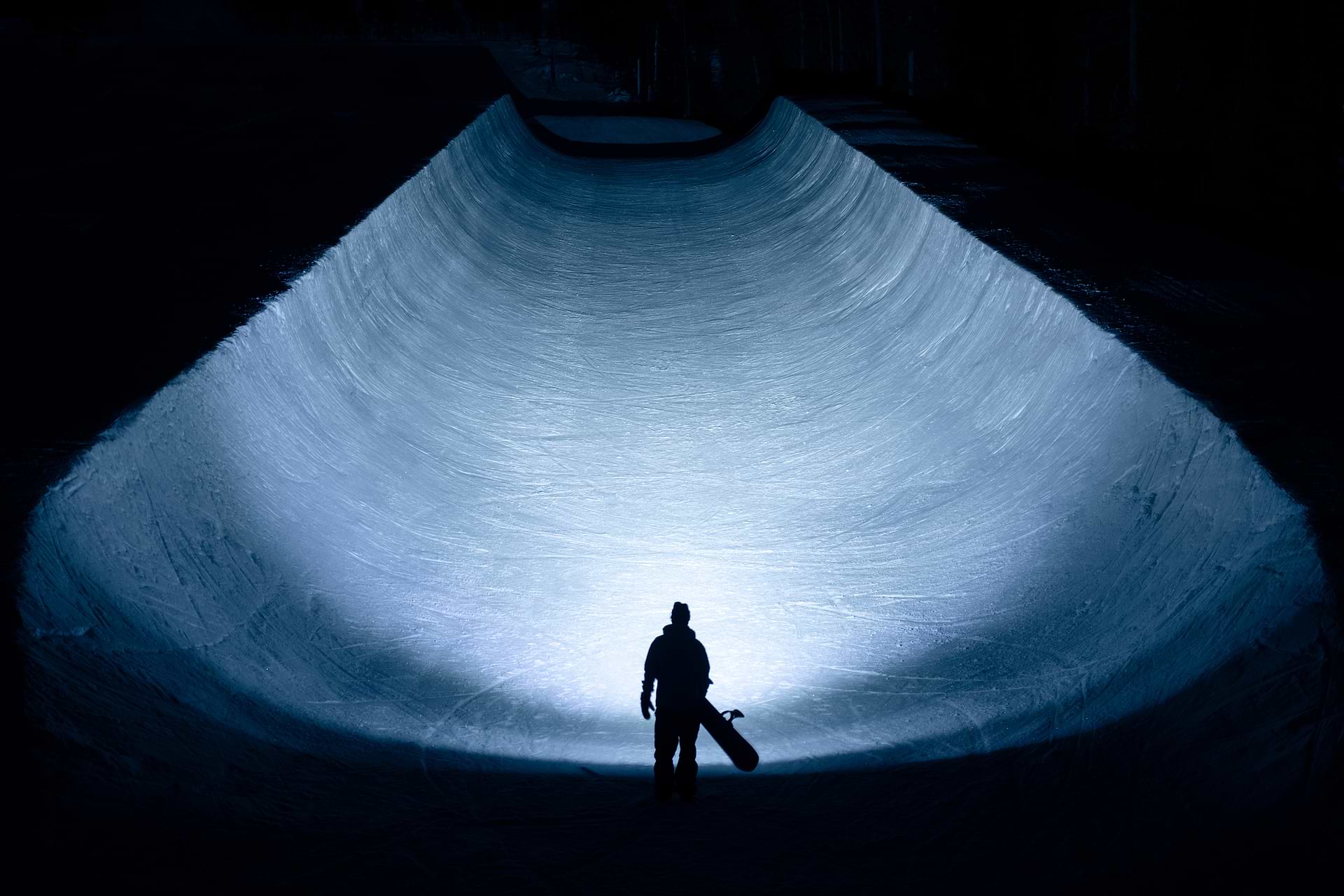
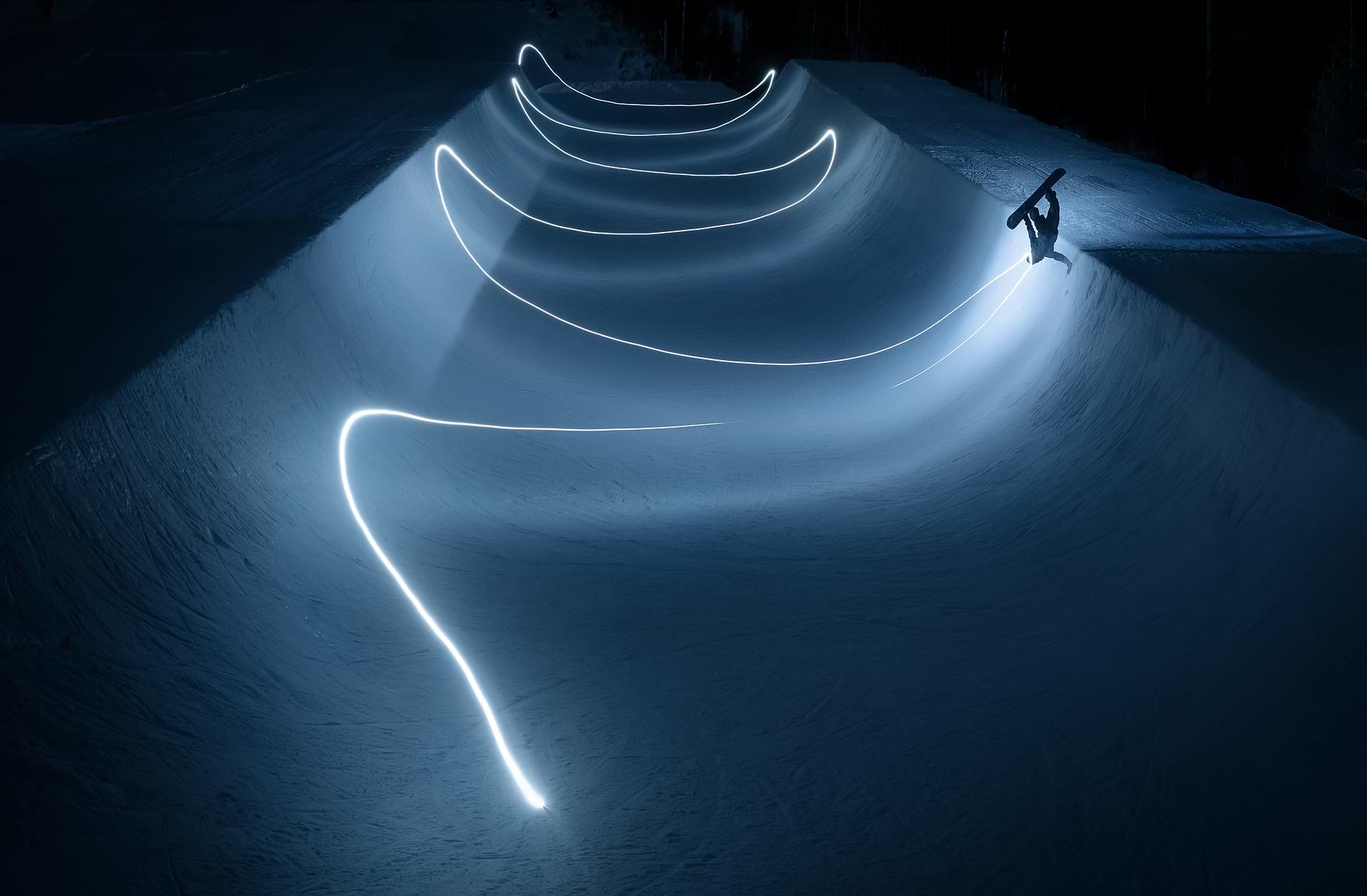
With his headlight, Niklas Mattsson looks up at Sweden’s only halfpipe in Kläppen, Sweden. Many people who have seen this photo think it looks like an ultrasound; I believe they are right.
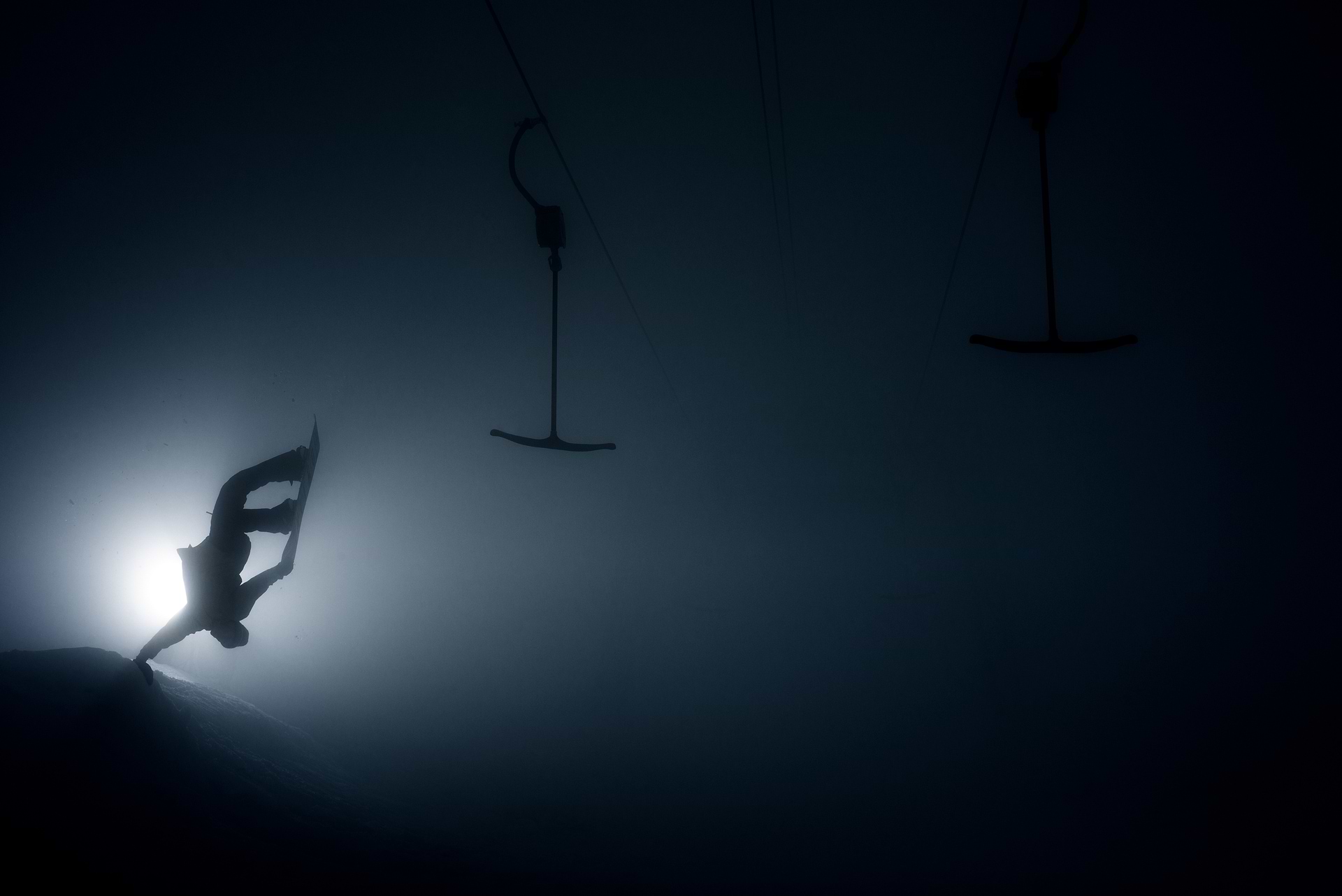
With a dramatic and well-defined style, Swedish photographer Daniel Bernstål has made a name for himself as one of the leading shooters on the global snowboard scene. The 36-year-old Bernstål, a self-taught photographer, often works with portable studio light on location, creating an almost surrealistic setting and then adding impeccable snowboarding into his scenes.
“I build up scenes, almost like how it’s done in the film industry, and create images that stand out and pop. I want people to think — how the hell did he do that?”
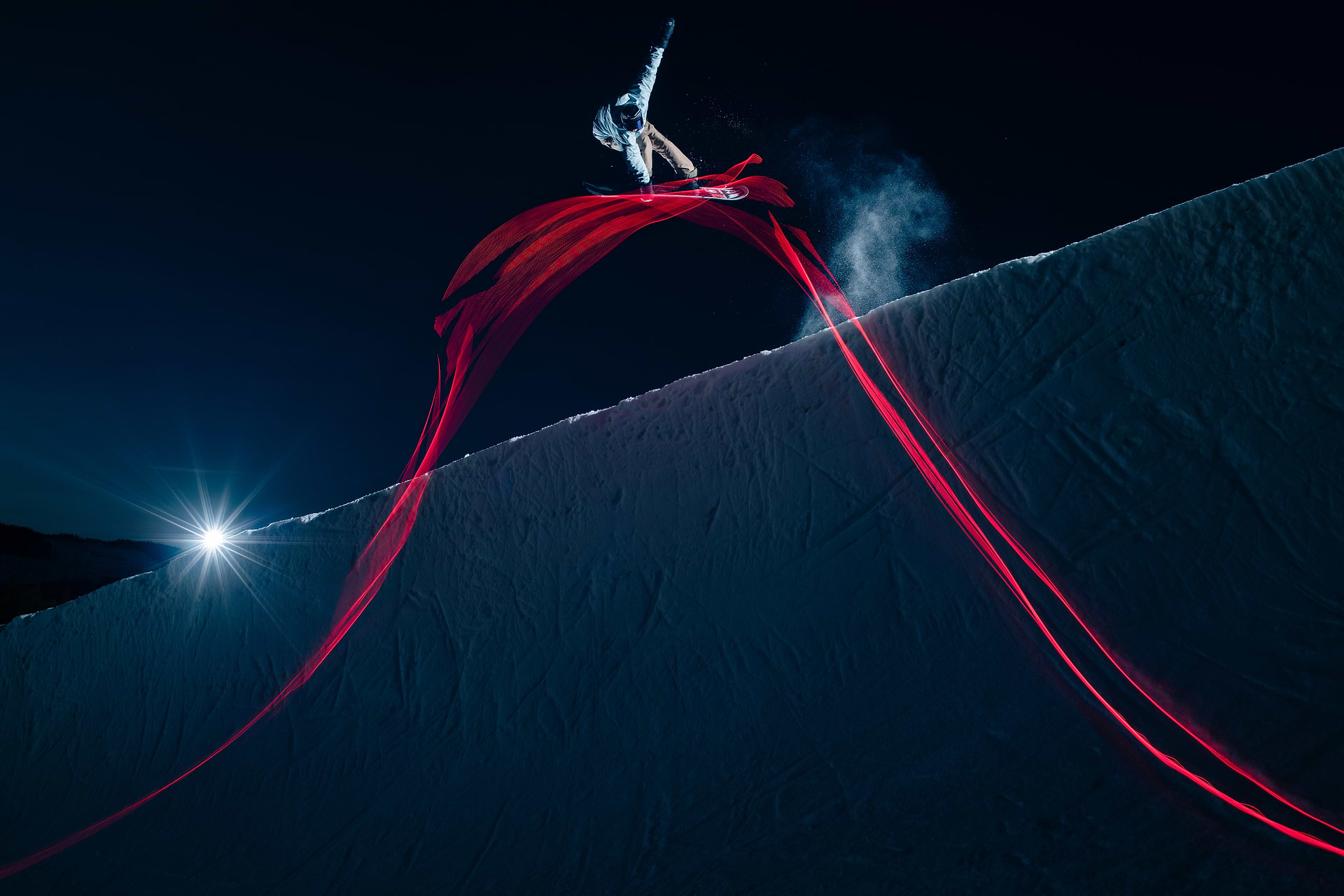
Bernstål’s toolbox includes machines to create smokescreens, flashes mounted on drones, torches, LED lights, smoke grenades, slow shutter speeds and multiple flashes. He likes to paint with light and create unique, theatrical images — definitely not standard catalogue shots.
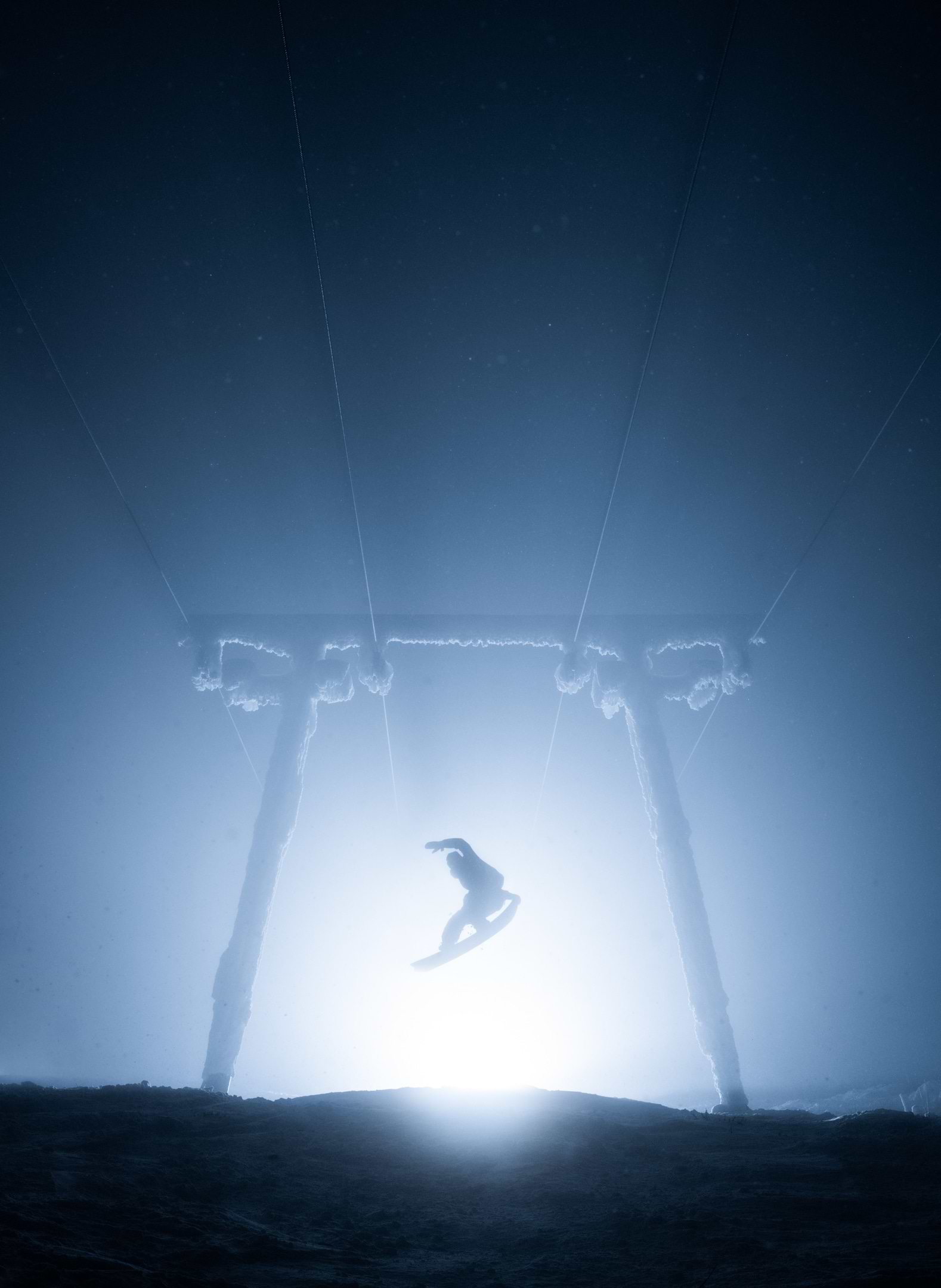
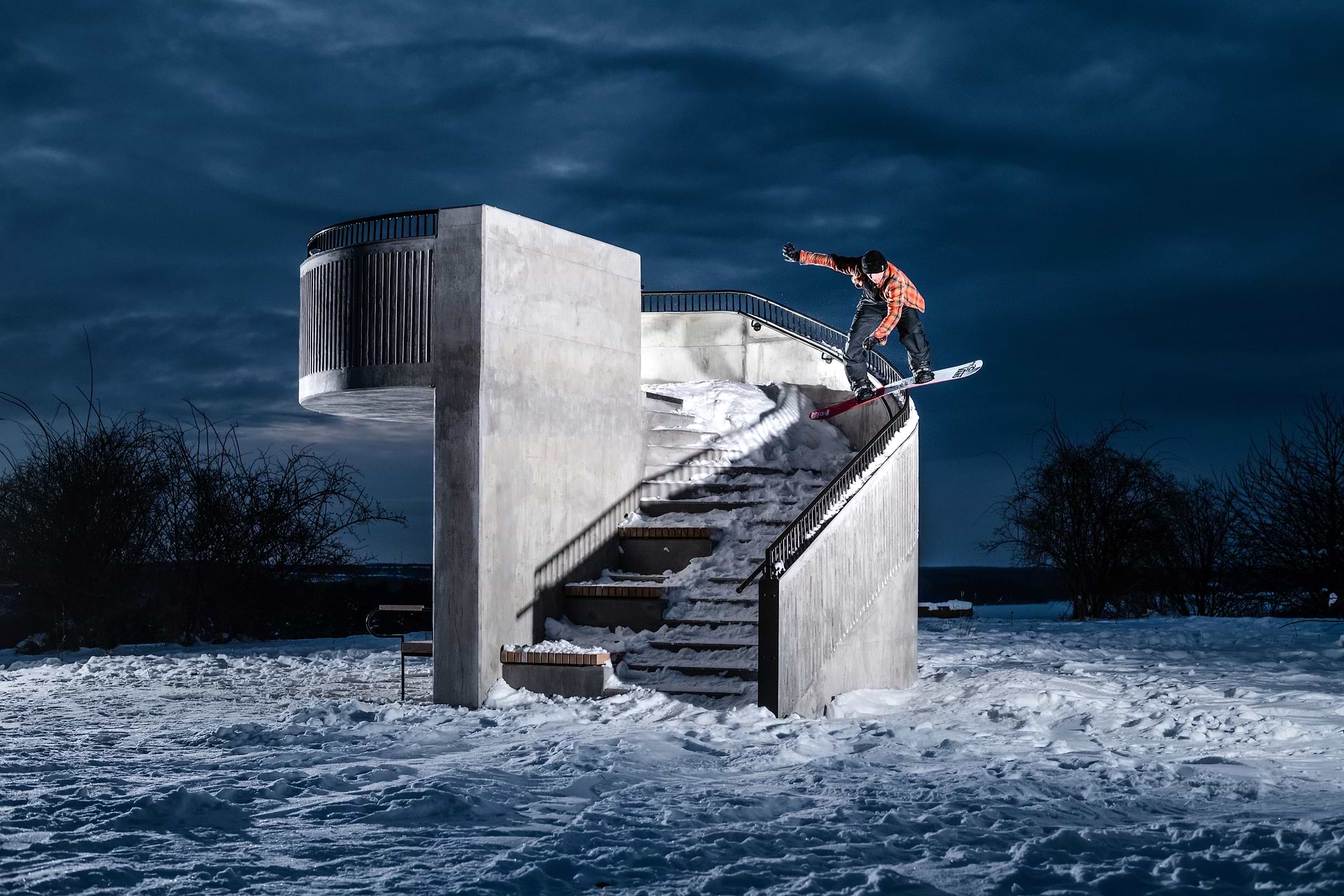
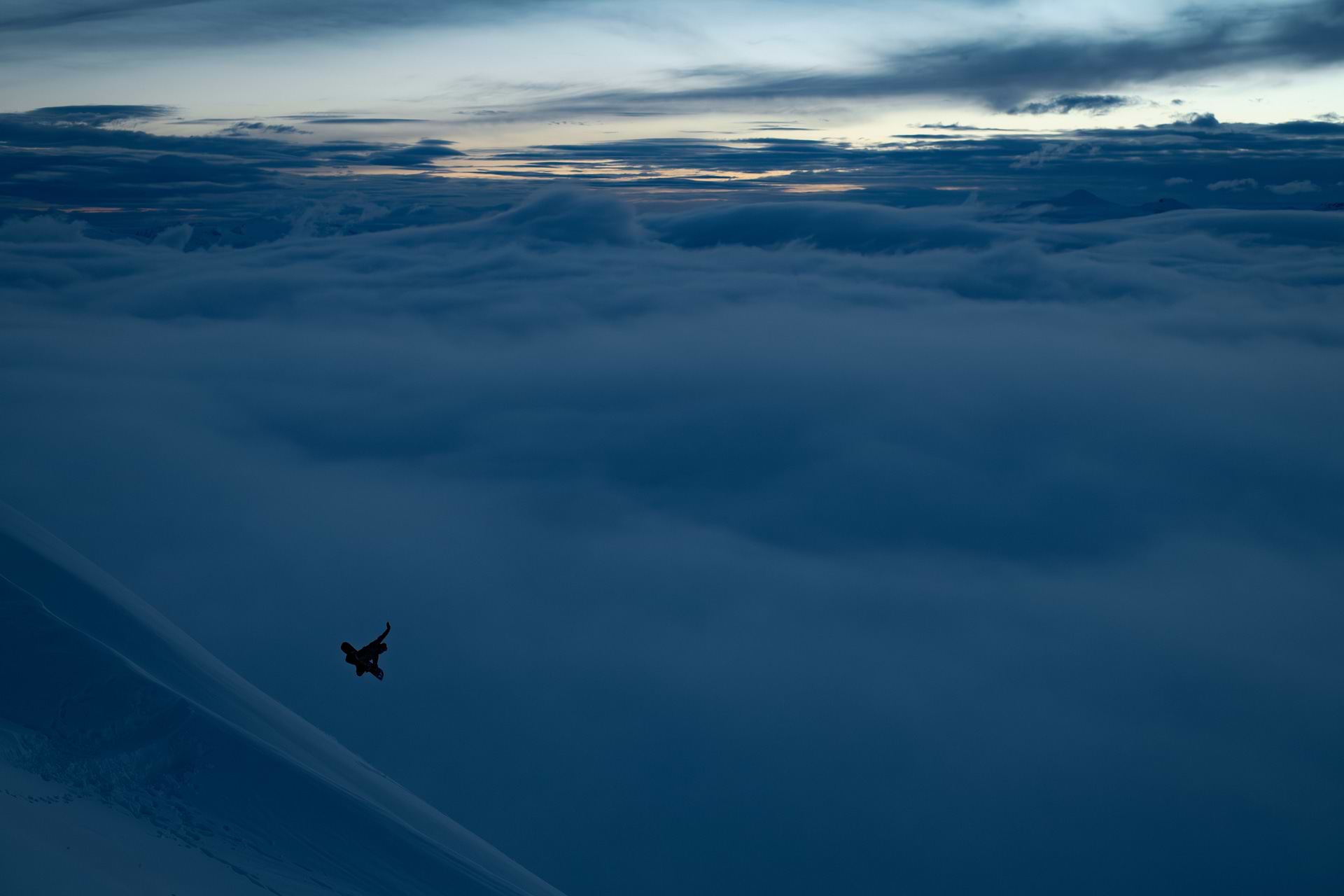
It was the season’s first photo session, with heavy fog all over the mountain in Sälen, Sweden. My buddy Johan Nordhag was out riding, and I asked if he was down to do something in front of my lens. I looked for something that could frame a beautiful trick and found this lift that was out of order. As often, I placed my flash behind him to create a moody silhouette. We discussed what trick would look the best and concluded that a crail could look cool.
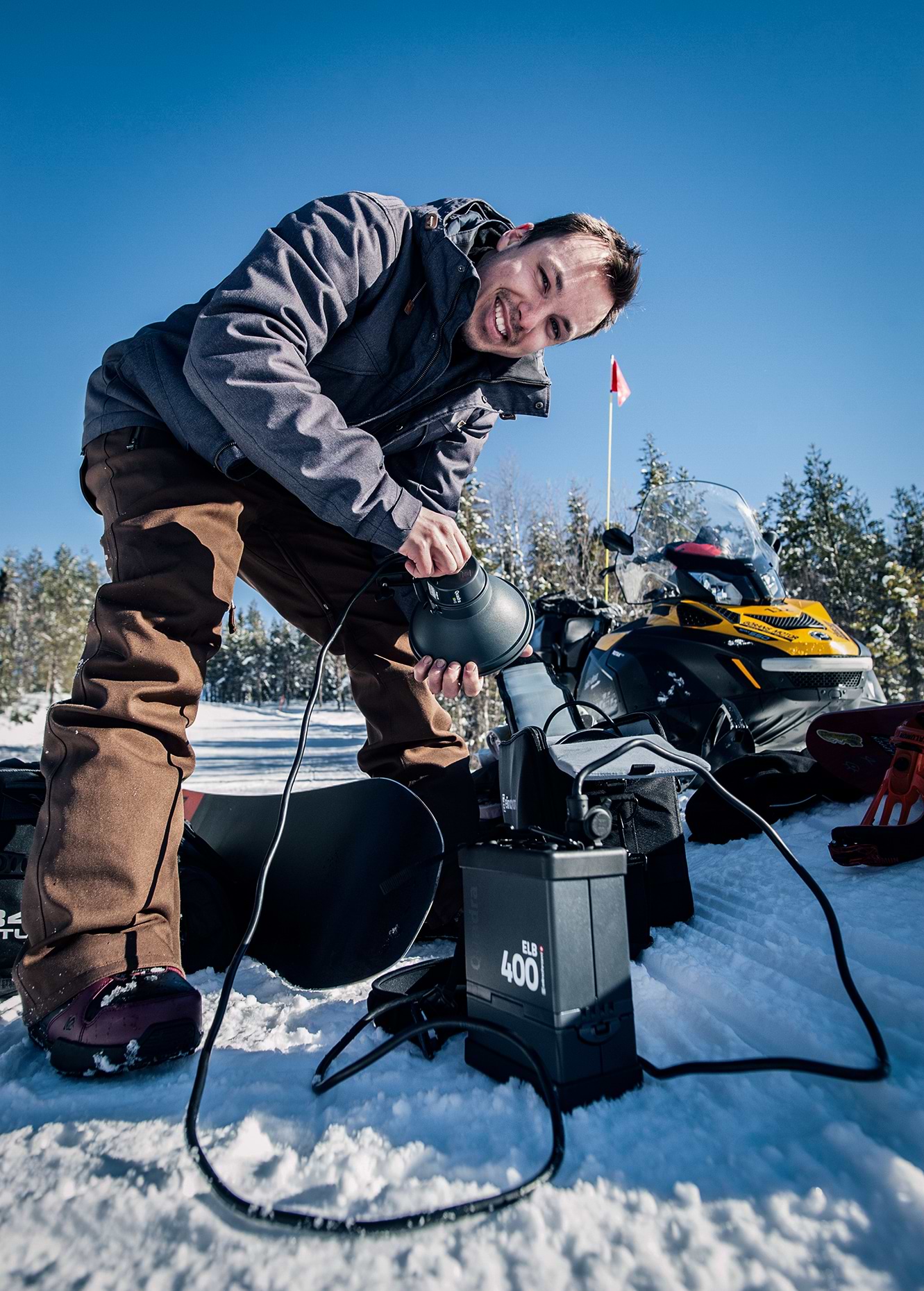
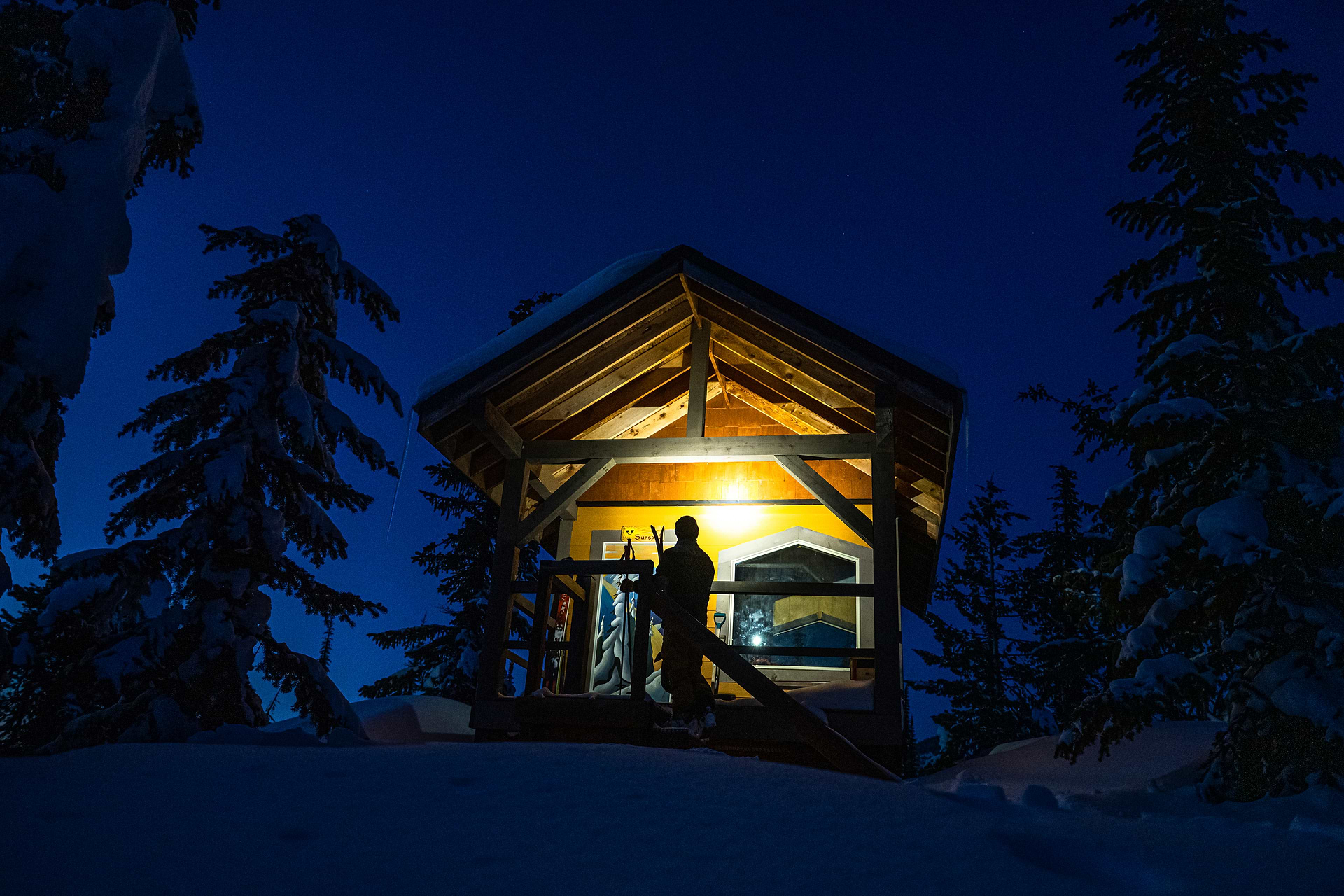
Creating unique sets with my flashes has always been a big passion of mine. But it is heavy to carry all the equipment. On this shoot, we were lucky enough to have a snowmobile. Unfortunately, that is not always the case; most times, we must carry everything ourselves.
It was the season’s first photo session, with heavy fog all over the mountain in Sälen, Sweden. My buddy Johan Nordhag was out riding, and I asked if he was down to do something in front of my lens. I looked for something that could frame a beautiful trick and found this lift that was out of order. As often, I placed my flash behind him to create a moody silhouette. We discussed what trick would look the best and concluded that a crail could look cool.
Creating unique sets with my flashes has always been a big passion of mine. But it is heavy to carry all the equipment. On this shoot, we were lucky enough to have a snowmobile. Unfortunately, that is not always the case; most times, we must carry everything ourselves.
Bernstål’s photos are spectacular, eye-catching, and powerful — but not necessarily shot for mainstream commercial appeal. Instead, Bernstål has focussed on defining his style; if you know his work, it’s easy to identify a “Bernstål.”
“I like to shoot simple, distinct photos. For some reason, I often end up shooting silhouettes of various kinds. It creates a powerful type of imagery where the action is clear from distraction.”
Bernstål found the passion for snowboarding early, but in his teens, he was realistic enough to understand that he would never achieve the dream of becoming a pro snowboarder. Instead, he eventually picked up a camera, more or less by accident.
“I was driving a delivery truck, but the company was struggling, so they did not have enough jobs to keep me on. At that time, I decided that my next job must be something I enjoy,” Bernstål recalls.
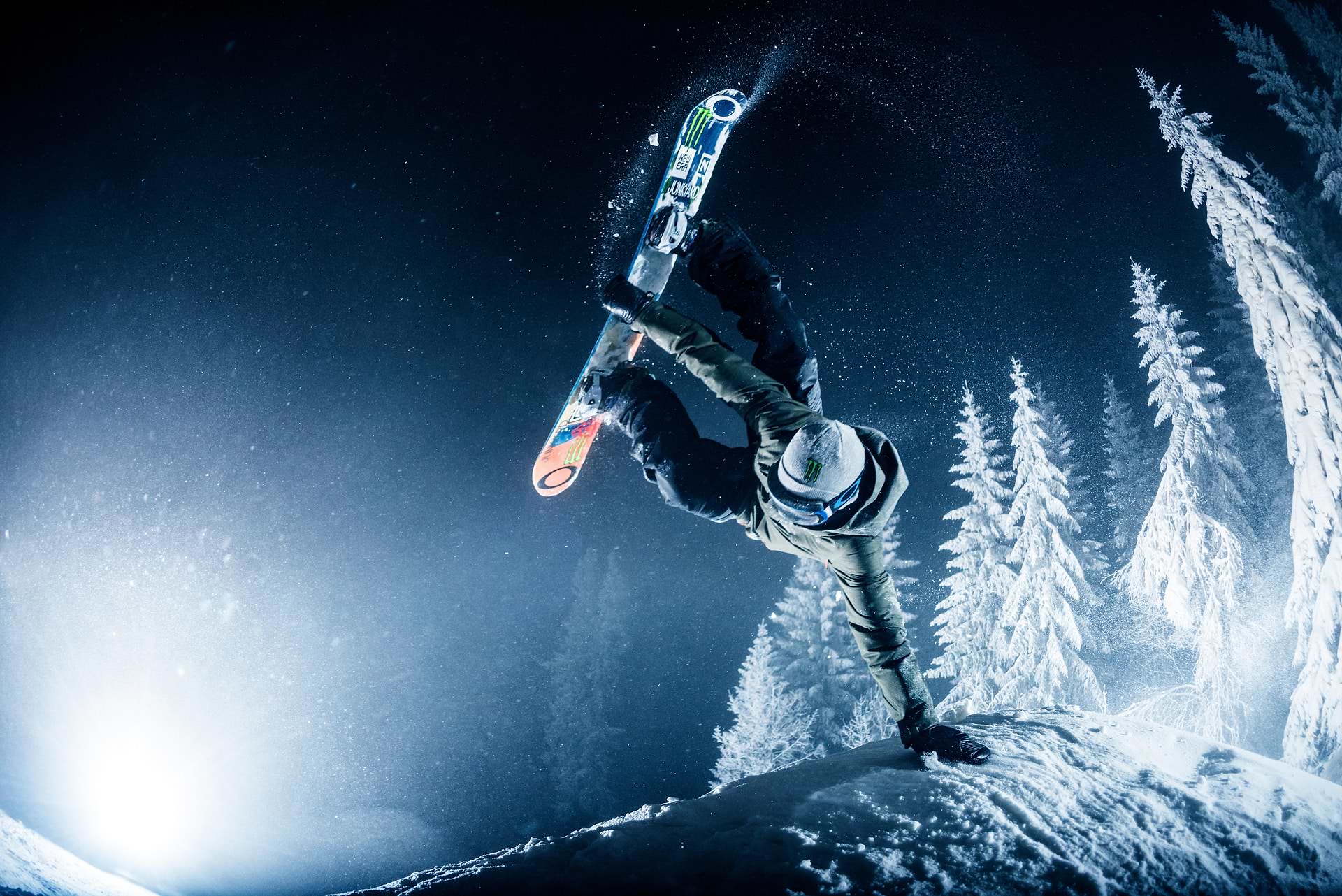
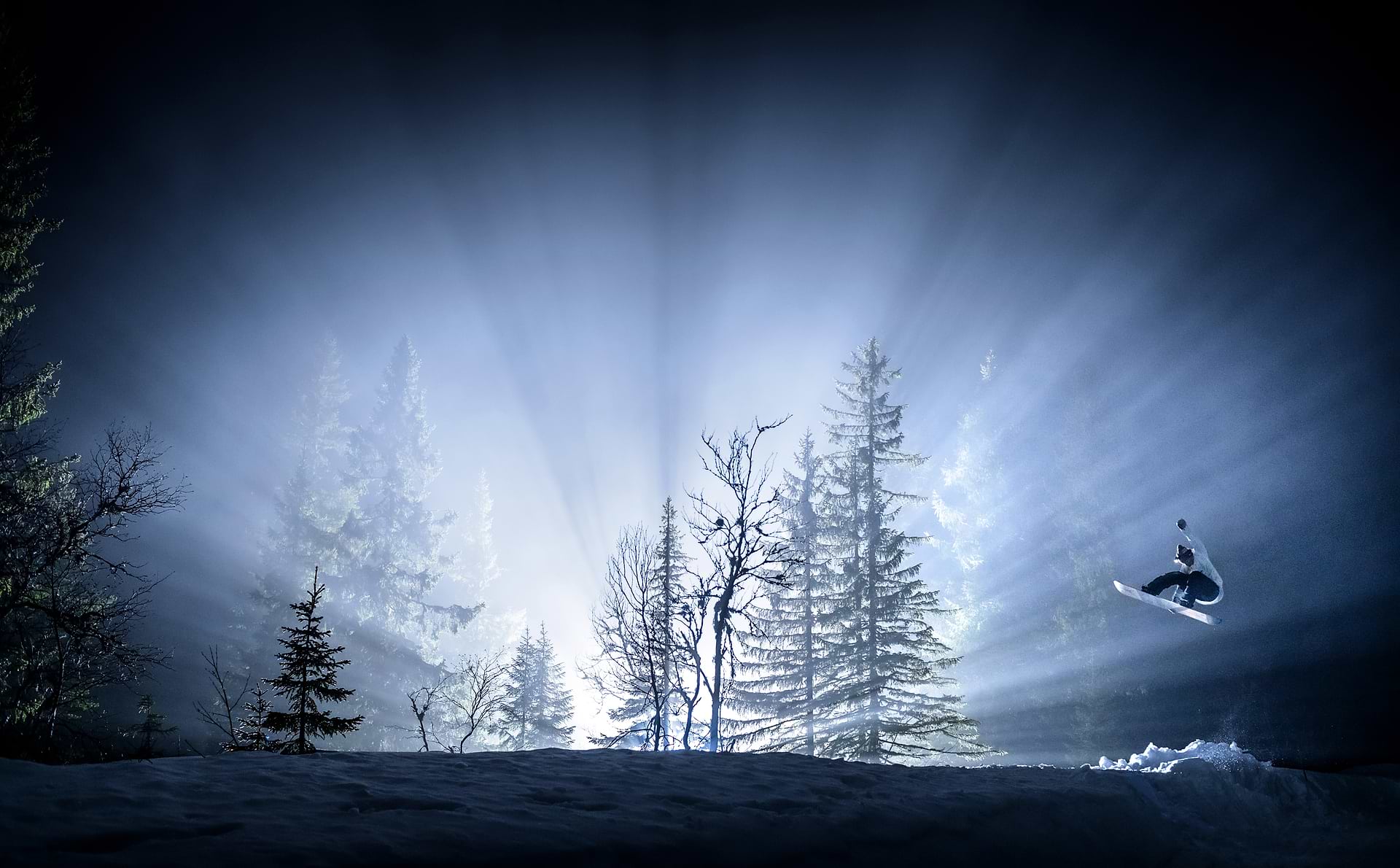
Looking at this shot, it might appear like we are in the middle of a deep forest, but we are not. This was just next to a groomer in a ski area, and all the snow came from snow-making equipment nearby. I like this about shooting with flashes; you can create a small set and make it look cool, even if it’s not that dramatic in real life.
Looking at this shot, it might appear like we are in the middle of a deep forest, but we are not. This was just next to a groomer in a ski area, and all the snow came from snow-making equipment nearby. I like this about shooting with flashes; you can create a small set and make it look cool, even if it’s not that dramatic in real life.
It took a few years, but he decided to try photography and eventually was drawn to snowboard photography. He studied all snowboard magazines and carefully analyzed every photo for what made it special. Then he went out to shoot with his friends back home in Gävle, a town located a few hours north of Stockholm and better known for hockey and coffee than snowboarding.
As he progressed, he reached out to the best riders in the region and asked them to join the shoots. Initially, it was a lot of trial and error, but Bernstål was a fast learner and quickly got the hang of it. After a short stint as a photo assistant for Anders Neuman, a well-established Swedish snowboard photographer at the time, Bernstål gained more confidence, and his connections in the industry grew.
“In 2016, I got invited by a few Swedish pro snowboarders to follow along to Folgefonna Glacier in Norway. Even superstar Sage Kotsenburg joined this trip, and it turned out the best way possible with amazing weather and epic sessions.”
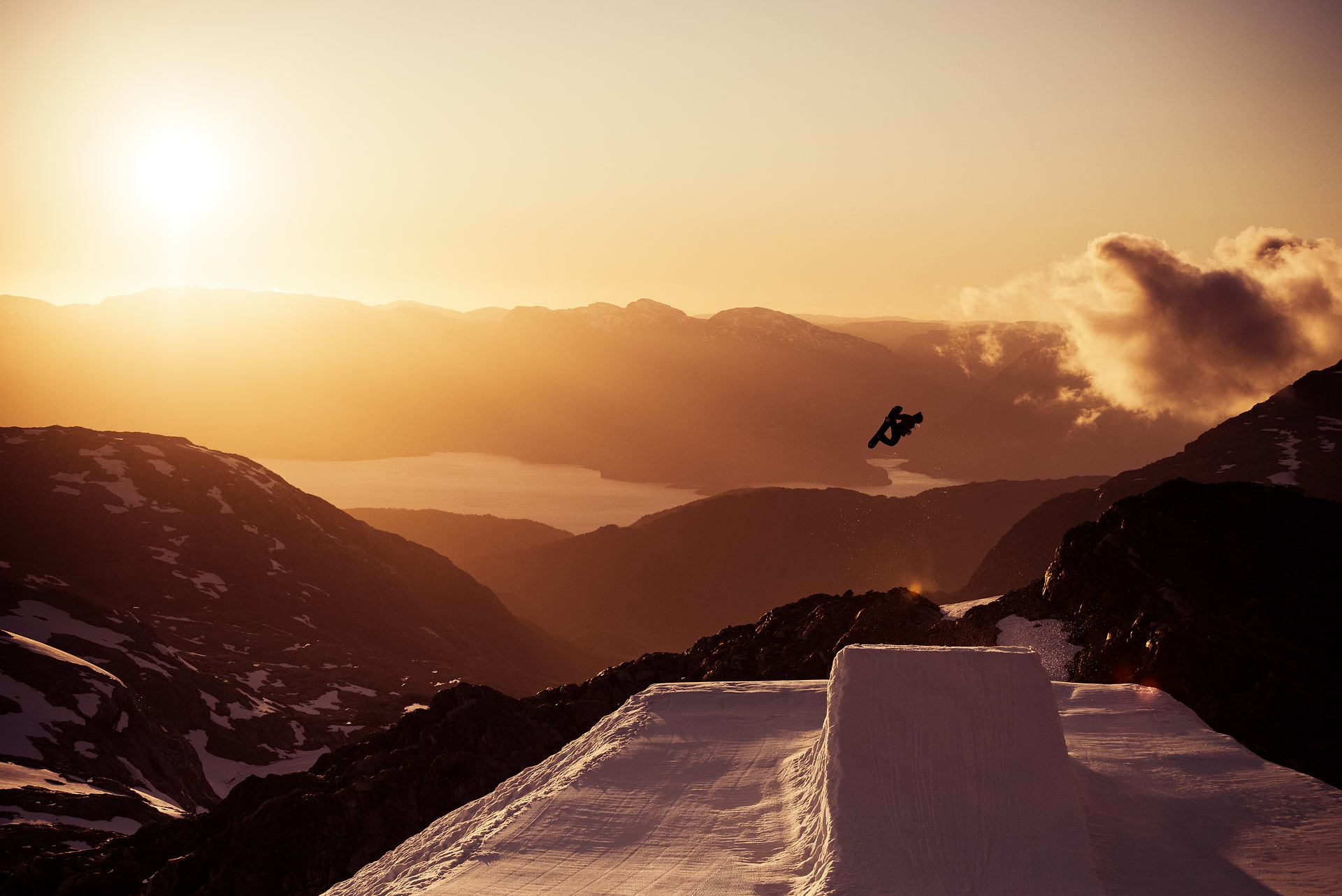
When Bernstål started distributing the photos from the Folgefonna trip, he quickly realized he’d hit a home run. Several of the athlete’s sponsors licensed pictures for their marketing campaigns and the photo editors at the magazines he worked with were stoked about his results.
“This trip changed everything for me. It was my breakthrough and set me on a great path forward,” recalls Bernstål.
Bernstål was soon drawn into shooting rails, prominent features, and urban snowboarding. He enjoyed controlling the light and the scenes rather than constantly relying on natural light. It was also more accessible to him, given that he struggled with mobility due to an old motocross accident in 2010 when he seriously injured his right knee and thigh muscle attachment.
Over the years, Bernstål has shot with some of the biggest names in the sport, lined up cover shots for the most respectable magazines, and been recognized for his work in events like Red Bull Illume and the X-Games photo category. But in the early years, he struggled.
“The hardest part was breaking into the scene and getting to work with the best riders. I didn’t know anyone, so it took me a while to break through and build up my reputation to get the trust of the pro riders.”
Nowadays, the income from snowboard photography is a small part of Bernstål’s revenue. Unfortunately, many magazines have been forced to close shop, and the commercial market has declined.
“It became unsustainable to travel for weeks and months at the time to shoot snowboarding, so instead, I am staying more at home, taking on all kinds of other commercial work. I still shoot snowboarding occasionally, but now it’s more about passion projects and not to make money.”
Swedish photographers have been making big marks in the action sports photography genre for a long time. Ever since the mid-70s, when the legendary ski magazine Åka Skidor was founded, the little Nordic country constantly produced standout shooters. When snowboarding became a global phenomenon in the mid-90s, many of the most prominent riders were Swedes, and some of the early ground-breaking events also took place in the country. Therefore, it was natural that some people in the Swedish snowboard scene picked up cameras and other creative tools.
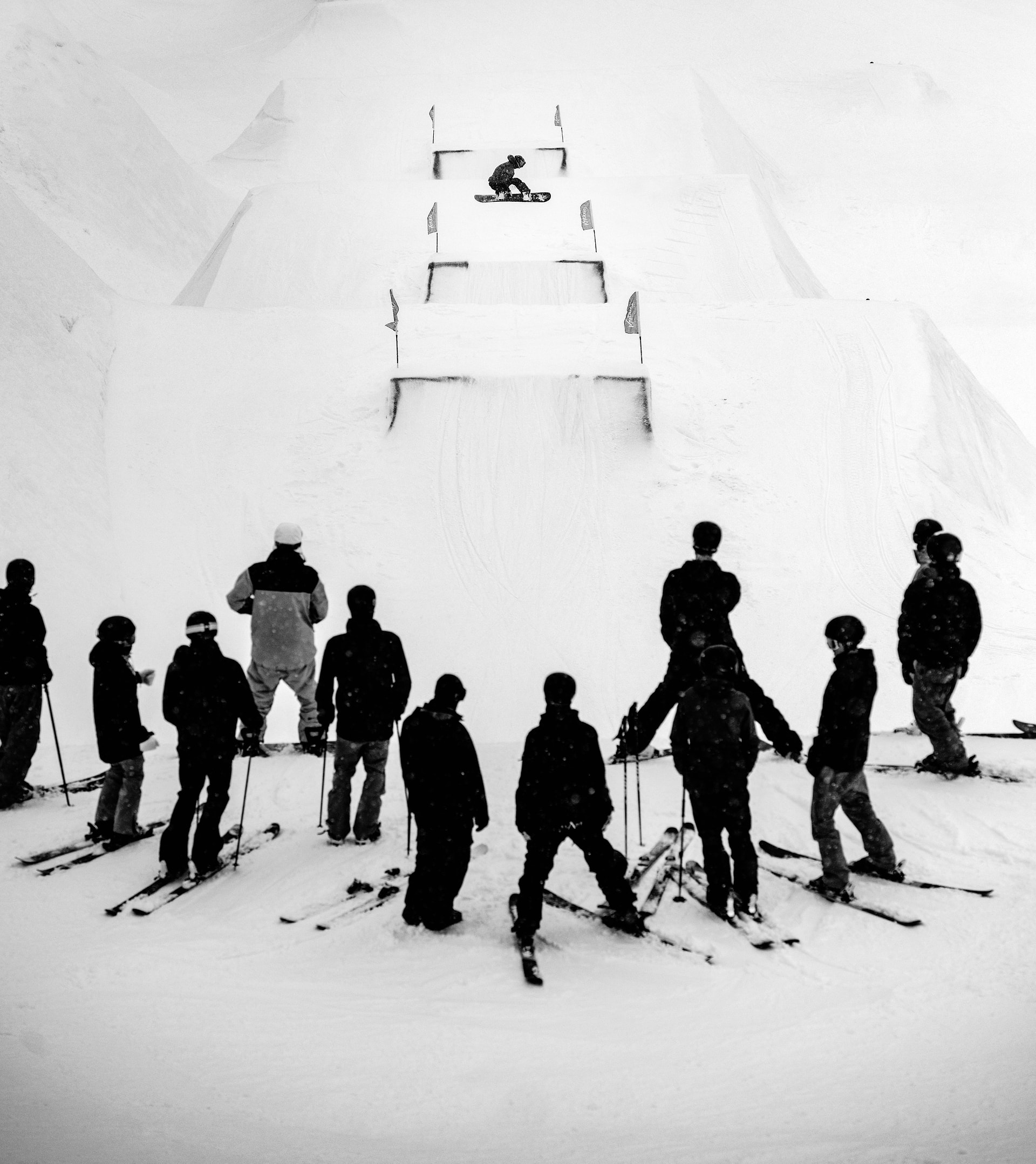
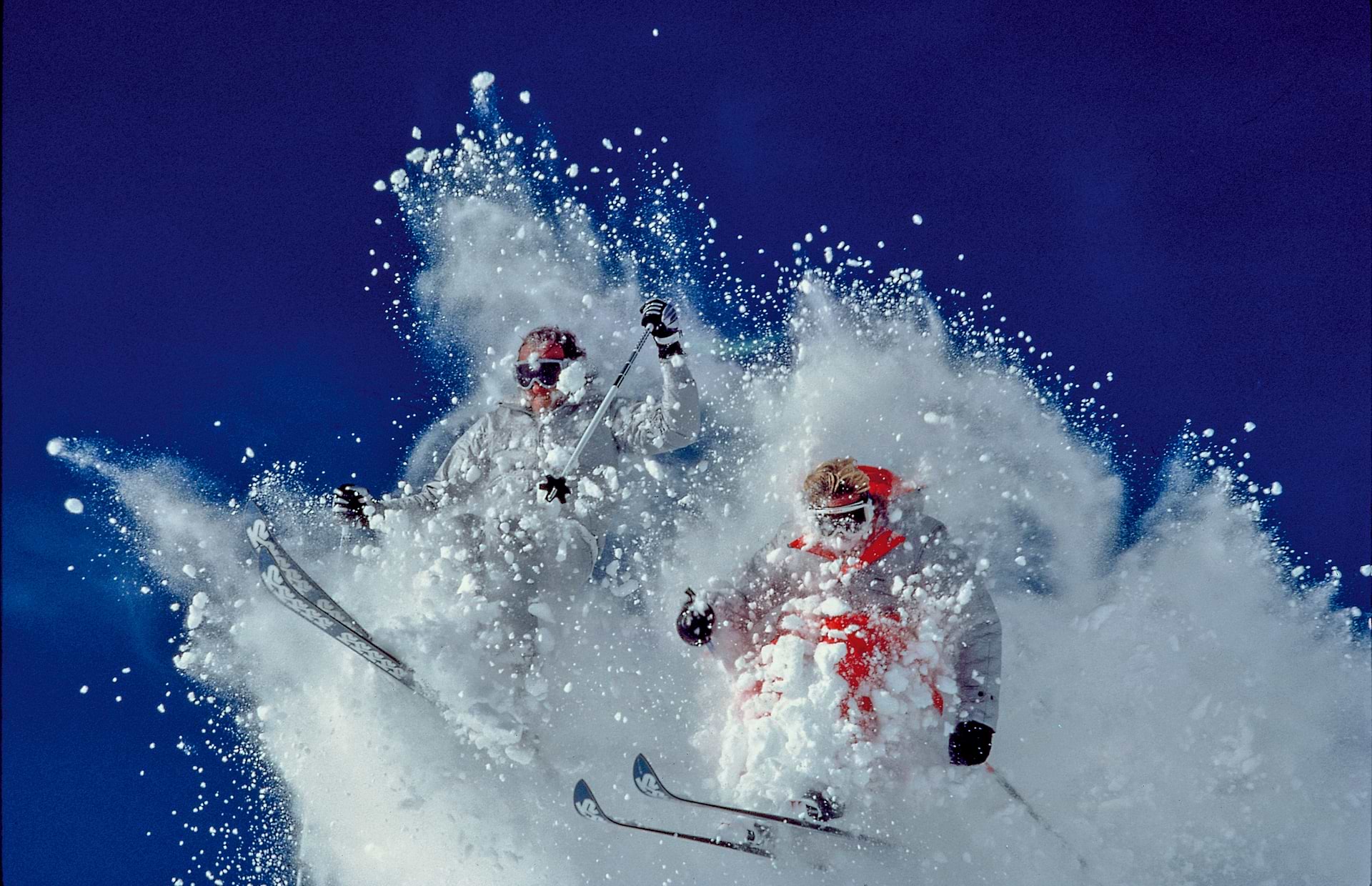
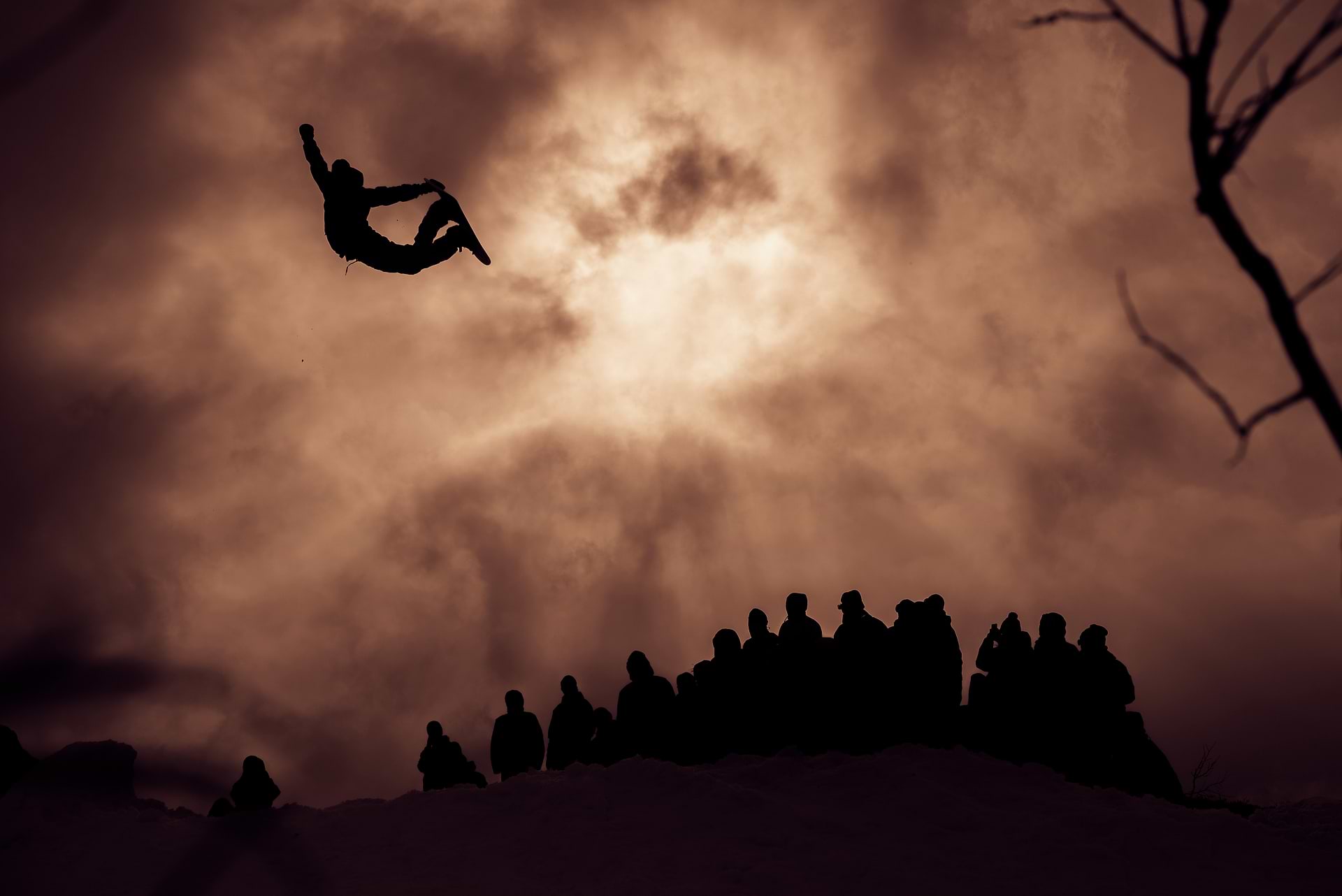
I love this photo. Skiers watching the snowboarders ride and getting inspired. Isn’t that how it’s always been? Photos like these that are more documentary are not my most vital part as I like to plan all my shots. But now and then, they also happen; maybe that’s why I like it so much.
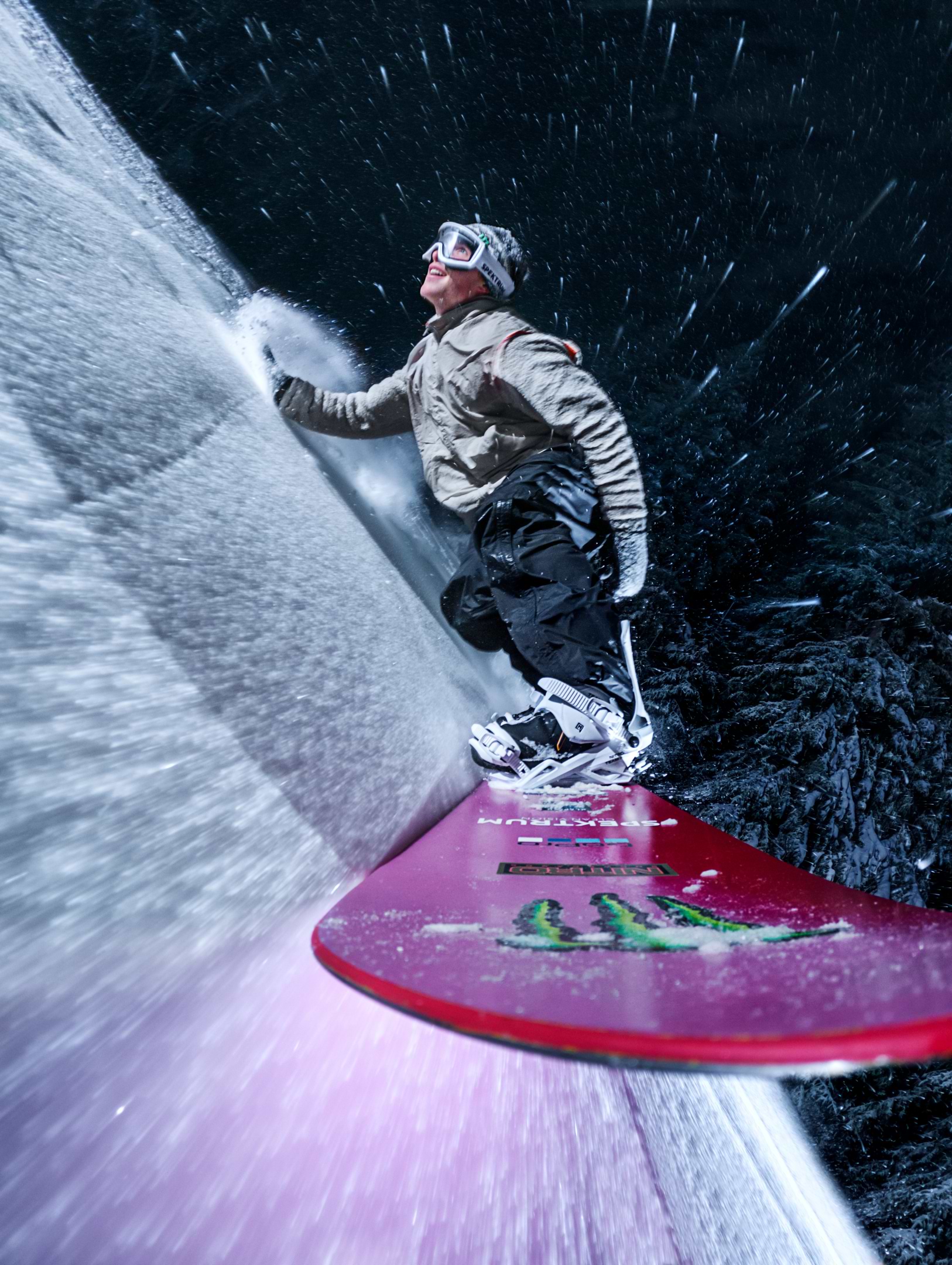
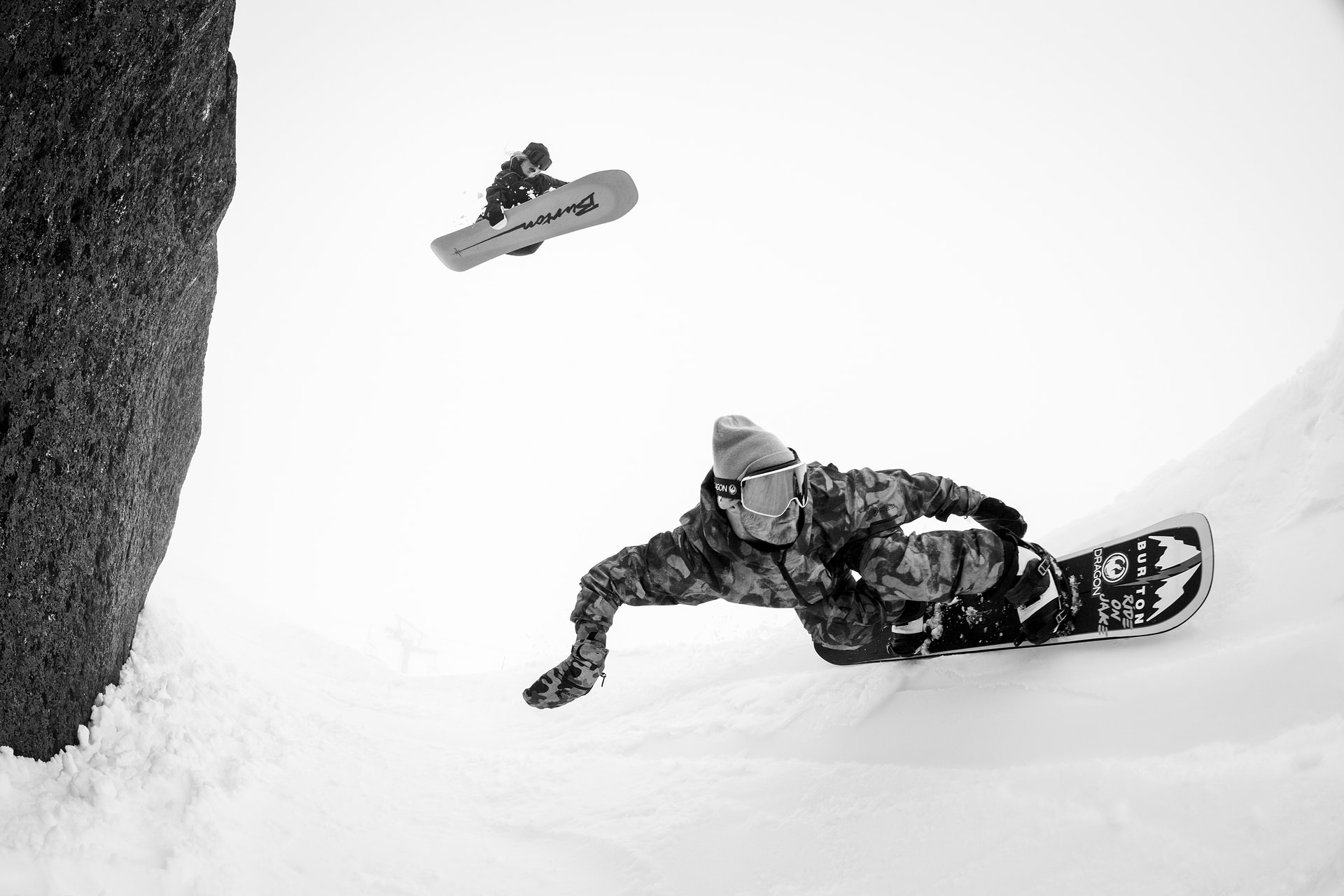
This is probably one of the most challenging photos I’ve taken. It’s shot with a Go Pro and with two Elinchrom flashes. Since you can’t trigger flashes with the GoPro, I set the shutter to 5 seconds and triggered them manually. It must be pitch black when shooting at long shutter speeds to avoid getting any other light in the photo. I used the app on my smartphone to trigger the Go Pro, so many things were happening simultaneously. When Sven dropped in, I activated the Go Pro with my phone, and then when he was at the right spot, I triggered the flashes with a remote controller. This might sound easy, but we worked on this for a while as the Go Pro didn’t go off, or the flashes didn’t fire. And when that happened, we had to move further down the slope to get some fresh snow. Puh! But after a lot of trial and error, we finally got it.
I love this photo. Skiers watching the snowboarders ride and getting inspired. Isn’t that how it’s always been? Photos like these that are more documentary are not my most vital part as I like to plan all my shots. But now and then, they also happen; maybe that’s why I like it so much.
This is probably one of the most challenging photos I’ve taken. It’s shot with a Go Pro and with two Elinchrom flashes. Since you can’t trigger flashes with the GoPro, I set the shutter to 5 seconds and triggered them manually. It must be pitch black when shooting at long shutter speeds to avoid getting any other light in the photo. I used the app on my smartphone to trigger the Go Pro, so many things were happening simultaneously. When Sven dropped in, I activated the Go Pro with my phone, and then when he was at the right spot, I triggered the flashes with a remote controller. This might sound easy, but we worked on this for a while as the Go Pro didn’t go off, or the flashes didn’t fire. And when that happened, we had to move further down the slope to get some fresh snow. Puh! But after a lot of trial and error, we finally got it.
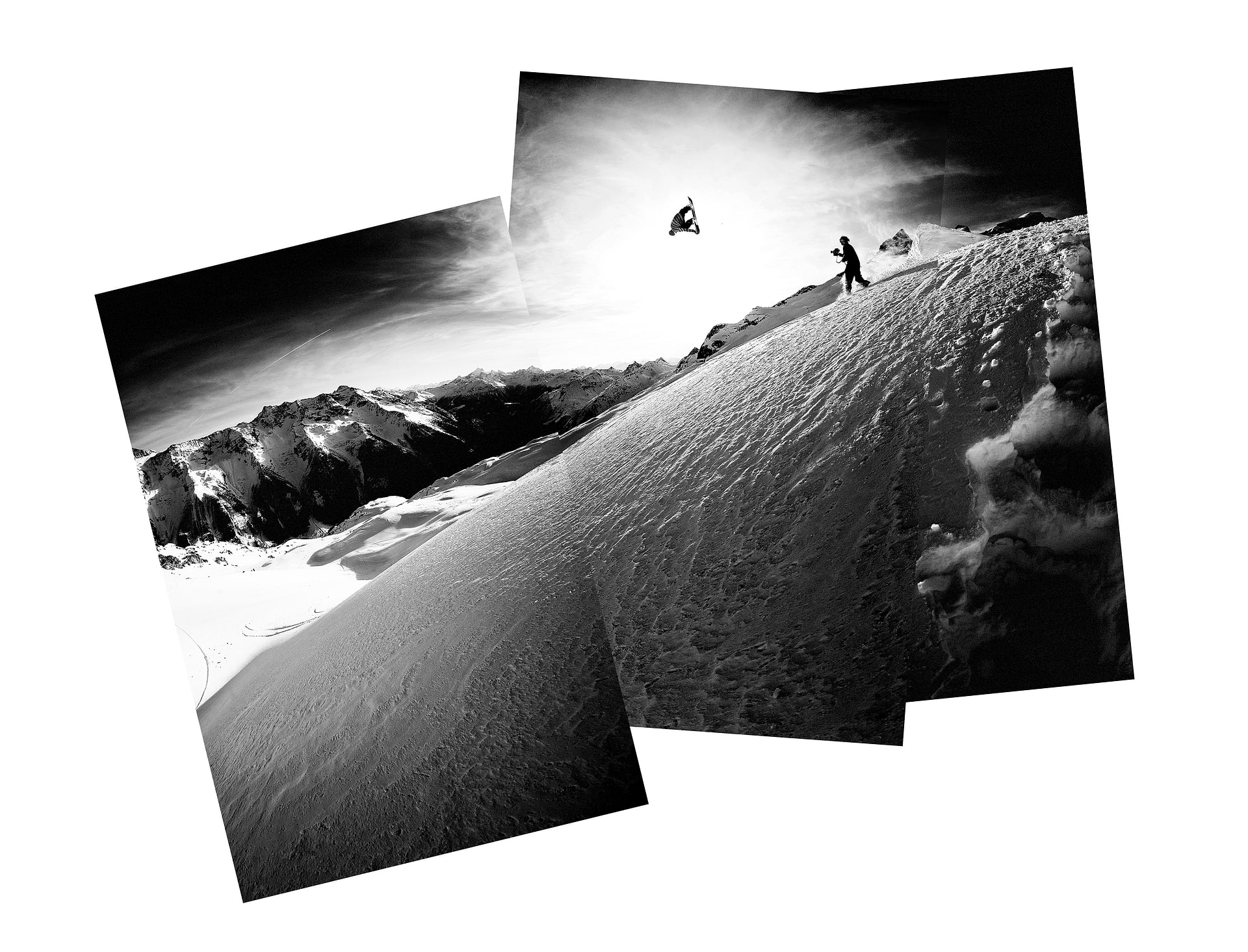
Calle Eriksson was one of the first Swedish photographers who established himself on the global snowboard scene. Eriksson and his friend Anders Hagman, a pro snowboard and computer wizard, started Method Magazine, one of the first websites for snowboarding (later, it was also a print mag and an online community). Eriksson’s photos helped countless promising Scandinavian snowboarders get their first photos published in magazines, eventually leading to successful careers for many of them. Eriksson went on to become the photo editor for Onboard Magazine, one of that era’s most influential publications. One of the senior photographers for Onboard was Eriksson’s fellow Swede, Vincent Skoglund, who became known as one of the most outstanding snowboard photographers to ever grace a snow-covered slope.
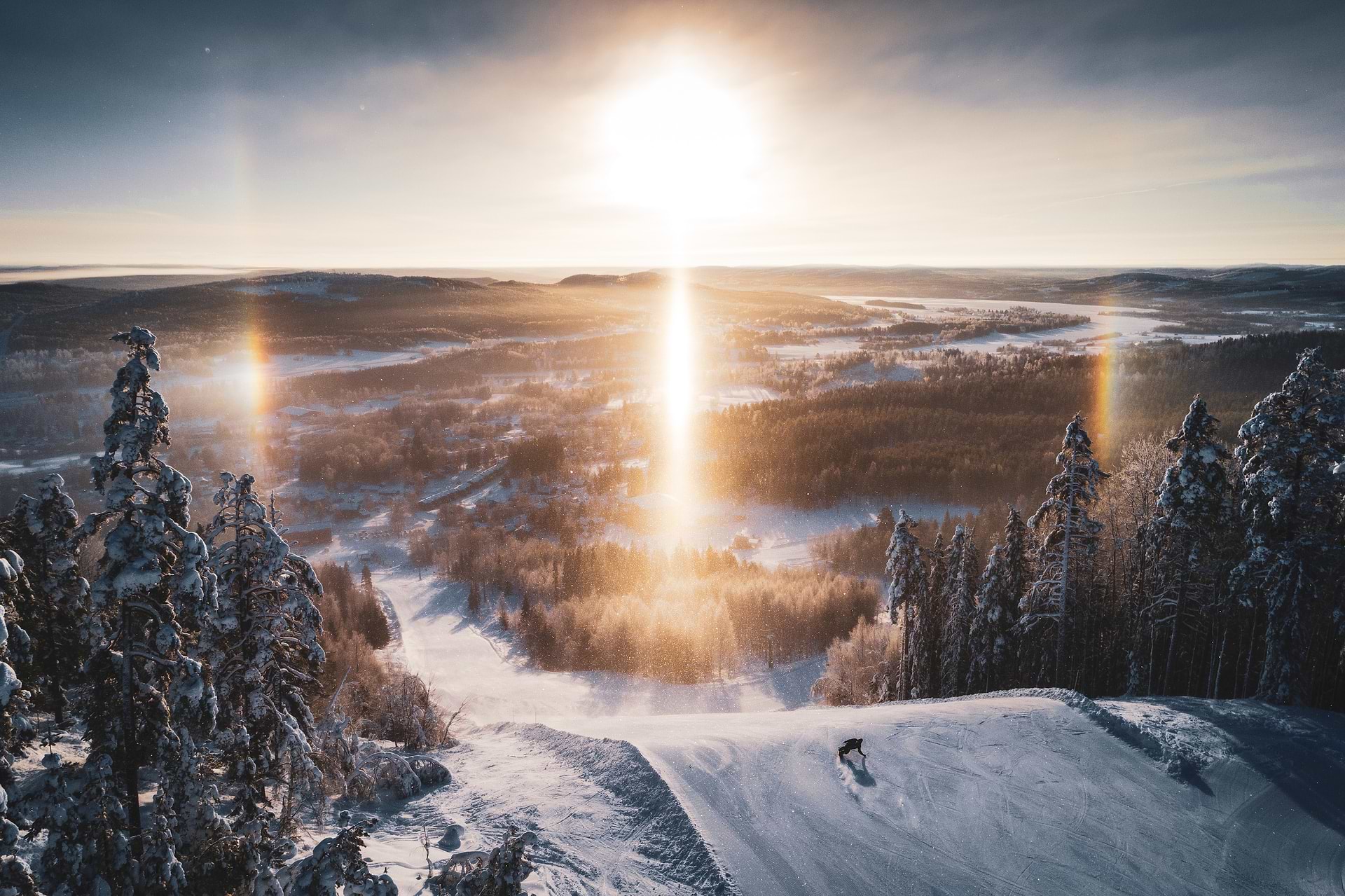
Nils Arvidsson and I try to link up at our home ski resort,” Järvsöbacken” every season. It’s a tiny resort, but you don’t need much to have fun on your board. On this day, it was frigid, so I wasn’t too hyped about going because I knew I would freeze my fingers off holding my camera. Once I reached the mountain, I noticed this crazy light phenomenon (light pillars) in the sky. I’ve seen it once before, but it’s rare and only happens when it’s super cold and there’s tiny ice particles in the air that the sunlight hits. I unpacked my drone and yelled the classic four words to Nils, “Lights good, do anything!!!”. He made a nice backside carve. I snapped the photo, and it turned out pretty nice.
Nils Arvidsson and I try to link up at our home ski resort,” Järvsöbacken” every season. It’s a tiny resort, but you don’t need much to have fun on your board. On this day, it was frigid, so I wasn’t too hyped about going because I knew I would freeze my fingers off holding my camera. Once I reached the mountain, I noticed this crazy light phenomenon (light pillars) in the sky. I’ve seen it once before, but it’s rare and only happens when it’s super cold and there’s tiny ice particles in the air that the sunlight hits. I unpacked my drone and yelled the classic four words to Nils, “Lights good, do anything!!!”. He made a nice backside carve. I snapped the photo, and it turned out pretty nice.
In modern times, Bernstål is holding the Swedish banner high in the snowboard media scene, but he is one of the few remaining in the country who photograph snowboarding professionally.
“The problem is that there are so few outlets these days, anywhere. Globally, there are only a few snowboard magazines left (and none in Sweden), only a couple of active film companies, and barely any vivid online communities for snowboarding. Unfortunately, there are very few places to publish your work and get paid for it.”
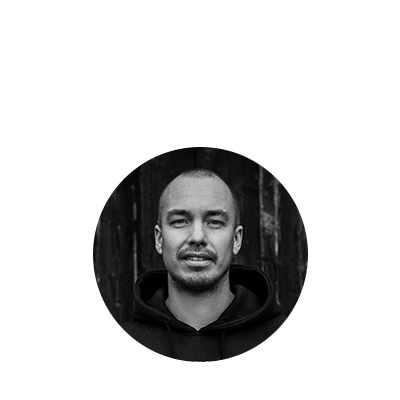
DANIEL BERNSTÅL is a freelance photographer based in Gävle, Sweden. Losing his daytime job in 2009 made him pick up a camera to pursue one of his childhood dreams: to become a professional snowboard photographer. Today, he shoots commercial assignments to make a living but occasionally points his camera toward some of the biggest names in snowboarding just for the fun of it. Besides photography, he loves being on two wheels on his dirt or mountain bike.
DANIEL BERNSTÅL is a freelance photographer based in Gävle, Sweden. Losing his daytime job in 2009 made him pick up a camera to pursue one of his childhood dreams: to become a professional snowboard photographer. Today, he shoots commercial assignments to make a living but occasionally points his camera toward some of the biggest names in snowboarding just for the fun of it. Besides photography, he loves being on two wheels on his dirt or mountain bike.
RELATED STORIES